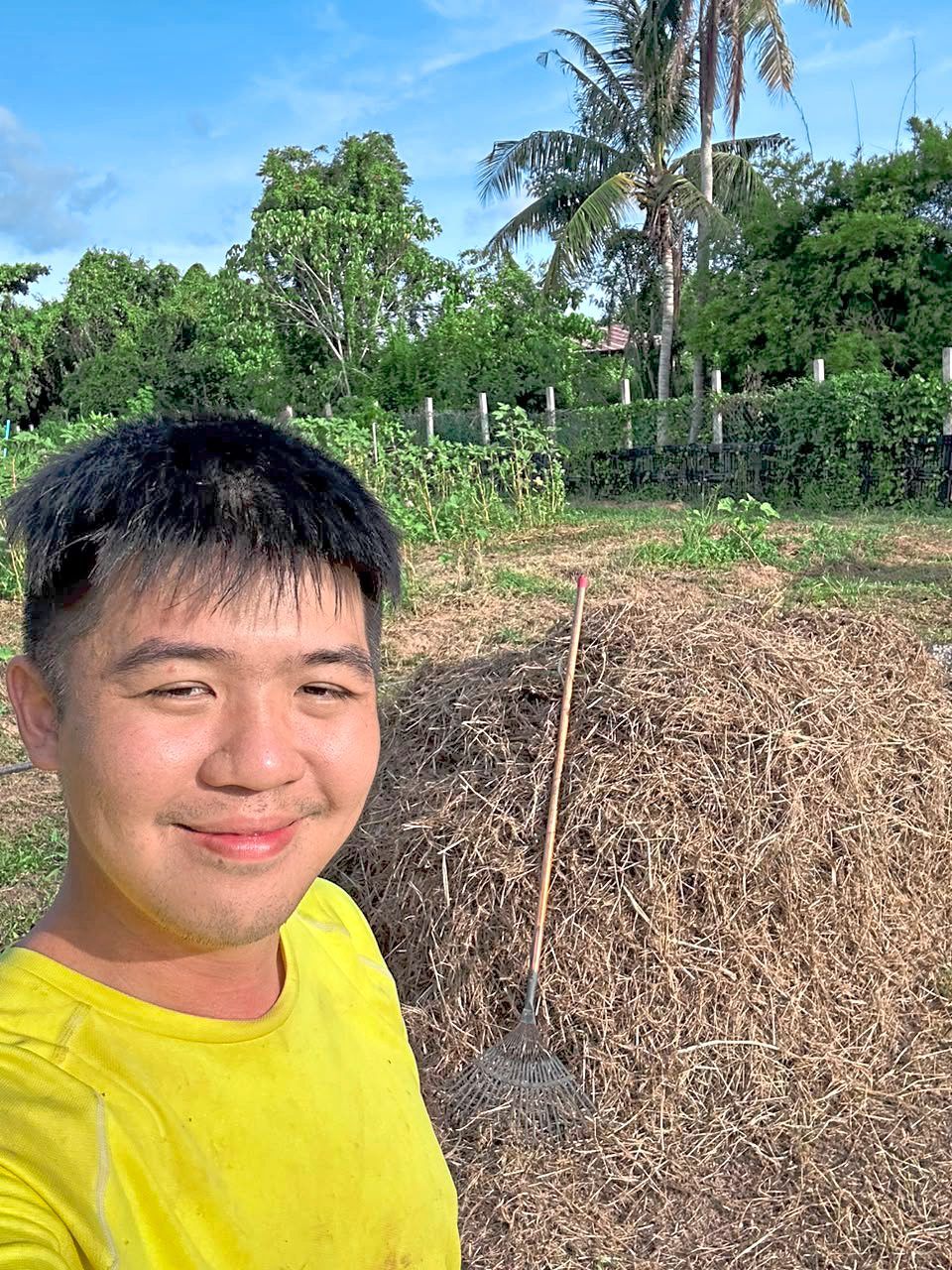
AT 29, Weihan is part of a new generation of farmers finding their way into Malaysia’s agriculture sector.
His journey shows that young farmers need not come from farming families. With no family background in agriculture, he holds an overseas degree in biotechnology, food and agriculture and initially worked in the palm oil industry before turning to farming on disused family land in Penang.
Five years on, Weihan relies largely on traditional methods to grow organic vegetables, with an automated watering system among his few technological investments.
As a smallholder, he says the cost of adopting agri-tech can be difficult to justify.
“I can rely on my strength for now, but by my 40s I would probably start investing in a mini tractor,” he says.
He can see greater value in technology as farms grow, particularly tools such as drones that can save time and labour.
“Smallholders, in theory, could benefit from agri-tech but it will need more training and the start-up capital would be higher,” he says.
“On a larger scale, there is a good future in agri-tech because ultimately, we are still human and no matter how strong you are, you will need rest. It can help save time and energy, especially in managing erratic weather.”
Technology, however, is only one of the challenges. Weihan has had to contend with monkeys and wild boars destroying his crops, while snakes have even eaten his chickens.
“I can understand why young people may not want to go into agriculture because it doesn’t always feel consistent. I myself am partially passion-driven,” he says.
Scaling up production while maintaining profit margins can be difficult, particularly for smallholders. Still, Weihan says the work has taught him lessons in discipline, negotiation and business.
He believes the physical demands of the job can also be part of its appeal.
“If you’re hands-on, you are living one of the healthiest jobs as you are practically exercising as you work. Farming is a job that is hard work, but it is good work and fulfilling.”
“The land grows with you. It’s a reflection of yourself as a farmer. You literally reap what you sow,” he says.
From school to farm
For 31-year-old Naviin Thiaga, his path into agriculture began in a classroom, where a teacher helped him see farming as a career with a bright future.
The founder and CEO of organic farming business Sayur Kita Asia grew up around agriculture through his father, who was in the industry. But his interest developed further at SMK Bandar Baru Uda in Johor, where he took agricultural science as an elective.
His teacher, Cikgu Mohd Redzuan, made a particularly strong impression. In 2010, Mohd Redzuan told his students that agriculture would become one of the country’s most promising sectors, and those who took the opportunity could do well in life.
“My school was one of the very few with agriculture science as an elective. I think agriculture should be a mandatory subject because food security is national security. If we don’t have a plan for ramping up food production and becoming more self-sustaining in the coming years, it will be tough for the country,” he says.
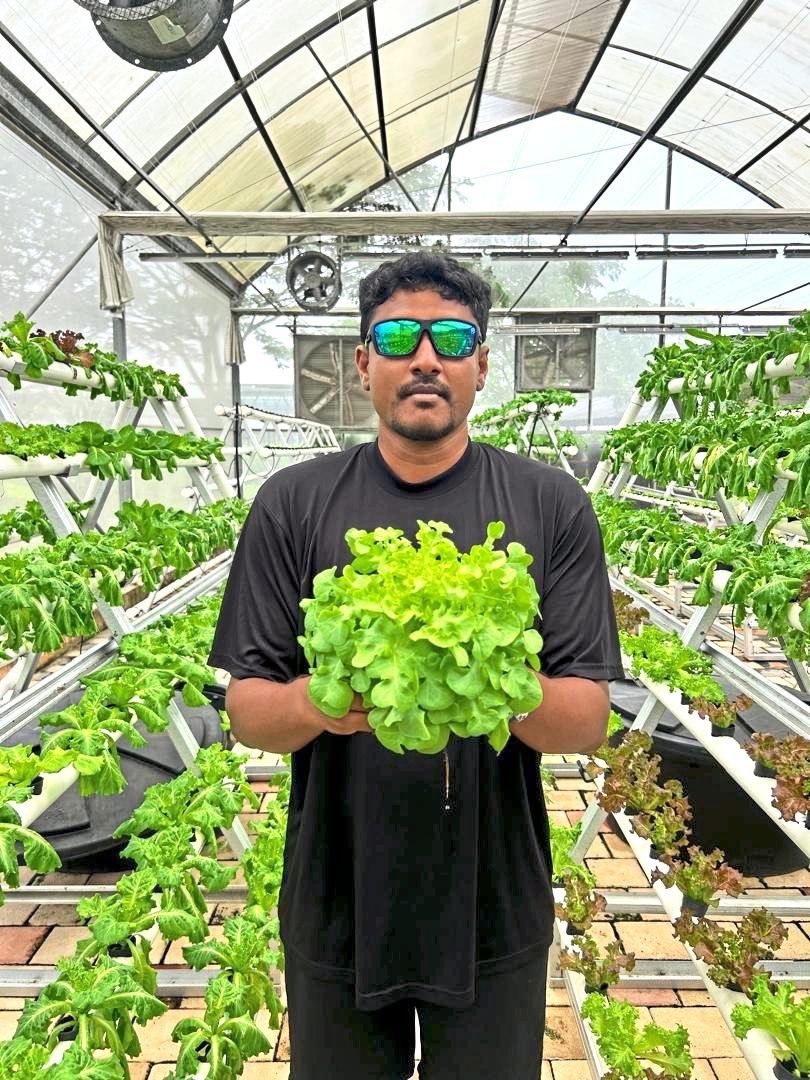
Today, Naviin runs a hydroponic operation using climate-resilient greenhouses equipped with Internet of Things (IoT) systems, temperature sensors and automated irrigation and fertiliser dosing.
The systems record data, top up water, mix and pump fertiliser, while shading and climate controls help regulate conditions inside the greenhouse. The farm currently covers about one acre (0.4ha), with plans to expand to three acres and potentially five.
For Naviin, technology is a way to broaden perceptions of agriculture, particularly among young people who associate farming with hard physical labour.
Yet attracting workers remains one of his biggest challenges. Naviin says the company is willing to pay an entry-level operations executive about RM3,500 a month and does not require tertiary qualifications, but finding the right people remains difficult.
“There is little awareness on the importance of agriculture and how it is a rewarding career. Many people think they have to physically toil and work under the scorching sun but that is not always the case,” he says, adding that agri-tech companies mostly hire operations and management executives because many routine tasks have been automated.
He believes exposing young people to agriculture early – through schools or even growing food at home – could help. His own interest began with a teacher who showed him what the industry could become.
“If we have 1000 more Cikgu Redzuans, more people like me will be churned out every year.”
From hobby to profession
Nuraishah Shamsuddin’s farming journey began as a hobby during the Covid-19 pandemic. Today, it has grown into Kebunnurai Oganik, a 0.5-acre organic farm in Teluk Intan, Perak.
Nuraishah, 33, who previously worked as a graphic designer, does not come from a farming background. But growing up in a village meant she and her family were familiar with planting crops and caring for animals.
Her farm now produces poultry, vegetables and herbs, and has a few cows, while excess fruits are sold online.
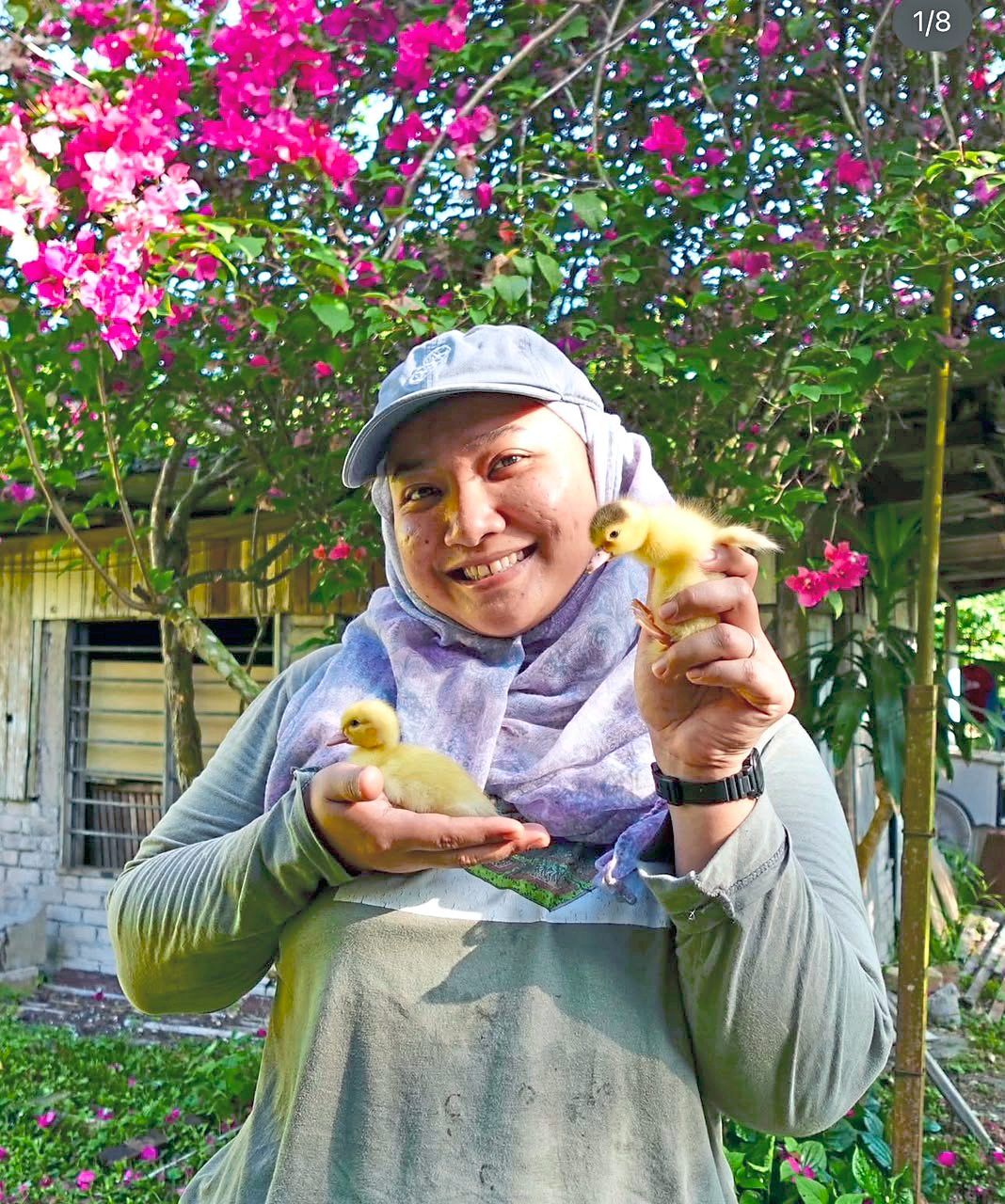
Nuraishah’s permaculture operation is traditionally run, but she hopes to change that. Once basic infrastructure such as solar power and rainwater collection is in place, she plans to introduce IoT systems so she can monitor and manage the farm remotely from her phone.
She also takes in interns from universities, polytechnics and colleges, giving young people hands-on exposure to agriculture.
For Nuraishah, changing perceptions of farming also means showing that small-scale farms can be commercially viable. Through online sales, farmers can reach customers beyond Malaysia, with some of her products already exported to Brunei and Singapore.
“If you do farming the right way, you will go far. We don’t have to focus on monoculture farming. My farm only has a small space but I plant a lot of things and produce a variety of products,” she says.
Farming, she adds, does not necessarily mean spending eight hours a day under the sun. She typically spends less than four hours on the land each day from 8am to noon.
“Farming is good for the soul because you talk to plants and animals about your problems and they don’t talk back to you, they just listen and give you a good harvest. My chickens are my therapists!” she jokes.