



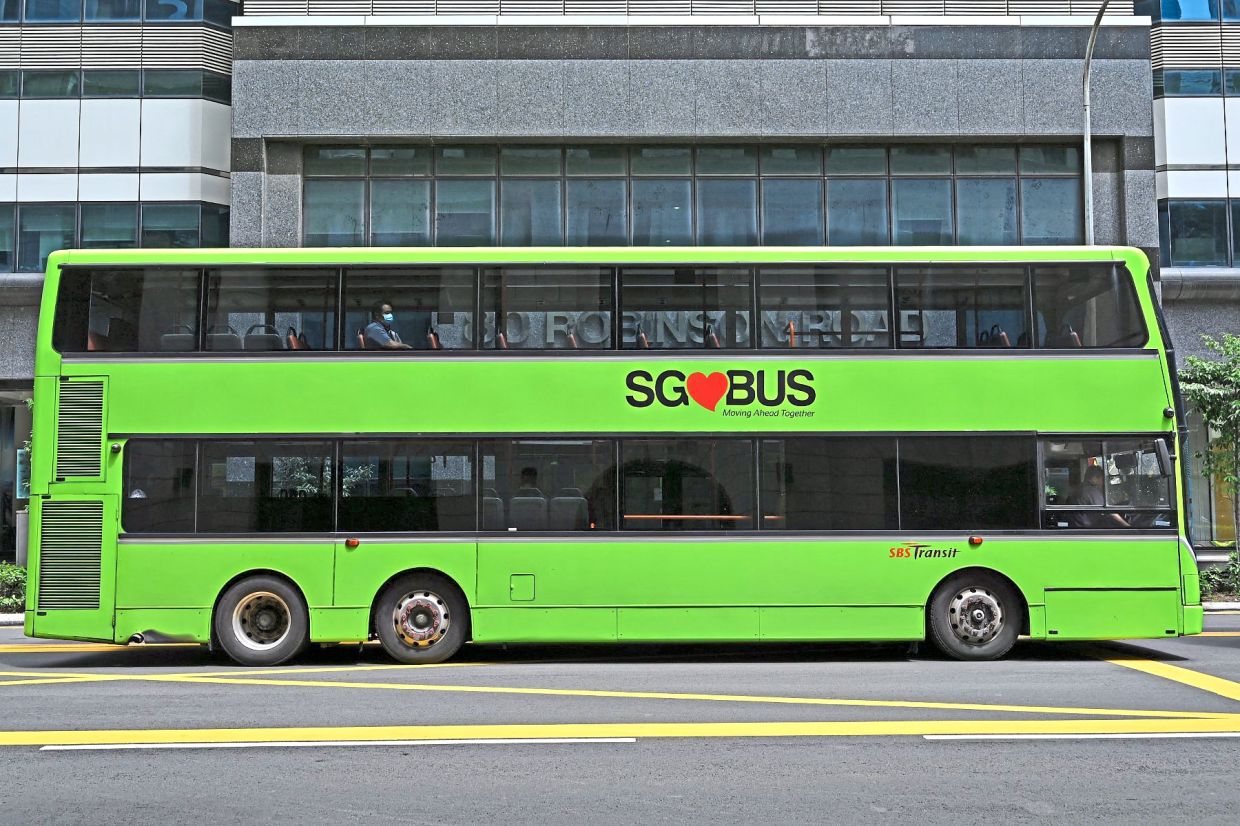
UNDER the rules that came into effect on Sept 23, bus commuters in Singapore who put their feet on seats or blast music without headphones can be fined up to S$500 (RM1,594).
It’s the latest addition to a long list of rules most Singaporeans can recite from memory. No selling of chewing gum, no durians on the MRT, no e-scooters on footpaths and, more recently, a S$300 (RM956) fine for diners who don’t return their trays.
It is no wonder that the tongue-in-cheek nickname “fine city” has stuck with us Singaporeans for so long.
Every few years, a new bad behaviour appears and escalates so much that the only fix seems to be a new fine. The list of fines just continues to grow, unable to anticipate whatever inconsiderate thing comes next.
But a society that needs an ever-expanding schedule of fines to keep its public spaces liveable needs to ask: Why do we need to penalise people to get them to practise what is essentially basic etiquette?
‘Will I get caught?’
No doubt fines can be effective in changing behavioural norms. The results of Singapore’s tray-return policy seem to suggest that.
For years, campaigns asking diners to return their trays voluntarily at hawker centres barely moved the needle.
The habit took hold only once fines arrived, with a survey showing that 95% of respondents returned their trays in 2022, the year enforcement began – a 46% increase from the previous year.
But were diners doing it because they were afraid of being caught and fined, or because they genuinely cared about the person after them and wanted to leave a clean table?
That’s the difference between treating the symptoms of an illness and targeting the root cause of it.
Think of the law and its penalties as a “floor” of sorts. Anything below that floor is behaviour society will not tolerate.
Culture and decency, meanwhile, shape behaviour at a much higher level. They mark the difference between a society where people are kind because they actually care about other people, and one that does so because it is the law.
It is why someone refrains from playing loud music on a bus purely because it is fineable, while letting a lift door close on a neighbour rushing to catch it as there is no penalty for that.
Surrounded by signs warning us of fines, it is likely the question we ask ourselves in our heads will instinctively shift from “Is this right?” to “Will I get caught?”

The two questions can produce the same outcome, compliance, but over time they shape different people. One is guided by an internal compass. The other, by the odds of getting caught.
Taking a primarily punitive approach could actually backfire. Take the surprising results of a study published in 2000, where researchers examined parental behaviour in a group of daycare centres in Haifa, Israel.
To deter parents from picking up their children late, the centres tried fining latecomers roughly US$3 per child after 10 minutes. Rather than deterring late pickups, the number of latecomers doubled and stayed at that level even after the fine was scrapped.
Researchers concluded that the fine had changed what lateness meant. Before it, arriving late meant letting the teacher down. After the fine was introduced, a late pickup became a service that a parent could simply choose to pay for.
This may explain why we need a new fine every few years, rather than fewer over time. Should we double down too much on this approach, we risk becoming a society whose guiding principle is the mantra “do what you want, just don’t get caught”.
It comes from within
Campaigns and fines are simply variations of the same instrument. One asks nicely, the other insists. Either way, both are external nudges. Is there a better way?
Our culture and social norms are shaped by us collectively deciding what kind of society we want to live in. If we genuinely want a generous and caring society, the nudge has to come from within.
It comes from asking our-selves: What kind of country do we want Singapore to be? And deciding, from there, how to live out those values. This might sound idealistic. But culture doesn’t transform overnight. It changes slowly with each of us making small, daily choices – holding a lift door, giving up a seat, or keeping your music to yourself simply because you care about the person beside you.
Do we want to remain a “fine” city kept in check by penalties, or a place where no one needs to be compelled to behave graciously? Ultimately, the choice is ours. — The Straits Times/Asia News Network
Krishnan Menon is a senior marketing and transformation leader with more than 30 years of experience across the Asia-Pacific. He is also a distinguished fellow at the Nanyang Centre for Marketing and Technology at NTU’s Nanyang Business School.
