
A DENSE, yellow-orange pall hung over Bordeaux, blotting out the sun and blurring the spires of the cathedral in the city. A swirl of tiny ash particles stung eyes and stuck in throats.
West of town, a mammoth forest fire burned so ferociously that it generated its own weather system.
“We’ve never seen anything like it,” said Roger Peuron, 89, a retired engineer born before World War II who was driven out of his home by the approaching flames. He could have been speaking for millions of people across Europe.
Ravenous fires. Searing heat waves. Freakish storms. The summer of 2026 has already shattered meteorological records in several European countries.
On a continent that has weathered centuries of upheaval – ruinous wars, deadly pandemics – it is the weather itself that now has Europe feeling close to a breaking point.
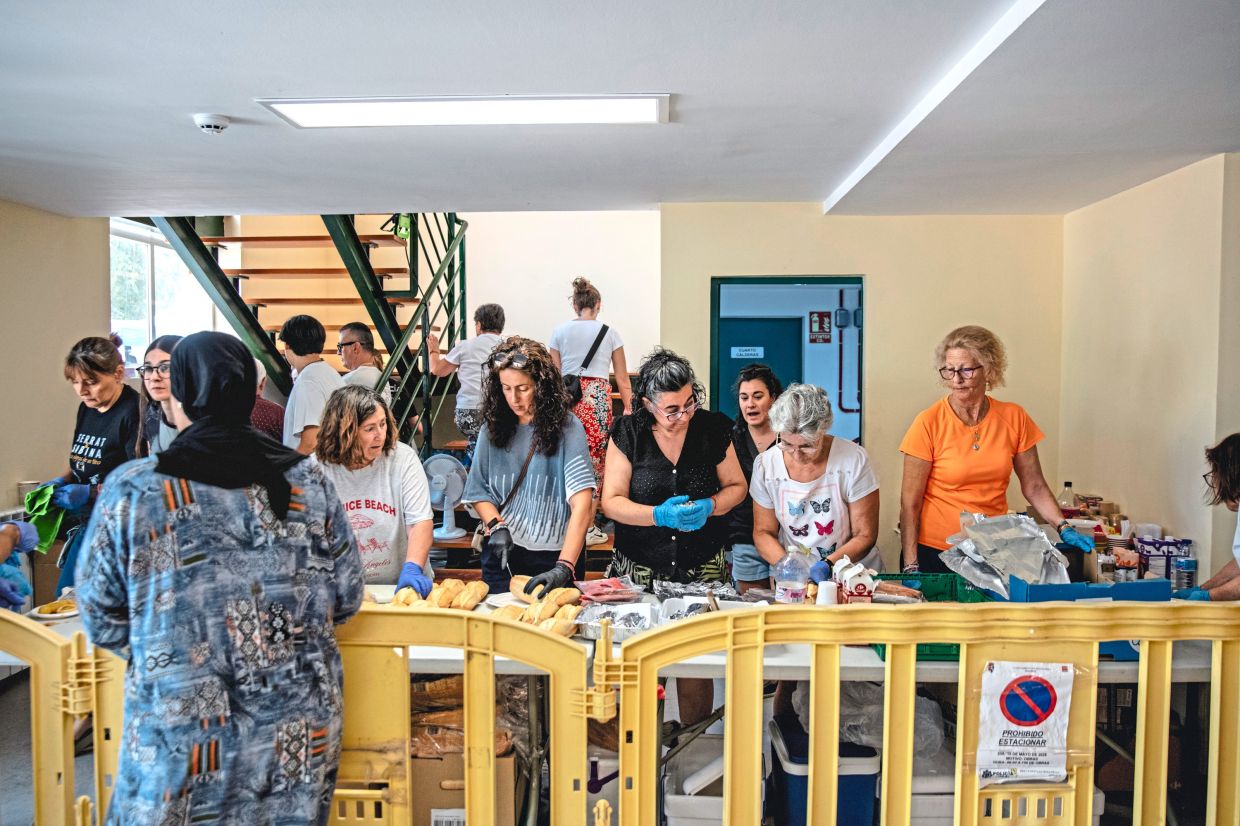
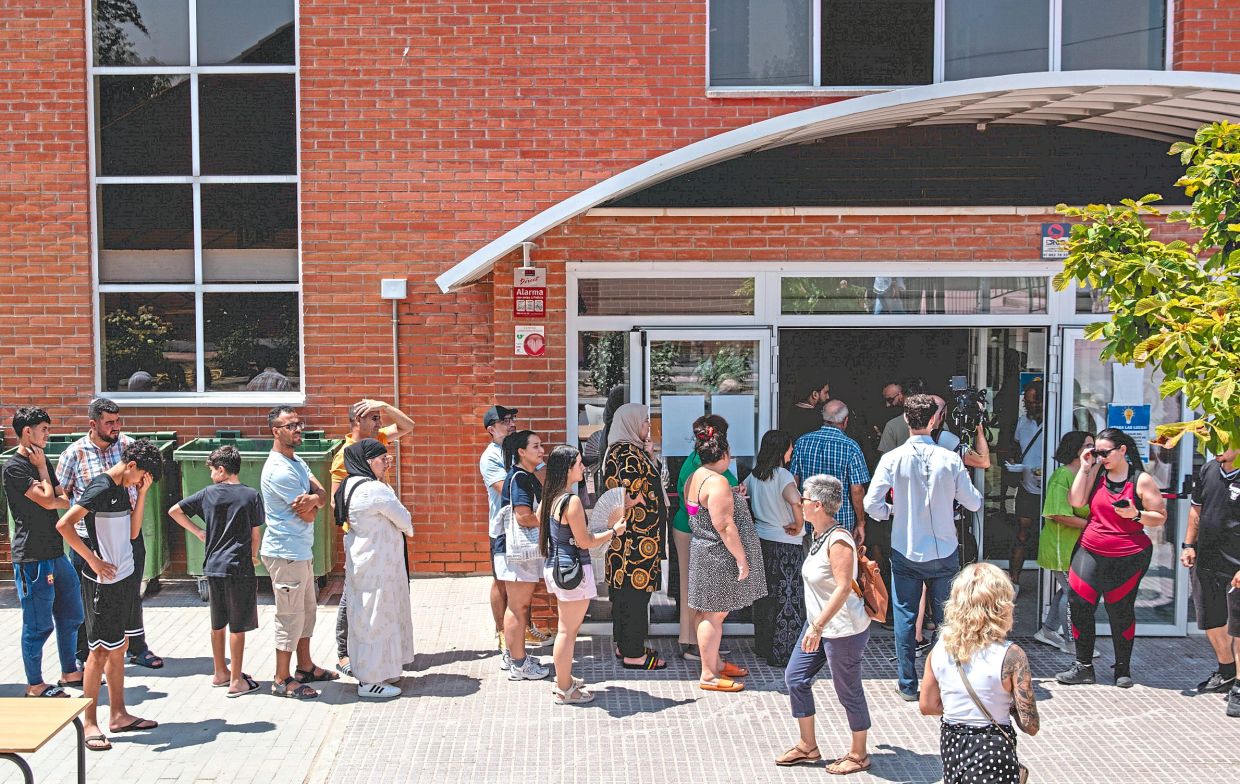
It displaced more than 300,000 people in France and Spain, where the largest fires in those countries’ modern history led to their largest peacetime evacuations, with villages destroyed and hundreds of thousands of hectares incinerated.
It left millions more desperate for relief from temperatures that routinely soar above 40°C.
It forced the cancellation of concerts and festivals, curtailed the final stage of the Tour de France cycling race and closed the Louvre Museum and Eiffel Tower early.
It brought wildfires to the Scottish Highlands. It led organisers in London to call off a conference on how to cope with extreme heat. And it caused at least 10,000 heat-related deaths across Europe in June alone – a number that may turn out to be an undercount.
“Europe is ground zero when it comes to impacts” from climate change, said Johan Rockstrom, a Swedish scientist who is the director of the Potsdam Institute for Climate Impact Research in Germany.
“2026 is just the beginning,” Rockstrom added. “It will inevitably get worse. It will get worse and worse and worse to the point where, I’m afraid, we’ll be passing the limits of adaptation.”
Europe is not alone, of course. Heat waves gripped Australia and Japan this year. Floods devastated Kenya and Angola. A snowstorm paralysed the Eastern United States. Developing countries in the Southern Hemisphere are still more vulnerable than wealthy Europe to the effects of a changing climate.
Yet no other continent has warmed as rapidly as Europe, at nearly twice the global average since the mid-1990s.
That has forced Europeans to confront, more starkly than others, the harsh realities of a changed climate, particularly in the summer, when their once-mild days have given way to furnacelike heat.
Though still cooler than other parts of the world, like the American South-West or the Persian Gulf region, Europe is less able to cope because its buildings are often without air conditioning and were built to retain heat.
The homogeneity of the trees on its hillsides and coastal plains, many of which were planted during cooler, wetter periods, make them dangerously flammable during fire season.
“With this heat wave and these fires, you can say it starts to become unbearable,” said Sonia Seneviratne, a Swiss climate scientist at the Swiss Federal Institute of Technology Zurich.
Whether it leads to drastic new measures – either to mitigate the effects of a warmer climate or to adapt to them – is another question.
In Spain, Prime Minister Pedro Sanchez declared a “climate emergency”, which he said would necessitate a state pact to “attack the root of the problem in a structural way”.
In France, President Emmanuel Macron vowed to replant the vast pine forests that were burned in the Gironde region with different species of trees that are better suited to a dry, hot climate.
“The situation we’re in today is the most difficult we’ve ever recorded, the most difficult since World War II,” Macron said.
Yet for all the urgency, Europe’s commitment to reduce carbon dioxide emissions – a goal that scientists say is the only conclusive way to curb climate change – is in danger of being watered down.
The European Union proposed in June to adjust rules so that some industries could pollute at slightly higher levels, further into the future.
“Net zero” policies, which aim to balance the greenhouse gases put into the atmosphere with the amount removed, have become inviting targets for critics, particularly on the right, who condemn them as a luxury Europe can’t afford during a period of weak economic growth and energy insecurity.
And no matter what Europe does, the global trajectory depends on China and the United States, where US President Donald Trump has called climate change a “con job”, as well as on energy-hungry developing countries.
Europe’s status as the fastest-warming continent is a consequence of both changing weather patterns and its proximity to the Arctic, where reduced snow and ice lead to more dark surfaces that absorb heat.
The continent is more than 1.6°C warmer than it was three decades ago and the rise in temperature is swift enough to be noticeable over a single generation.
Bordeaux never experienced a day with temperatures at or above 39°C between 1921 and 2000, according to Meteo-France, the national climate and weather service.
This summer, it has happened eight times, and the season is not even half over.
Bordeaux’s winemakers, already beleaguered by the heat, now worry about smoke tainting their famous vineyards.
Friederike Otto, a German climatologist at Imperial College London, said “jet stream” wind patterns and high-pressure systems once could lock in days of “nice-ish summer weather” in Europe.
Now, she said, those same dynamics produce excruciating conditions because they occur in tandem with a warmer climate.
The most frightening aspect of Europe’s summer, scientists say, is that it could appear tame in retrospect.
The planet is already on course to breach the central goal of the Paris Agreement of 2015: to stop the planet from heating more than 2°C higher than preindustrial levels.
Far from moderating, some experts say the pace of warming appears to be accelerating.
France’s weather and climate service has painted a dystopian picture, saying that by 2050, heat waves could be five times more frequent, while temperatures could hit 47.8°C.
At a cavernous exhibition centre in Bordeaux, where thousands of evacuees took shelter, that future had already arrived.
Yet Celine Lartigue, 51, a social worker, had to reach into Europe’s ancient past to describe the ashes and orange sky she witnessed as she fled her house in the suburb of St-Medard-en-Jalles, where factories manufacture the propellant for France’s nuclear missiles.
“It was like Pompeii,” she said. — ©2026 The New York Times Company
This article originally appeared in The New York Times.