
Richard Mille shows luxury can also be about minimalism.
RICHARD Mille’s timepieces have always appeared to defy convention, and increasingly so, even gravity.
The brand’s signature skeletal architecture, technical materials and bold cases consistently challenge traditional notions of what luxury mechanical watches should look and feel like.
Beneath their striking appearances lies an obsession with engineering ever lighter constructions without sacrificing rigidity or precision.
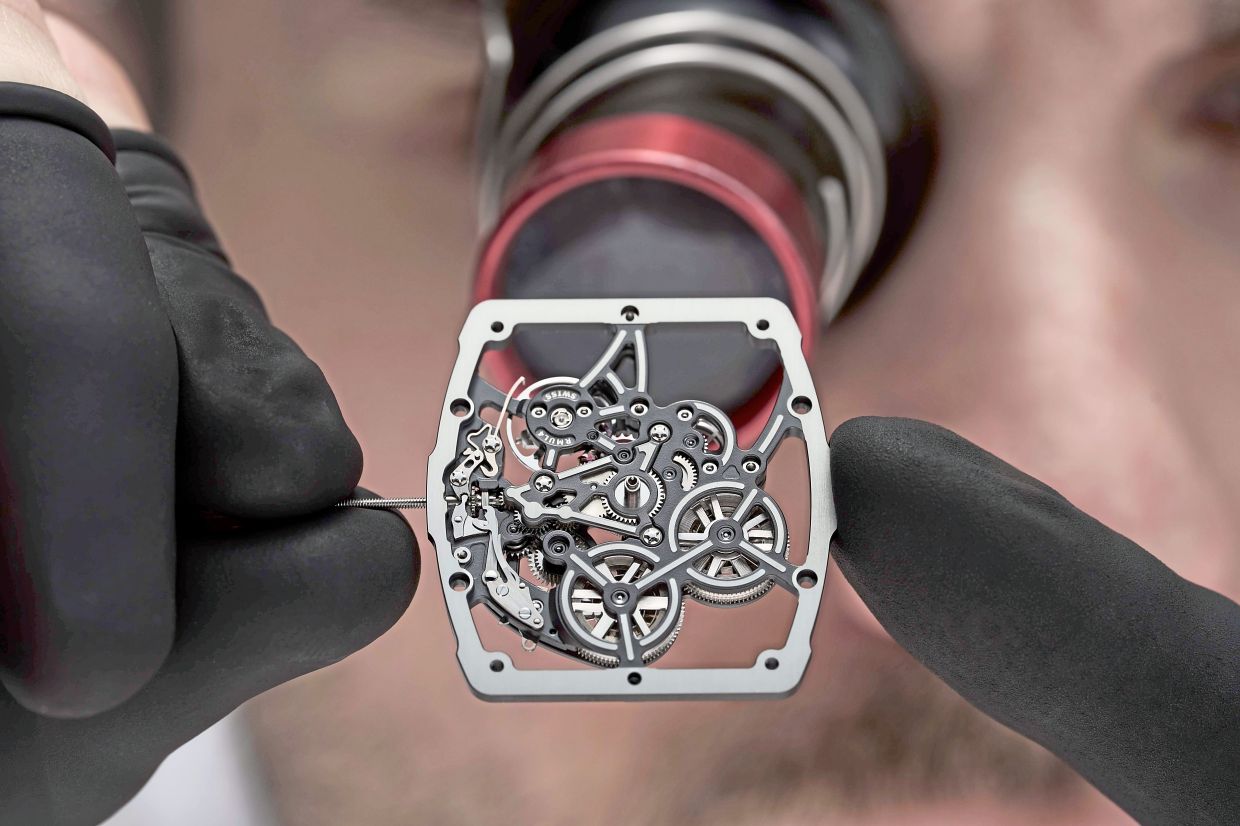
The new RM 55-01 Manual Winding is the clearest embodiment of that minimalist approach, where empty space becomes as important as the components themselves.
Everything is stripped down to absolute mechanical necessity, resulting in an airy structure where each element earns its place through function.
This calls to mind the words of pilot and author Antoine de Saint-Exupery who famously wrote: “Perfection is achieved, not when there is nothing more to add, but when there is nothing left to take away”.
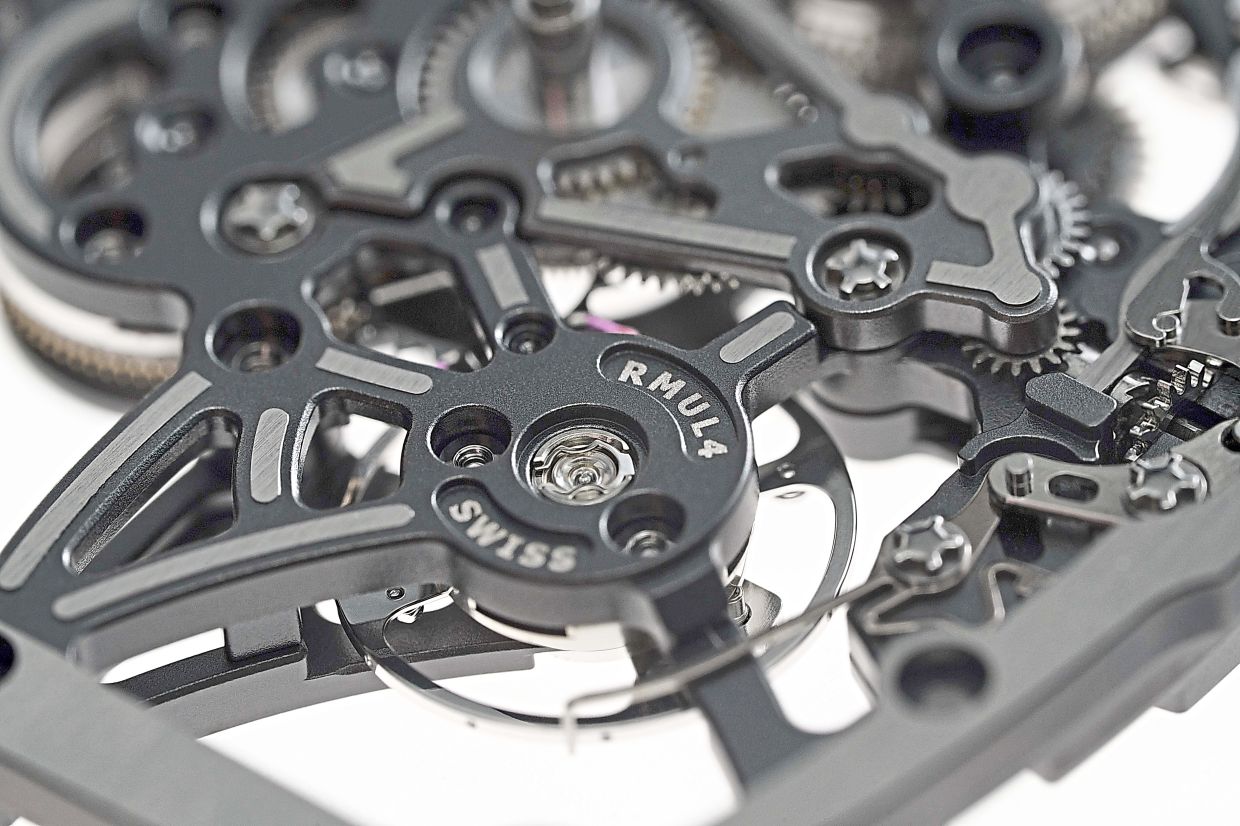
At the heart of the RM 55-01 is the newly-developed Calibre RMUL4, an ultralight manual-winding movement weighing less than five grammes.
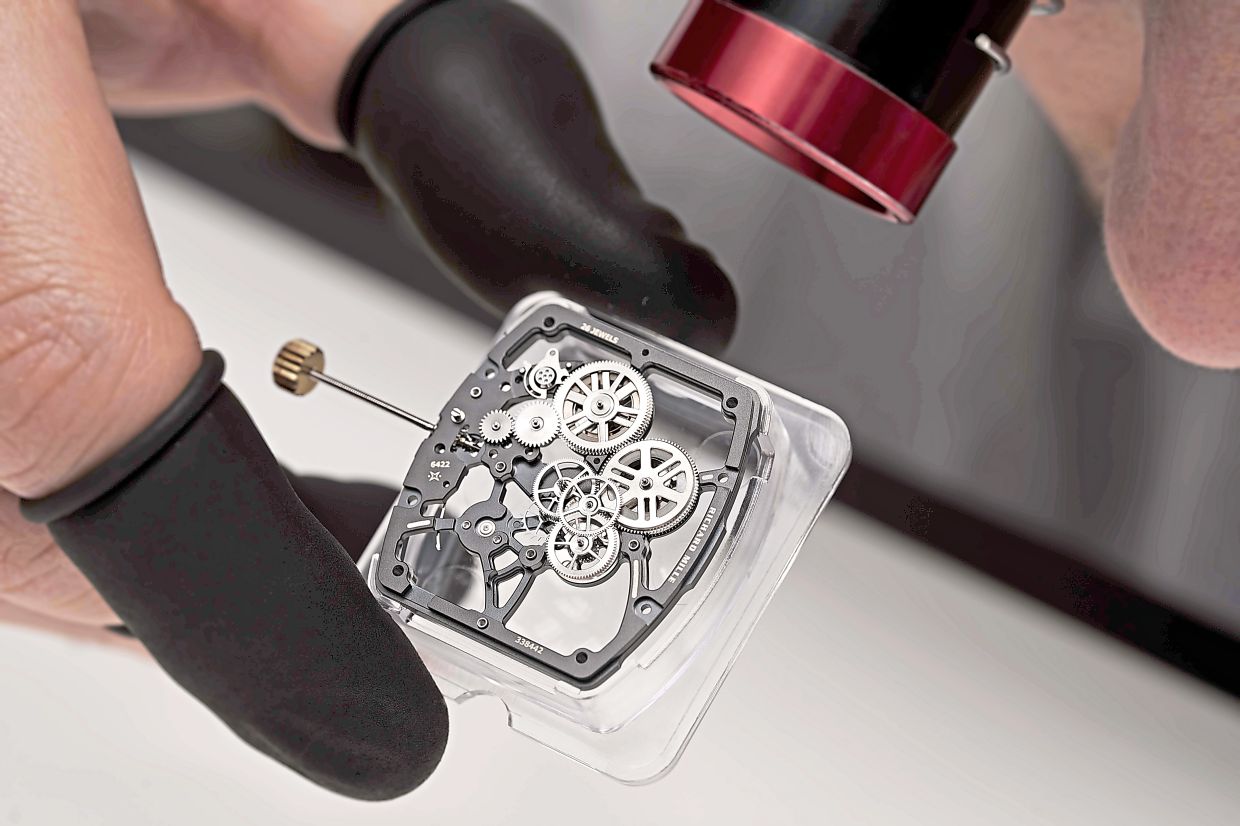
Embodying the technicity of modern haute horlogerie, it fits snugly within the conservatively-sized case that optimises wrist comfort and visual balance.
The decision to adopt a manual-winding system was also deliberate.
Without obstruction from an oscillating weight, light can flow freely through the skeletonised structure.
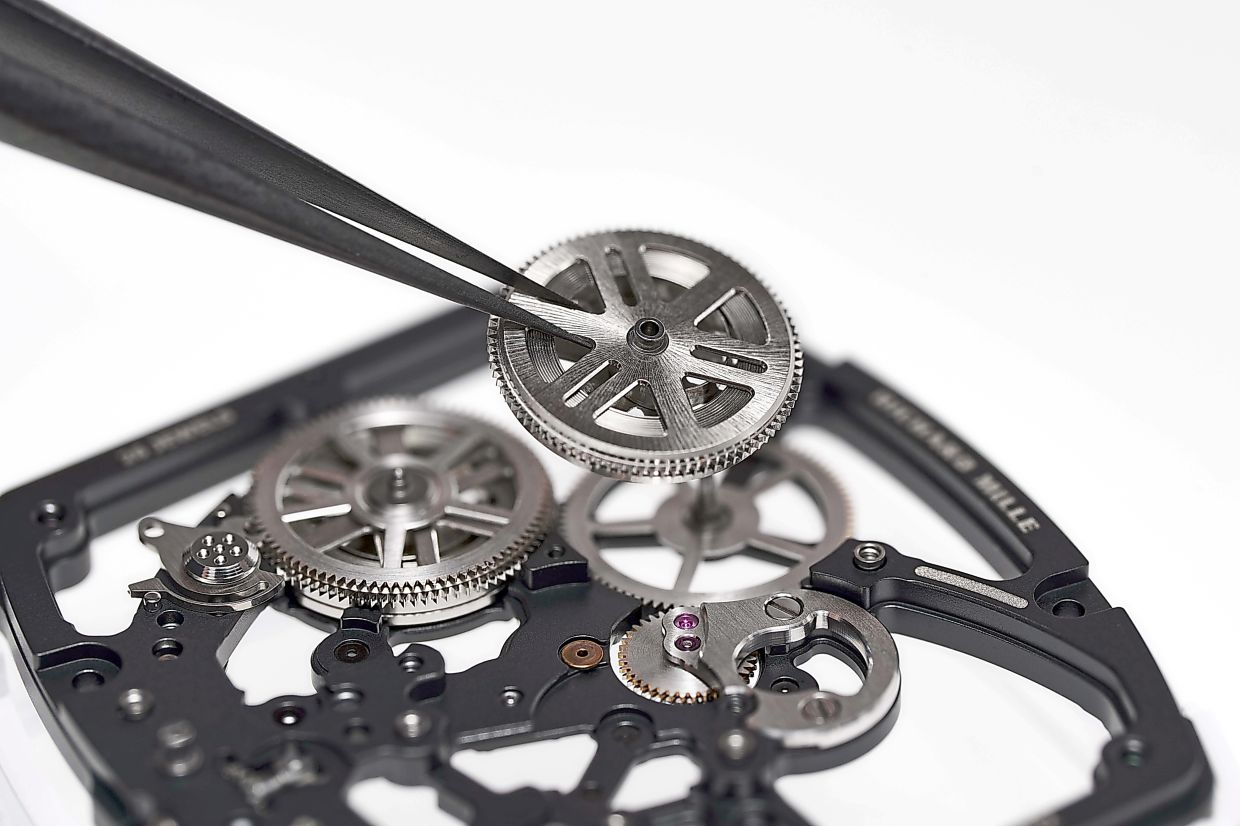
This allows the movement to appear almost suspended within the case and it creates a sense of transparency.
Despite the airy appearance, it is hardly delicate.
Its skeletonised baseplate is machined from grade 5 titanium − an aerospace-grade alloy renowned for exceptional rigidity, low mass and outstanding corrosion resistance − then microblasted, sanded and finished with a black PVD coating.
The three bridges, similarly produced from grade 5 titanium, also receive Titalyt treatment for enhanced durability and appearance.
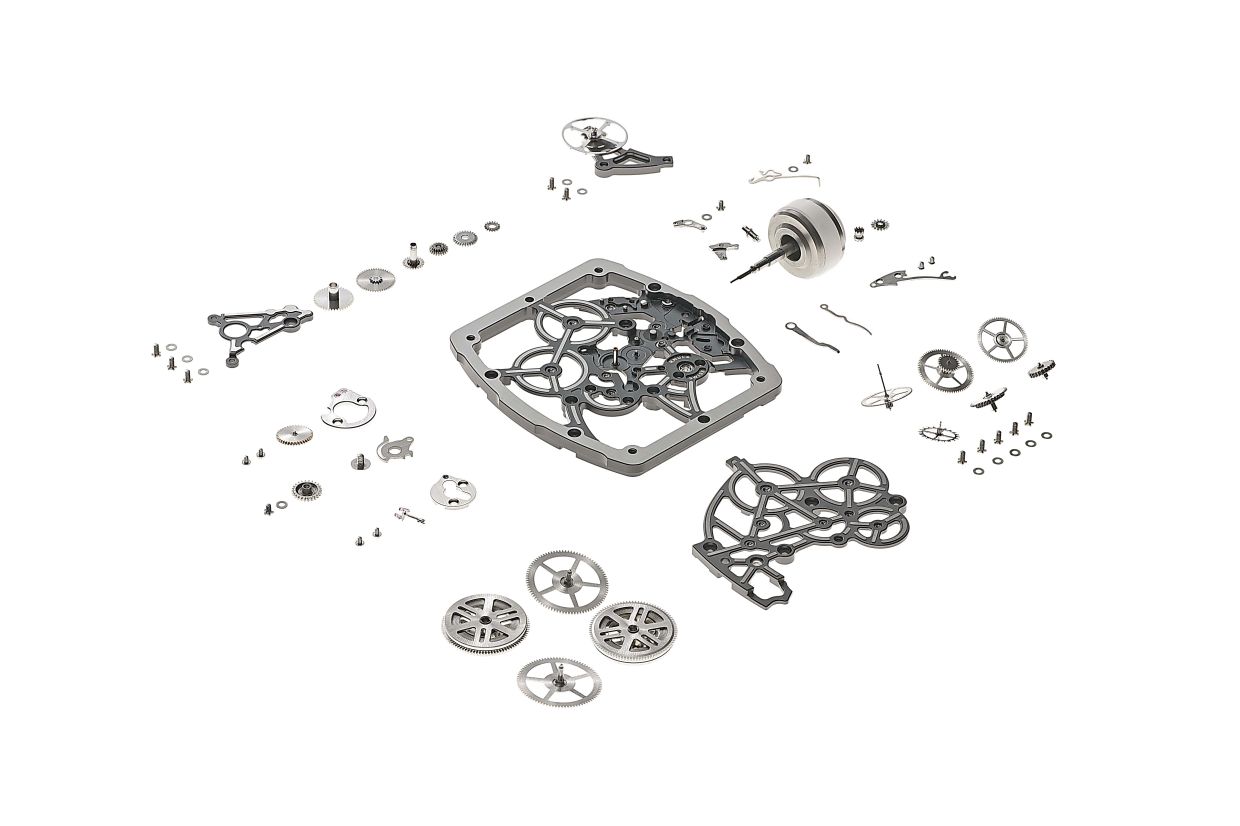
Working with such materials is no straightforward task.
The extreme hardness, coupled with the brand’s exacting tolerances, place tremendous demands on machining tools.
Even the slightly thicker, satin-brushed structural components are meticulously executed, resulting in dynamic interplays between linear forms and flowing curves throughout the movement.
The mechanics of minimalism
The RMUL4’s mechanical performance is equally uncompromising.
It employs a double-barrelled system that delivers more consistent torque throughout its approximately 55-hour power reserve.
By distributing energy across two winding barrels, the system reduces friction on bearings and pivots while ensuring smoother, more stable power delivery.
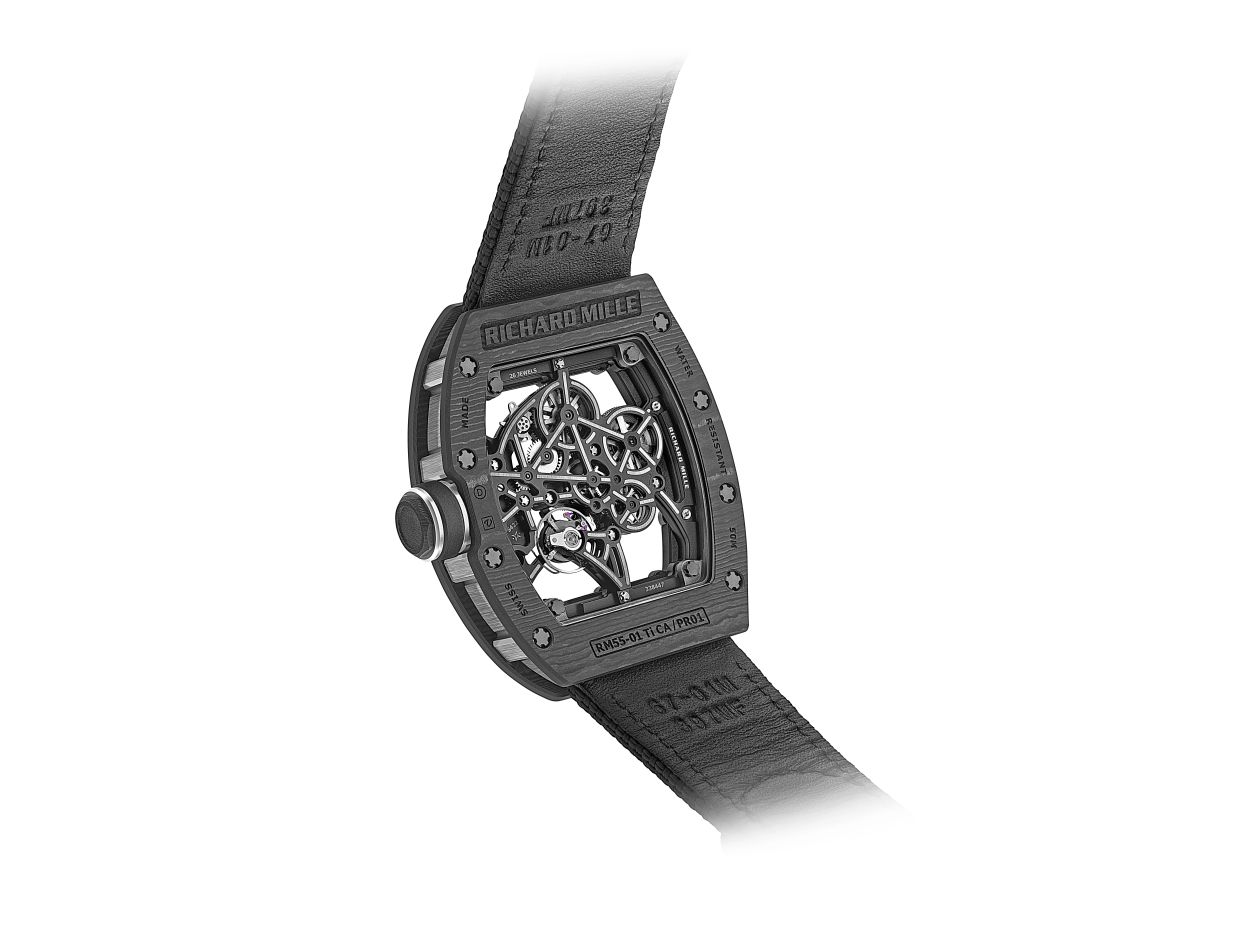
Faster barrel rotation also reduces stress on the teeth and pinions, contributing to greater long-term reliability.
Regulating the movement is a free-sprung balance with variable inertia, beating at 4Hz and equipped with a stop-seconds mechanism for precise time-setting.
Instead of relying on a traditional index regulator, Richard Mille adjusts the movement through four small inertia weights positioned directly on the balance wheel.
Altering the balance’s inertia rather than the hairspring length results in greater precision, improved repeatability and enhanced resistance to shocks – qualities that have long been central to the brand’s engineering philosophy.
The movement itself measures just 31.25mm by 29.45mm, and is only 3.46mm thick, housing 26 jewels, an AP20 steel barrel arbor and Incabloc shock protection.
Every visible surface reflects meticulous attention to detail, from hand-polished locking sections and burnished pivots to rhodium-plated wheels with diamond-cut bevels.
Even the pinions are undercut to optimise both geometry and performance.
Engineered as one
Like every Richard Mille creation, the RM 55-01 has been conceived through an entirely holistic approach to watchmaking.
Rather than treating the movement, case and dial as separate entities, every component has been developed in concert, much like the integrated engineering processes employed in Formula One.
The movement is secured by four titanium spline screws framed by satin-finished pillars and polished bezels, while microblasted, rhodium-plated hands glide across an intricate four-part flange combining titanium, carbon fibre, polyamide and stainless steel.
This results in exceptional shock resistance while keeping the watch remarkably lightweight, allowing time to defy gravity.
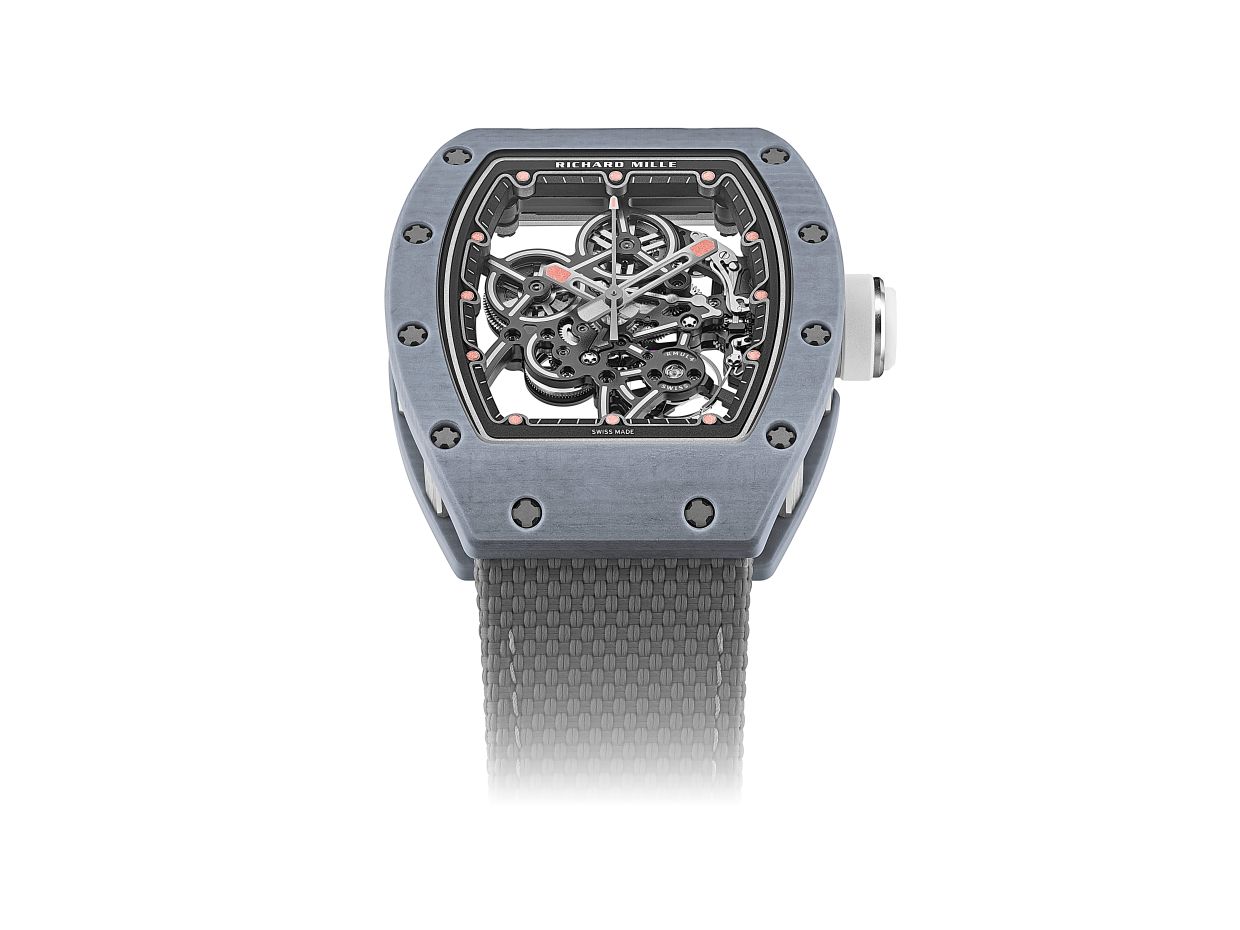
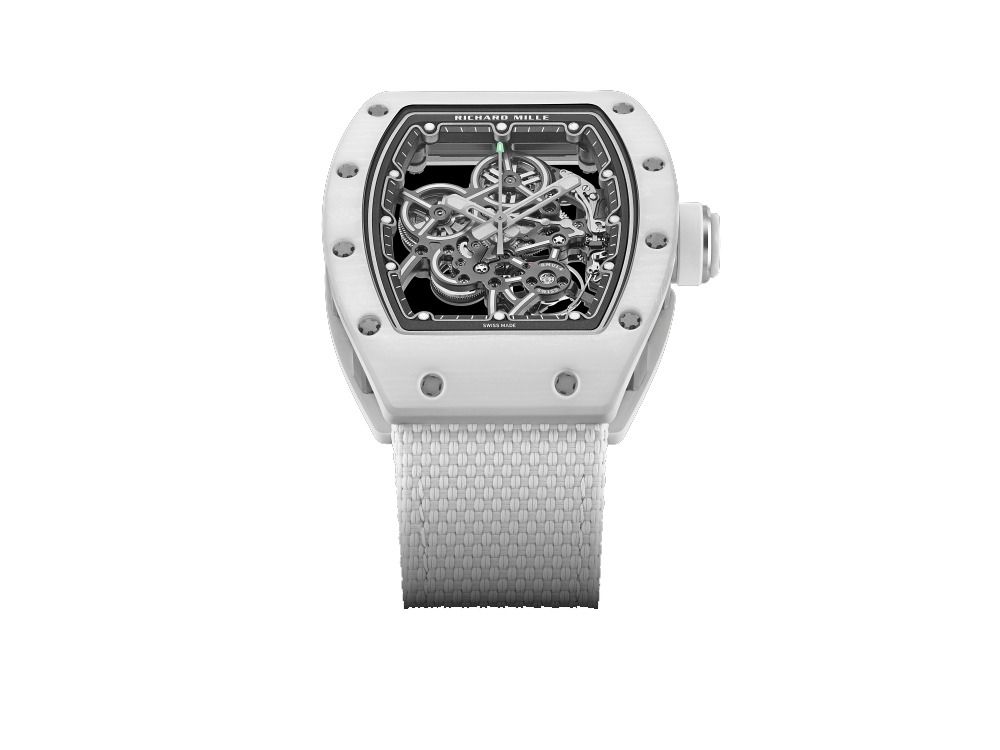
The RM 55-01 is offered in three distinct versions, each showcasing one of Richard Mille’s signature composite materials – Carbon TPT, White Quartz TPT and Grey Quartz TPT.
Their naturally layered, damascene-like patterns ensure that no two cases are exactly alike, lending every piece a unique visual character.
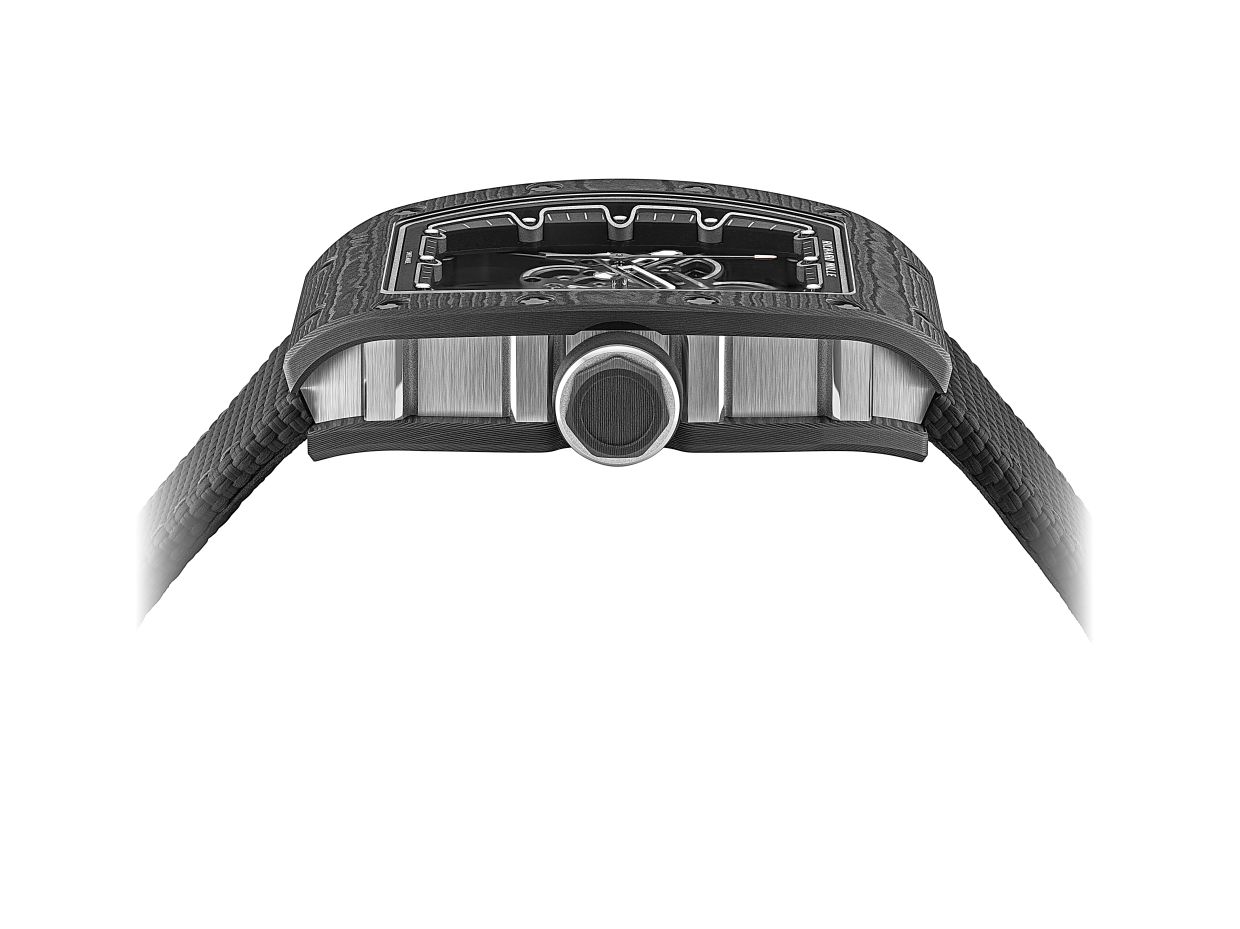
The sculptural three-part tonneau case measures a restrained 37.95mm by 47.33mm with a thickness of just 10.75mm, proportions that enhance both wearability and visual balance.
Completing the technical package is a grade 5 titanium crown fitted with a rubber collar, anti-reflective sapphire crystal on both the front and back, and water resistance up to 50m.
The case itself is assembled using 20 grade 5 titanium spline screws and abrasion-resistant 316L stainless steel washers, reflecting the meticulous attention.
The beauty of subtraction
Beyond these impressive qualities lies the RM 55-01’s greatest achievement.
For all its technical sophistication, the watch never feels over-engineered.
Instead, it presents a remarkable sense of visual calm, where empty space becomes an integral design element rather than an absence of material.
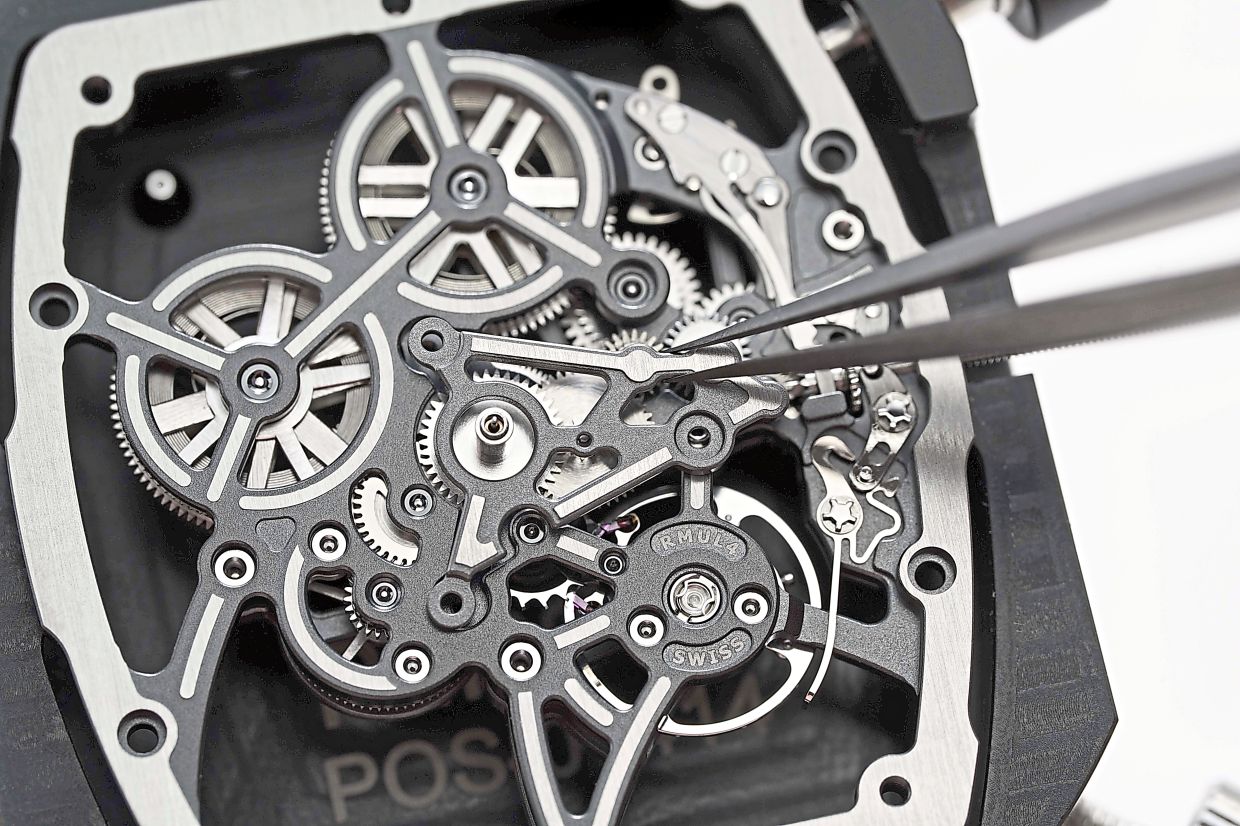
The skeletonised architecture allows the wearer to observe the measured rhythm of the balance wheel, the gradual release of energy from the twin barrels and the precise choreography of the gear train, each component working in harmony with the others.
In an age when luxury often equates to excess, Richard Mille continues to demonstrate that sophistication can also be found in subtraction.
The RM 55-01 Manual Winding is not just an exercise in lightweight engineering.
It boldly serves a compelling reminder that the beauty of haute horlogerie often lies not in what is added, but rather, what remains after everything unnecessary has been stripped away.