
Imagine calling your home (either by design or accident) and hearing yourself answer the phone.
Such a moment featured in (among other places) the 1970 Roger Moore film The Man Who Haunted Himself, and Shatterday, a Harlan Ellison story adapted as the opening segment of the 1985 Twilight Zone revival (directed by Wes Craven and starring Bruce Willis).
While the Moore movie was a bit of a mess (through no fault of Sir Roger, more memorable in the dual role than the rest of the feature), the TZ episode was a stunner in which a selfish, insecure man is slowly replaced in his own life – by a better version of himself.
Fast-forward 40-some years, and we have the K-drama Mousetrap, based on a webtoon called Field Mouse as well as a folktale about a rat that gains human form by eating someone's toenail clippings.
Adapted by writer Lee Jae-gon (A Model Family) and directed by Kim Hong-sun (Voice S1, The Age Of Blood), Mousetrap is certainly propulsively paced but tends to feel overstuffed with twists and "shocking" revelations.
Successful novelist Je Moon-jae (Ryu Jun-reol, The Night Owl and Alienoid movies), who became a highly medicated recluse after a family tragedy, has always depended on his best (only) friend Son Su-Hyun (Moo Jin-sung) to handle his money and all his personal matters.
When Su-hyun suddenly becomes uncontactable and strangers show up claiming that Moon-jae's plush apartment has been sold (apparently, by him), the shut-in is forced to step into the world beyond his door and find out what's going on.
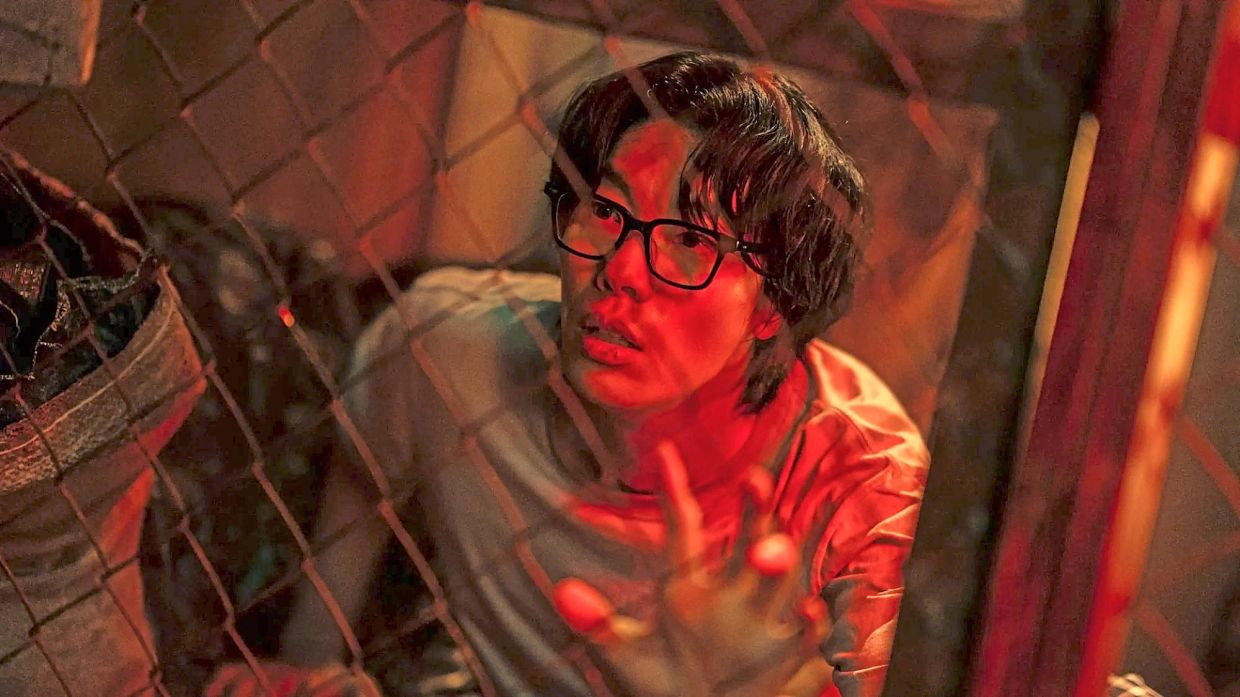
He soon realises that someone has been impersonating him and is steadily removing every way that he can prove he really is Je Moon-jae – to the extent that his own fingerprint can't even unlock his phone (dude, enable facial recognition, come on!).
A brutal complication shows up in the form of vicious fixer/loan shark No-ja (Sul Kyung-gu, the 2013 Hope, Kill Boksoon, The Merciless), who thinks Moon-jae absconded with stolen funds.
Suddenly dropped into the shady world of identity theft and erasure, our hapless "hero" has to dodge No-ja, other criminal types, and the police – in the form of detective Park Sun-yong (Lee Kyu-hyung, Prison Playbook, Voice S4's main antagonist), put on his trail by an anonymous tip involving an unidentified corpse pulled from a river.
As crowded as the playing field is here, Mousetrap must rise or fall on Ryu's strengths in the main (dual) role.
On that score, he delivers the goods as both the harried, desperate Moon-jae and the suave, self-assured double, "The Rat".
That overstuffed feeling does get in the way of making this a thoroughly satisfying watch, though.
For one thing, The Rat's manipulation of both the gangsters and police gets somewhat repetitive and drawn-out, culminating in a confusing, ineptly slapstick and credibility-defying search in a forest – it's a complete mess (hint: you'll know when the action gravitates to an abandoned, flooded building in the middle of nowhere).
And while Ryu goes above and beyond in pulling double duty, the character of Moon-jae – not just because he's an unreliable narrator, thanks to his medication-addled state, but simply from a human perspective – does not exactly engender sympathy from the viewer.
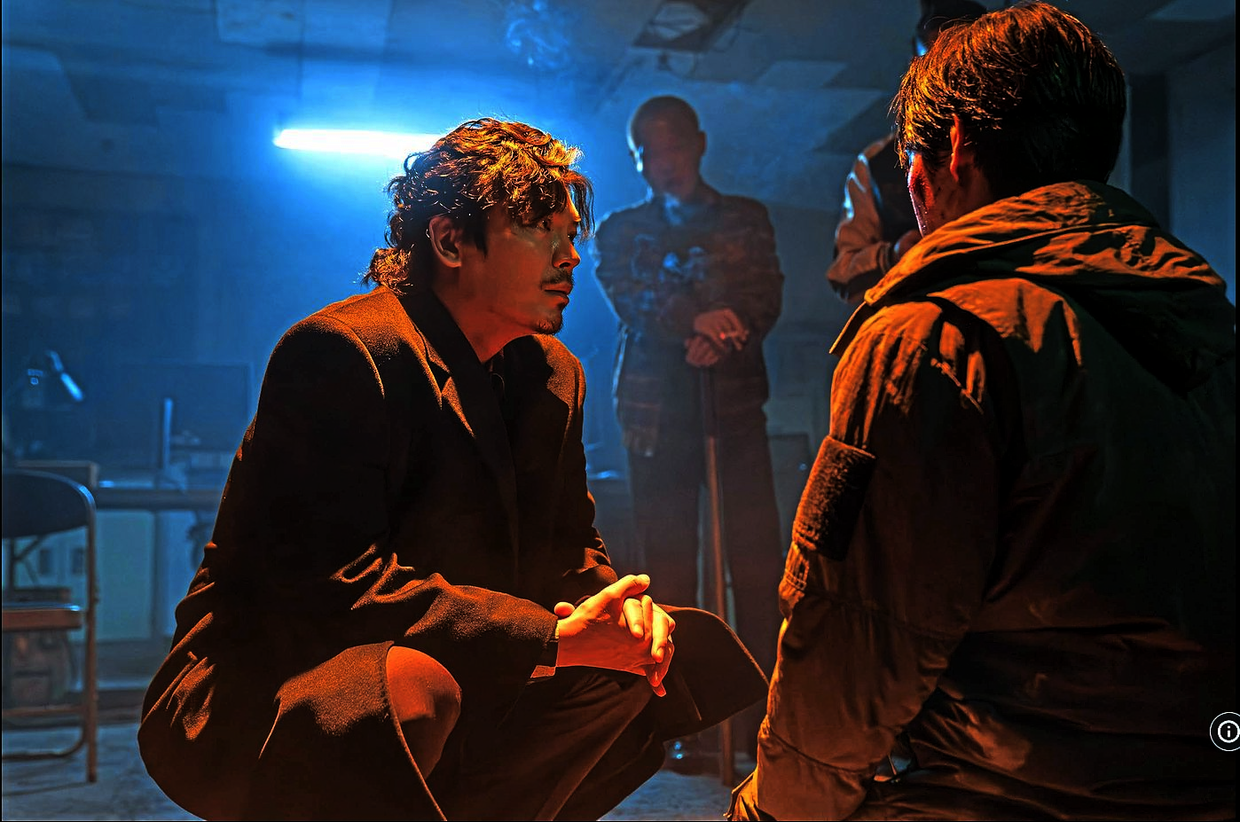
Far more surprising is how we gradually come to feel about No-ja – to borrow a line from Unforgiven, a known thief and murderer, a man of notoriously vicious and intemperate disposition.
He should be a completely unsympathetic, irredeemable jerk throughout, yet his interaction with Moon-jae somehow dredges that suppressed ember of humanity in him to the surface.
The series initially raises interesting questions about what defines our identity, and the human connections that anchor us in life, and how taking these for granted can bring us down some dark roads.
The path Mousetrap takes with its main character, however, gradually leads to a feeling of apathy towards Moon-jae at best, or outright antipathy, depending on how generous one is feeling at the time; and a gradual shift in favour of The Rat.
Ultimately, Mousetrap left me with mixed feelings – conflicted between applauding it for its audacity in storytelling choices, or lamenting its lack of sympathetic characters.
To paraphrase the closing narration from Shatterday: Consider Je Moon-jae, both victor and victim of a brief struggle for custody of a man's self, in a series that found an audience and lost a little of the plot... on a crowded battlefield, somewhere in the streaming zone.
Mousetrap is available on Netflix.
Summary:
Wake up, it's Duesday