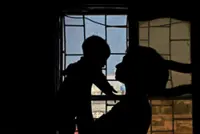
THE baby bouncing on Nesma’s lap has his mother’s smile and curious eyes, but nothing she says of the three paramilitary fighters who gang raped her two years ago in Sudan’s capital.
“I saw their faces. I remember them,” said the 26-year-old graduate.
Baby Yasser is one of thousands of children born to rape survivors during three years of fighting between Sudan’s army and the paramilitary Rapid Support Forces (RSF).
Nesma’s family fled Khartoum early in the war, but a year later she returned to retrieve birth, graduation and death certificates they needed to rebuild their lives.
RSF fighters stopped her bus in Khartoum North, ordered everyone out and separated the men from the women.
“I came to in the morning,” she recalled. “One of the men from the bus was shot dead on the ground.”
UN experts have accused the RSF of using systematic sexual violence as a weapon of war.
The trauma was so overwhelming that Nesma did not realise she was pregnant until five months later.
She almost gave up the baby.
“Then I just couldn’t let him go,” she said. “It’s not my son’s fault, just like it is not mine.
“I couldn’t handle the thought of him going through pain, or ending up in a bad home.”
The United Nations says rape is being used in Sudan as a weapon “of war, dominance, destruction and genocide”.
Sudan’s state minister for social affairs, Sulaima Ishaq al-Khalifa, says thousands of women have been assaulted, while many never report the crimes. Abortions, adoptions and births often go undocumented.
The stigma can be as devastating as the attack itself.
“Families have abandoned their daughters, husbands have divorced their wives who were victims of rape,” said UN special rapporteur Reem Alsalem.
“We’re revictimising ... and it’s not their fault.”
In the Darfur refugee town of Tawila, 20-year-old Hayat cradled her four-month-old son after being raped while fleeing the RSF assault on Zamzam refugee camp.
“I just want a better future for him,” she said. “I don’t want him to grow up like us.”
War has been fought on women’s bodies in Darfur for decades. Mass rape was among the crimes against humanity charges brought against the Janjaweed militias, from which the RSF later emerged.
Many women now face impossible choices. Some keep babies conceived through rape. Others seek abortions, often in dangerous conditions.
Gloria Endreo, a midwife with Doctors Without Borders, said some survivors arrived “already bleeding, after trying for unsafe abortions”.
She has treated hundreds of rape survivors in just two months.
“Some of them who gave birth, in spite of themselves, have that resentment and disconnection. They can’t show their babies love or attention. And then these women are forced to raise this child, a constant reminder of what happened to her.”
In Khartoum, another survivor, Fayha, cares for her five-month-old son alone.
“But of course he keeps me up all night,” the 30-year-old said with a weary laugh. “I have to be both mother and father.”
She was raped by a civilian while an off-duty army soldier stood guard with a gun.
“I was terrified he’d shoot me,” she said.
The UN says sexual violence by army personnel is underreported because victims fear retaliation, though observers distinguish it from what they describe as the RSF’s organised campaign of terror.
Fayha discovered she was pregnant at the end of her first trimester.
“Sometimes I get upset with him,” she admitted. “Recently I’ve started to feel more of a motherly instinct. But motherhood itself is just so hard.”
Women like Fayha and Nesma face another obstacle: obtaining birth certificates for children whose fathers are unknown or absent. Without them, children can struggle to access healthcare, education and social services.
Officials say emergency procedures exist, but bureaucracy and conservative social norms frequently stand in the way.
“What is going to be the legal status of these children?” asked the UN’s Denise Brown.
“It’s a long-term issue. How will they be cared for? What will this do to communities?”
In some cases, families reject both mother and child.
Khalifa recalled one 16-year-old girl whose mother took the newborn immediately after delivery.
“She scooped him up, handed him to us and said, ‘We’re not taking this RSF baby home.’” His mother never held him.
Others, however, quietly embrace the children.
Displacement has allowed some families to pass babies off as younger siblings or children adopted during the war, shielding mothers from stigma.
Even so, many adoptions happen informally, with little oversight, worrying aid agencies.
For Nesma, giving Yasser away was never truly an option. Now 14 months old, he is learning to walk.
His mother thinks only about finding a good job and giving him the future she believes he deserves.
“He deserves a good life,” she said, holding his tiny hands as he took another unsteady step. — AFP