



AFTER an Islamic State group affiliate attacked his farm, Mumbere Saidi fled to the gold mines in north-eastern Congo, trekking 320km across one of Africa’s most dangerous war zones.
He found backbreaking work in a remote mining town where he panned for gold.
When times were good, Saidi, 27, sent a few dollars back to the parents he left behind. When they were bad, he struggled to feed his wife and baby daughter.
At least he felt safe, until recently, when an invisible enemy struck Saidi inside his home.
“The disease got him,” said his brother Kondu Ganda, also a miner, using a common euphemism for Ebola in a town where many avoid the word.
Behind him, Red Cross workers in white protective suits removed Saidi’s body from their mud-walled home and carefully placed it in a coffin.
For over a century, gold has been the lifeblood of Mongbwalu, a remote hill town in Ituri province that draws people looking for work from across Congo and beyond. But now Mongbwalu is at the epicentre of the devastating Ebola outbreak sweeping the region, and gold is helping to drive it.
Experts now believe that the outbreak, already the third largest on record, began in Mongbwalu as early as February.
Yet authorities failed to detect it until May 15, in part because it was caused by a lesser-known virus, Bundibugyo, for which there is no treatment.
By the time a crisis was declared, the Bundibugyo virus had already been spreading for weeks through Mongbwalu’s gold mines, among men who work cheek by jowl in rough conditions, trading gold that often crosses nearby borders.
Now, they are falling sick and dying.
When Saidi fell ill in May, it first seemed to be malaria. As his condition deteriorated, increasingly desperate relatives carried him to six different clinics in search of a cure, his brother said. Nothing worked.
After his death, neighbours clustered quietly outside Saidi’s home, which is perched on a hillside amid banana groves and twisting paths. Five people had already died on their street, they said; word came through that a sixth had fallen ill.
“Another person has started bleeding up there,” Ganda said, pointing to a house.
Mongbwalu, in the Kilo-Moto gold belt, has long embodied the tragedy of Congo’s abundance.
Belgian colonists opened the town’s first mines over a century ago, using forced labour. Cycles of exploitation, corruption and conflict followed.
Under dictator Mobutu Sese Seko, the mines were badly mismanaged. After Mobutu was ousted in 1997, and Congo fell into turmoil, militias and warlords battled over Mongbwalu’s riches.
During one particular brutal period between 2002 and 2003, at least 2,000 civilians were killed in and around Mongbwalu, Human Rights Watch later found.
Now Mongbwalu is largely peaceful, even as ethnic conflict rages in the surrounding countryside, and most of the mining is done by small-scale miners who work the informal mines dotting the town’s edge.
Many come from other provinces of Congo, especially North Kivu, which itself suffered an Ebola outbreak between 2018 and 2020. But the lure of Mongbwalu is what is making it so dangerous.
The gold economy fuels a flow of workers, traders, prostitutes and smugglers from Congo and neighbouring countries.
Town authorities now believe that more than 80 people died from Ebola in the weeks before the outbreak was detected, and things have only gotten worse.
“We fear we are just at the start of our misfortune,” said Jean-Pierre Bikilisende, a former town mayor.
On the edge of town, gold seems to be everywhere. A winding path through tall grass leads to a wide stream, where dozens of men in mud-splattered clothes shovelled sediment.
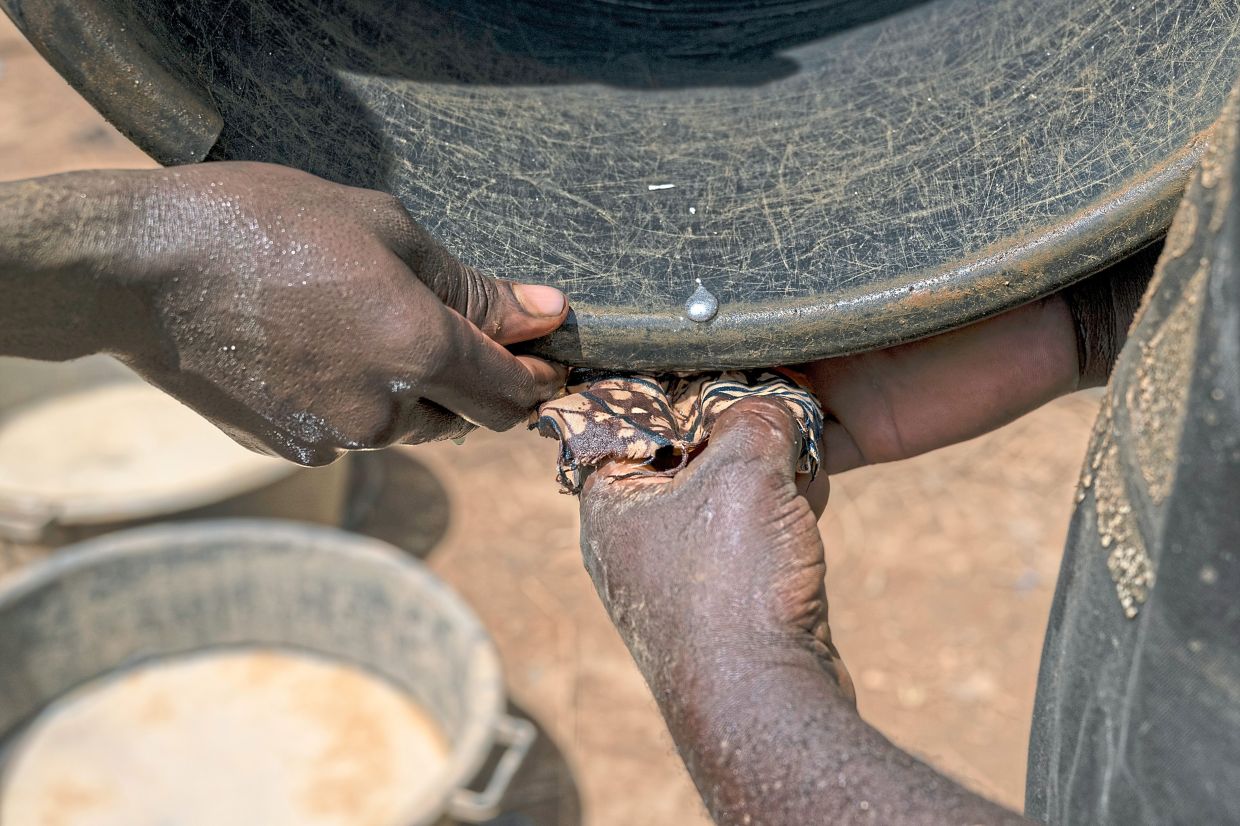
They sifted the sandy goop by feeding it into wooden sluices powered by clattering generators, then mixed it with mercury to extract gold nuggets.
Given the perils of the work and the threats many had fled, few said they were bothered by Ebola.
Bienvenue Bironyi, a miner from North Kivu, had heard that people were dying. But, he added, he did not know what precautions he could realistically take.
“We’re still working from morning to evening,” he said. “Nothing has changed.”
The pay is an indisputable factor.
Gedeon Abimana said he makes between US$136 and US$272 a week, depending on his team’s gold haul.
That is great money in rural Congo, although it comes with a considerable health risk: his job involves handling mercury with his bare hands, which can cause serious illness, including neurological damage.
Abimana shrugged. “What can we do? We have no choice but to work.”
Michel Anguma, a gold miner in rubber boots, downplayed the calamity.
Certainly, people are dying, he said as he strolled home after work.
“Just back there, I saw people going to bury someone,” he said. — ©2026 The New York Times Company
This article originally appeared in The New York Times

