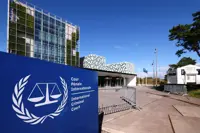
US President Donald Trump’s administration has announced its policy of seeking to dismantle the International Criminal Court (ICC).
This constitutes a blatant act of intimidation against an international tribunal of which many countries, including Japan, are members, and amounts to an attempt to destroy the “rule of law” that has underpinned the international order. The United States must withdraw this policy.
In a contribution to a US newspaper, US Secretary of State Marco Rubio argued that the ICC threatens US sovereignty by investigating US military personnel overseas and others, and stated that the US would dismantle the ICC by “using all the tools at our government’s disposal”.
Washington’s specific measures include plans to urge member states to withdraw from the ICC, and considering revoking visas and imposing travel bans on ICC personnel and others, and strengthening sanctions against the ICC.
The ICC was established in 2002 as an international court to try individuals who have committed war-related acts of brutality and other crimes.
When genocides occurred in Rwanda and the former Yugoslavia in the 1990s, the United Nations responded by establishing ad hoc tribunals after the fact. Subsequently, momentum grew for the establishment of a permanent court independent of the United Nations, leading to the creation of the ICC.
The US is not a member. However, it not only criticises an international organisation with 125 member states and regions but also now calls for its dissolution and plans to pressure member states to withdraw. This makes no sense.
The Trump administration’s true aim is likely retaliation for the ICC’s issuance of an arrest warrant in November 2024 for Israeli Prime Minister Benjamin Netanyahu in connection with the conflict in the Palestinian territory of Gaza.
In February 2025, the Trump administration, acting in support of Israel, signed an executive order to impose sanctions on the ICC, and has so far implemented sanctions against 11 prosecutors, judges, and others. This time, it has gone a step further, stating that it is considering expanding sanctions to the ICC itself.
If the ICC loses access to US banks and information and communication systems, it could become dysfunctional.
The impact would be immeasurable. The hopes of victims and others who are working to preserve evidence in anticipation of future justice would be shattered, and witnesses would likely remain silent. There is also the possibility of a cycle of personal retaliation against perpetrators and involved nations, or even acts of terrorism.
To prevent the rule of law from further sliding backwards, the ICC must be protected. Japan, in particular, is the largest contributor to the ICC’s budget, and Tomoko Akane serves as its president. Japan, therefore, bears a heavy responsibility.
It is not enough for the Japanese government to simply express its view that it “is closely monitoring the US position with concern”. Even if this is out of consideration for the Trump administration, such a stance could raise doubts about Japan’s diplomatic policy of prioritising the rule of law.
Japan should urge the United States to reconsider its position and reaffirm its support for the ICC. — The Yomiuri Shimbun/Asia News Network