
ANTONIO Salguero pored over the checklist on his laptop: eight extra security guards, radios for guards and staff, a specific catchphrase for emergency response.
The Jewish High Holy Days are the busiest time of the year for Salguero, who owns a company that handles security for Congregation Beth Israel, the largest synagogue in San Diego.
With thousands attending multiple special services, the logistics can get complicated.
The stakes of the work feel especially heightened these days.
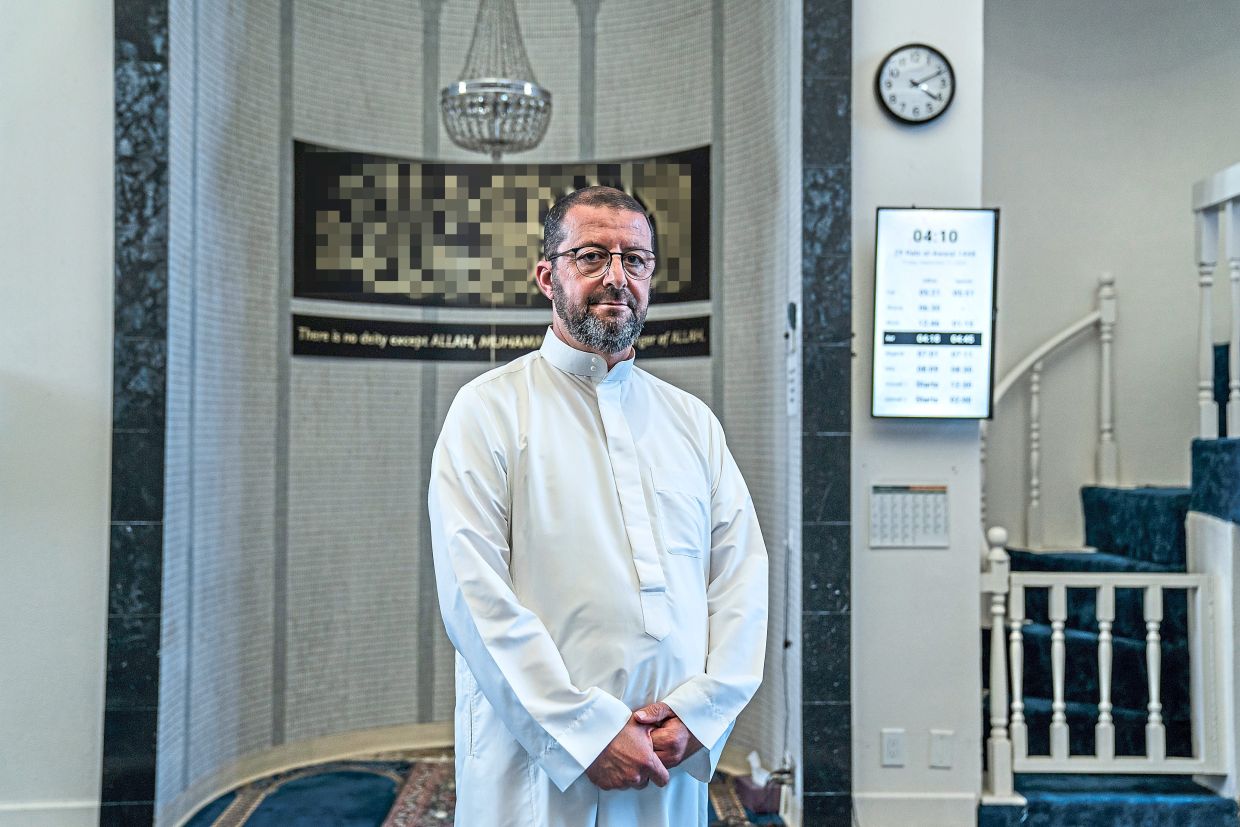
Threats against houses of worship, especially synagogues and mosques, are on the rise.
And a few months ago, two teenagers opened fire on the Islamic Centre of San Diego, the largest mosque in the region, killing three men. The shooters had also planned to attack a local synagogue.
“The risk is always there,” said Salguero. “But that shooting really hit home the reality.”
That attack resonated for people like Salguero because one of the men killed was Amin Abdullah, the security guard at the mosque’s front entrance.
Amin ensured the mosque went into lockdown and then confronted the gunmen. He died doing his job, protecting the worshippers inside.
There are some 1.3 million people working as security guards in the United States, more than the nation’s police and sheriff patrol officers, according to a report released this summer by the UC Berkeley Labour Centre.
Despite their ubiquity, they are often overlooked.
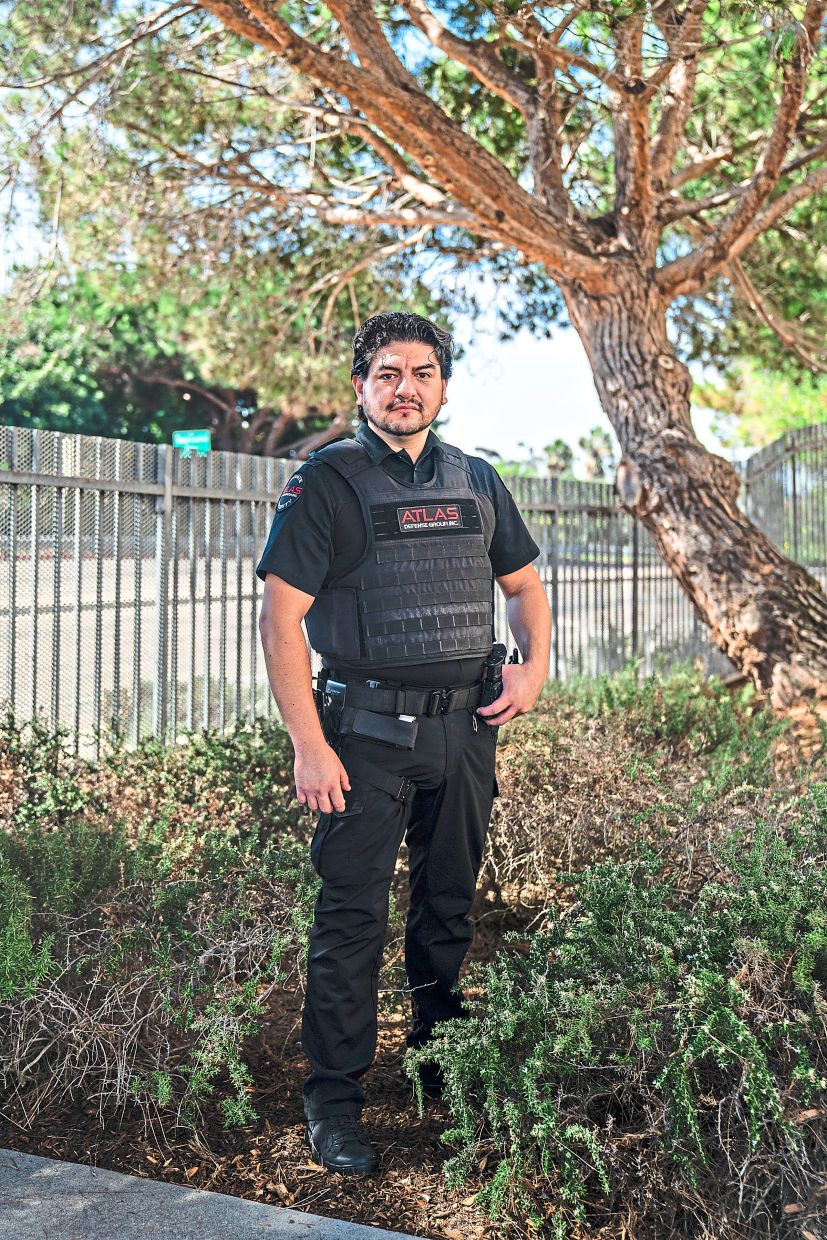
They wear suits or neatly pressed collared shirts. Some wear bulletproof vests and carry walkie-talkies.
They keep watch outside schools and hospitals, strip malls and construction sites.
Yet, security guards, some of whom are unarmed, have to de-escalate mental health crises, prepare for mass casualty responses and navigate many of the same complex situations that confront law enforcement – without the same levels of training, institutional protection or pay.
The private security market is a growing US$50bil industry, but security guards earn a little less than US$19 an hour – about 73 cents for every dollar earned by the typical US worker, according to the Berkeley report.
Most guards work for contract security firms and many don’t get health insurance through work.
The workforce is overwhelmingly male and around half is Black or Latino. Turnover is exceptionally high, a fact the Berkeley researchers attributed in part to low wages and poor benefits.
“They play a critical public safety role, but their wages and training have not kept pace with those responsibilities and risks with the job,” said Enrique Lopezlira, a labour economist at Berkeley and an author of the report.
There is no federal training standard for security guards. Roughly half of states set a minimum number of training hours for unarmed guards, which ranges from around four to 48 hours.
The Service Employees International Union (SEIU) has pressed for local and state legislation to improve conditions for guards, with mixed results.
In New York City, the killing of Aland Etienne, a security guard on duty during a 2025 mass shooting in midtown Manhattan, propelled action.
A law now mandates that armed guards in the city must soon make at least US$33.70 an hour and unarmed guards with certain training at least US$22.20.
In March, Baltimore city officials implemented a similar piece of legislation.
“Security work has become one of the most dangerous occupations in America, making this more than a workplace issue,” said April Verrett, president of the SEIU, in a statement.
“It’s a matter of life and death.”
In California, in the wake of the San Diego mosque shooting, state lawmakers doled out US$80mil in grants this spring primarily to faith-based groups so they could bolster security infrastructure.
But an effort to create the nation’s first statewide minimum wage for California’s estimated 330,000 private security guards faced strong pushback from the business community and was ultimately stripped of pay standards.
“Private security must remain affordable so our employees and customers are protected,” said Matthew Hargrove, president and CEO of the California Business Properties Association.
Recently, members of the SEIU-United Service Workers West voted to authorise a strike for 14,000 security guards in Los Angeles County and the Bay Area amid contract negotiations with major security companies. The tension led Anthropic, which uses one of the security firms, to ask employees to work from home, according to reports.
Taha Hassane, the Islamic Centre’s imam, was the last person to speak with Amin at his post inside the guard shack on May 18.
About 10 minutes later, Amin radioed to initiate the mosque’s emergency lockdown protocol and exchanged fire with the shooters, actions that the authorities say saved the lives of dozens of children and congregants gathered inside.
Amin was an independent contractor, who worked shifts at the centre where he was also a member.
Taha Hassane said the mosque had armed security for the last decade.
“We want this to be a welcoming place,” he said. “But it’s the world we live in.”
Rabbi Cantor Jeremy Gimbel of Congregation Beth Israel agrees.
“We have it because we need it,” he said of the security team, adding that congregants “breathe easier” when they see armed guards at the entrance. — ©2026 The New York Times Company
This article originally appeared in The New York Times
Already a subscriber? Log in
Get 20% OFF The Star Digital Access
Cancel anytime. Ad-free. Unlimited access with perks.