
TWO days after a catastrophic earthquake shook Nepal in April 2015, the US Agency for International Development (USAID)deployed a 128-member disaster response team to assess how it could help and pledged US$10mil in humanitarian aid.
The agency later provided tarp for shelters, helped build temporary schools out of bamboo and used mapping technology to help people find clean water.
But in the weeks after the country’s worst natural disaster since then – the flash floods set off by a glacial fall that left more than 5,000 dead or missing – the United States has dialed back, sending US$3.6mil to provide food for 10,000 households.
USAID is conspicuous by its absence.
Non-profit groups in Nepal that were funded by the US aid agency said they have had to shut down some of their programmes since the Trump administration gutted it early last year, making it harder for them to support relief efforts.
The difference in the US response to the earthquake and the floods was “night and day”, said Corey O’Hara, an international development expert based in Nepal who oversaw the closeout of a USAID programme last year.
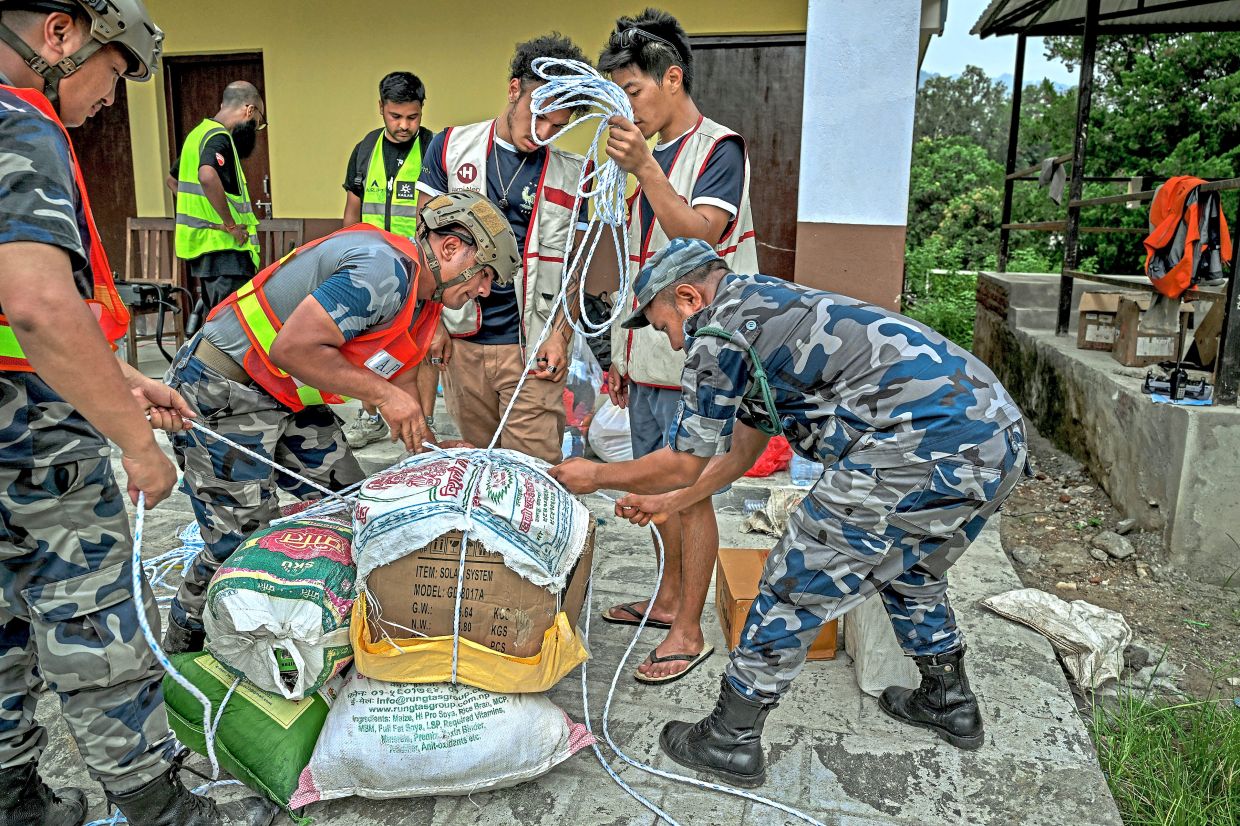
“The US had an incredibly important role from the start of that particular disaster,” he said. “At this point, the US response is invisible.”
Development experts and government officials highlighted a bigger issue.
The pullback by the United States from providing humanitarian and development assistance has had the effect of not just cutting off disaster aid but also shrinking the total pool of money available, a significant issue for an impoverished country that must rebuild towns, bridges, roads and schools, as well as care for thousands of displaced people.
Nepal’s finance minister, Swarnim Wagle, who was involved in the recovery after the 2015 earthquake, said that while USAID’s role in immediate relief would have been limited, the US retreat from international assistance has had a cascading effect on how other major economies view foreign aid commitments.
By dismantling USAID and pulling out of other international agencies and treaties, he said, the United States “seemed to have emboldened other rich countries to also follow a similar path”.
Nepal is one of dozens of countries suffering the fallout of US President Donald Trump’s decision to end USAID.
The agency’s grants helped international and local humanitarian groups do everything from administering vaccines to getting more children in school and mitigating the effect of climate change.
The State Department said in a statement that the US response to the floods in Nepal had been “fast, flexible and driven by conditions on the ground”.
The dismantling of USAID allowed the department to “use humanitarian partners to move resources far more quickly and more efficiently to communities in need”, it added.
In an email sent after this article was published online, Thomas C. Pigott, a State Department spokesperson, said two US military cargo aircraft delivered 5,000 “specialised disaster victim recovery supplies” and 500 first aid kits, among other equipment, to help Nepal in its search-and-rescue operations.
“Our disaster response has been based on requests from the government of Nepal,” Pigott said in a statement.
Nepal, an impoverished country vulnerable to natural disasters, has long relied on foreign aid and loans for development and rebuilding.
In 1951, the United States signed an agreement to support Nepal’s development through a predecessor of USAID, and it has given more than US$1.5bil in grants over the decades.
In recent years, the agency included climate change in its programmes, training people in how to handle natural disasters, from assessing their magnitude to participating in search-and-rescue operations.
In 2022, USAID signed a five-year agreement to give US$659mil to Nepal for economic development, but those projects have now ceased.
After the floods in late August, which killed more than 1,300 people and left at least 5,000 missing in Nepal and neighbouring Tibet, there are tens of thousands of survivors who need help: medicine, food, blankets, clothing and shelter.
The bill for long-term recovery – rebuilding bridges, highways, electricity poles, houses, schools and hotels – is still being tallied but will run into billions of dollars.
After the 2015 earthquake, Nepal needed more than US$7bil, much of which came from credit extended by the World Bank and others and which the country is still paying back.
Although Britain pledged around US$6.5mil in humanitarian assistance to Nepal after the floods, it announced last year that it would cut overseas development assistance from 0.7% of its budget to 0.3% to redirect money to defence and other domestic issues, starting next year.
The Japanese government pledged about US$8mil in emergency aid to Nepal in the immediate aftermath of the 2015 earthquake.
Following the recent floods, it promised about US$3mil.
The destruction from the floods is likely to be several times greater than that caused by the earthquake, said Govind Raj Pokharel, the former head of Nepal’s National Reconstruction Authority, which was established to oversee post-earthquake reconstruction.
“The paradox is that we have seen less interest from the international community in extending support,” he said. “The initial signs are not encouraging.” — ©2026 The New York Times Company
This article originally appeared in The New York Times
Already a subscriber? Log in
Get 20% OFF The Star Digital Access
Cancel anytime. Ad-free. Unlimited access with perks.