
IN the recent past, Malaysia has witnessed a disturbing rise in cases involving school-aged children falling from heights in schools, hostels and homes. Some survived with critical injuries, while others tragically lost their lives far too young and far too soon. The latest case involved a Form Two student in Sabah who was hospitalised after surviving a fall at school last week.
In the past month alone, a Form Four student died after falling from a secondary school building in Seremban, while a Form Five student lost her life after falling from an apartment building in Selayang.
These were not isolated incidents, with similar cases reported across the country over the past year. Some of these cases have been linked to bullying, peer pressure, mental health challenges or reactions to disciplinary action, while others remain unresolved.
Though the circumstances may differ, they share a common and troubling reality: young lives have been lost or placed in grave danger.
For those who survive, the physical and emotional scars may endure for years; for those who do not, the loss extends beyond a single family to a young life with promise, potential and possibilities that will never be realised.
These tragic incidents are a stark reminder that no community, school, family or demographic group is immune to the mental health challenges facing children today.
A growing challenge
Children are the future of our nation, while schools should be safe spaces nurturing their physical, emotional and intellectual development. However, the available statistics tell a troubling story: Institute for Public Health researchers found 7% of school-going adolescents had reported attempted suicide and more than 16% experienced bullying in 2017.
Importantly, the study found that students who experienced bullying were significantly more likely to report suicide attempts.
More recently, University Sains Malaysia researchers found in 2022 that the prevalence of suicide behaviour among school-going adolescents exceeded 17%, with nearly 12% experiencing suicidal thoughts and over 8% reporting suicide attempts.
These findings are consistent with the National Health and Morbidity Study 2023 reporting one in ten adolescents had attempted suicide.
The recent cases and research findings raise an urgent question: What is happening to the mental health of school children, and how can we support them better before more young lives are endangered?
Key risk factor
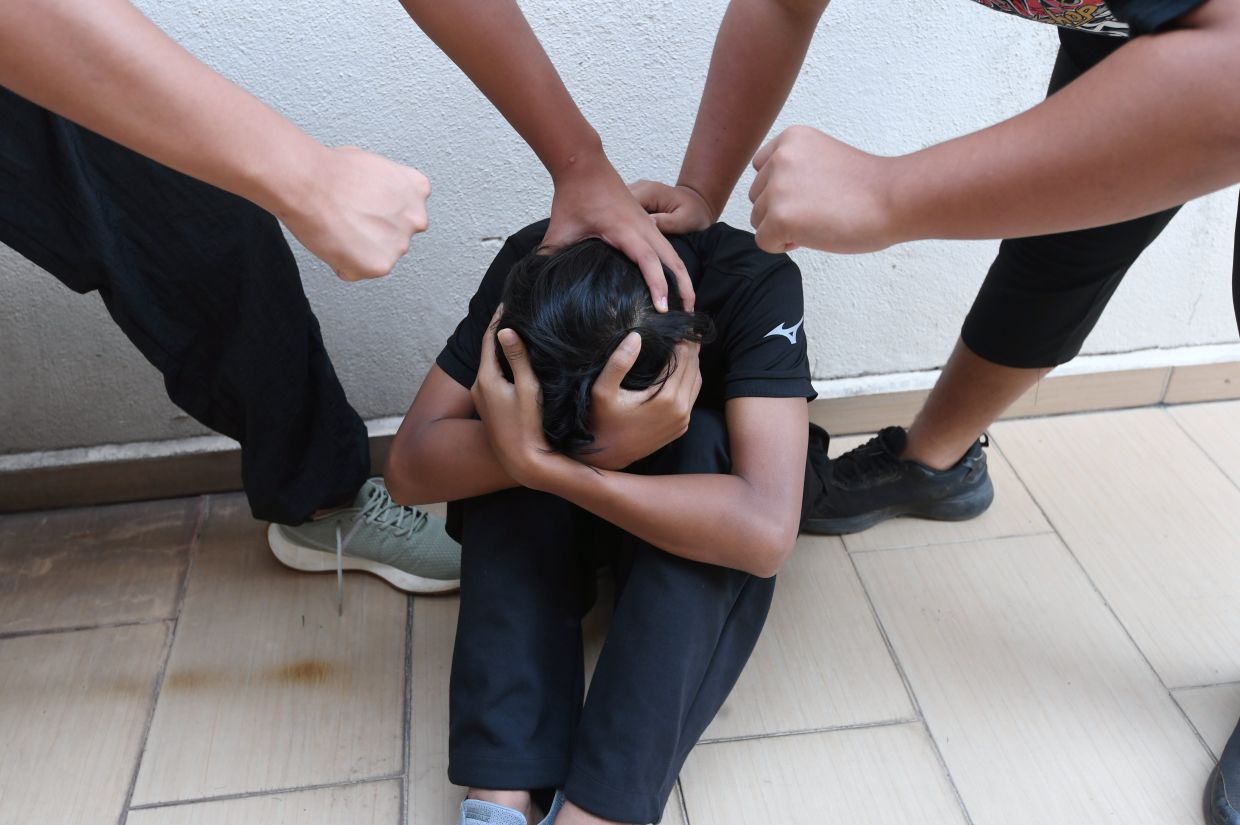
Bullying has long been recognised as a significant risk factor for poor mental health and suicidal behaviour among school children.

The ongoing inquest into the death of Zara Qairina, a Form One student who died after falling from a school dormitory in Sabah in July 2025, provides a glimpse into the extent of bullying that some children may face in school settings.
Witness testimony suggests that she was subjected to various forms of bullying, including abusive language, humiliation and social isolation both in physical and online interactions. The testimonies suggest a toxic environment in which senior students were able to summon their junior peers for disciplinary-style investigations that could be intimidating and embarrassing.
This tragedy reminds us that bullying does not have to be physical in causing harm.
In recent years, cyberbullying, such as harassment, stalking, gaslighting, exclusion and humiliation, has emerged as a growing threat to children in a wider public domain. These non-physical forms of bullying are often invisible from parents, teachers and peers, making the warning signs more difficult to recognise and leaving many children suffering in silence.
Significant stressors
Bullying does not occur alone and many children face a range of other mental health stressors.
Through my work with mental health services and helplines, I have observed that some of the most common challenges facing young people arise from conflicts in relationships with friends and family, struggles with identity and belongingness, and academic pressure due to homework and examinations.
School children are also navigating significant physical and emotional changes during a vulnerable stage of their development.
In addition to their own struggles, children are increasingly exposed to stressors affecting the adults around them, including rising living costs, financial pressures and health concerns.
They are also constantly exposed to negative news ranging from natural disasters to global conflicts. Though children may not fully grasp the complexity of these events, they are affected by the fear and uncertainty that surround them.
Building better support for children
Bullying and other mental health stressors can leave children feeling overwhelmed, vulnerable and powerless. Over time, these experiences can intensify feelings of anxiety, worry and helplessness, while increasing the risk of depression and other mental health conditions.
Given help-seeking remains a significant challenge and many children do not reach out for support, what can we do to help them?
> Emotional literacy: First, we need to strengthen mental health awareness among children by helping them understand and identify their emotions, recognise early signs of distress and seek help before challenges escalate into a crisis. Such education should be age-appropriate, practical and integrated into everyday school life.
For example, children can be taught to recognise common signs of stress, such as a racing heartbeat or butterflies in the stomach, and develop simple coping strategies such as deep breathing and relaxation techniques.
This can also help children label their emotions, build emotional resilience and develop the emotional intelligence to recognise how their words and actions affect others.
Mental health education should also foster empathy, kindness and compassion, helping to support victims and prevent bullying.
These specialised programmes should be delivered through dedicated school counsellors with the support of external mental health providers and community organisations, without placing additional burdens on teachers.
> Professional support: Second, we need to make mental health services more accessible, approachable and responsive to the needs of school children. This will require separating counselling from disciplinary functions within schools. Students should view counselling as a safe source of support and wellbeing, not as part of the school's disciplinary framework.
Strengthening school-based mental health services will require investment in both dedicated counsellors and appropriate counselling facilities. Schools need dedicated counselling spaces that provide a sense of calm, safety and belonging, something that is difficult to achieve in an environment associated with discipline and punishment.
In addition, we need to expand access to online mental health support for children, including child-safe digital mental health services, online counselling platforms and chat-based support services that make it easier for young people to seek support when they need it.
> Trauma awareness: Third, we need to adopt a whole-school approach to mental health that supports dedicated counsellors in promoting the emotional wellbeing of students, particularly for those affected by trauma arising from bullying and other mental health stressors.
Teachers and parents have an important role to play in creative safe, supportive and inclusive environments for children. School counsellors can help develop trauma-awareness programmes for teachers and parents with the support of external menta health providers and community organisations.
It is important to distinguish these programmes from counselling services so as not to place additional burdens on teachers, highlighting their role is not to provide counselling services but recognise early warning signs of distress, offer a compassionate response and make timely referrals where necessary.
These initiatives should be accompanied by specialised programmes strengthening the emotional resilience and wellbeing of teachers, which would also contribute to a more healthier school environment.
At the same time, a more trauma-sensitive approach in schools will need for a re-examination of disciplinary practices such as caning, which research has shown to be both ineffective and potentially harmful to children's psychological wellbeing.
Warning call
The recent deaths of students are a tragic reminder that we must revisit how to address the mental health and wellbeing of children, particularly through emotional literacy, professional support and trauma awareness in schools.
This crisis also presents an opportunity to strengthen mental health support in schools. Schools can serve as one of the most important platforms for building resilience, promoting emotional wellbeing and encouraging help-seeking behaviours among young people.
This will require sustained investment by the government in dedicated counsellors, counselling facilities and mental health programmes within schools, alongside stronger partnerships between school counsellors, external mental health providers and community organisations to optimise resources and build collective resilience.
Such investments are for the future of our nation. The children we support today will shape the wellbeing, productivity and social fabric of Malaysia for generations to come.
Dr Arman I. Rashid is a Kuala Lumpur-born, Melbourne-based mental health practitioner, trainer and researcher. The views expressed here are solely the writer’s own.