IN 2025, I spent three months in Japan researching the portrayal of the Asia-Pacific War in museums across the country under a research fellowship at the Japan Institute of International Affairs (JIIA).

Despite knowing the contestations over Japanese war memories and its spillover effects in the realm of international relations, I submitted a proposal showcasing my longstanding interest in war memories.
Some had warned me not to get my hopes up, given that my topic would likely be perceived as concerning, as well as the fact that past researchers selected for the programme had focused on maritime security and international relations. The next thing I knew, I was on my flight to Tokyo with two suitcases in tow, scarcely able to believe my good fortune.
Not once, when I was in university learning about the history textbook controversies in Japan or researching how the Japanese Occupation was remembered in Malaysian history textbooks, did I imagine that I would be selected to embark on a fully funded research fellowship in Japan.
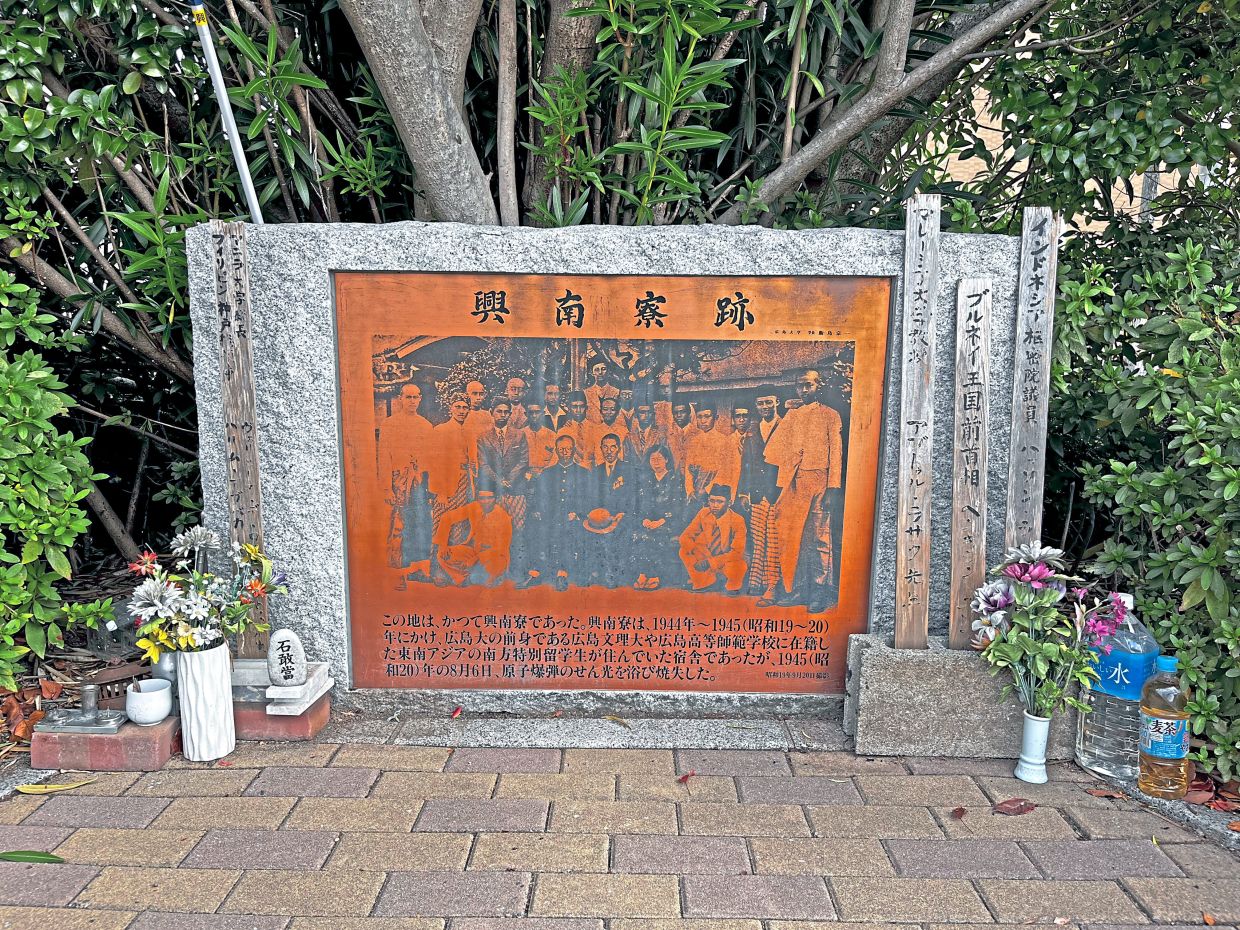
The next three months were spent in a whirlwind of museums, footpaths, flights and bullet trains. In between the engagements organised by my host institution, I visited museums and memorials relating to the Asia-Pacific War across Tokyo, Okinawa, Hiroshima, Nagasaki, Osaka, Kyoto, and Nagoya.
Given the sensitivity of my research topic, I had expected my host institution, which is funded by the country’s Foreign Affairs Ministry, to place guardrails over my topic. I was to learn a few weeks after my arrival that there had been concerns that I was a communist or a mainland Chinese agent before I was accepted into the programme.
In some of my conversations with government officials and academics, I encountered defensiveness, such as comments that the Nanjing Massacre death toll had been exaggerated by China (while missing the point about the senseless violence to begin with), citing the official apologies made by various Japanese prime ministers (the Murayama Statement being the most prominent) and the Asian Women’s Fund that provided monetary compensation for the comfort women.
In a more extreme case, a non-Japanese researcher recommended I read a book titled The Comfort Women Hoax, which made clear the extent to which people in Japan could go to denying the atrocities committed during the war.
After becoming increasingly perturbed while navigating unspoken boundaries, a professor I met in Tokyo with links to the Japanese government explained that despite the presence of liberals sympathetic to the issue within my host institution, their greatest fear would be the ultra-conservatives – many of them high-ranking and influential with views in line with revisionists – would call them up to berate them for allowing me to research unacceptable topics.
The comfort women issue was number one on the list of concern.
With that in mind, I was conscious of not inconveniencing my hosts, which shaped how I approached my research topic: carefully and uncontroversially. Nevertheless, there were people who were supportive of my choice of topic, and encouraged me to go further than my self-imposed arrangements.
At Kanazawa University, I was asked by a professor to be more critical of the Japanese approach in my presentation on war memories in Japan and Singapore, given the liberty of speech accorded to me in academia. Given that my presentation had been vetted by my host institution, I found myself – for the first time in my early career – torn between my benefactor and the demands of academia that required me to tell it like it is.
The professor I met in Tokyo had also shared his thoughts that given how the Japanese haven’t apologised properly with a proper understanding of what was done during the war, there is not much reason for the South-East Asians to have forgiven them.
Given that these people – and others who were insistent I tell Japanese people about the wartime conduct of the Japanese army – had spent significant time outside of Japan, points to the lack of the knowledge and narratives dealing with the war within Japan.
Many of those who were of the same generation as me told me that their history textbooks did not teach much about how the Asia-Pacific War affected the countries outside of Japan. Those academics who had left Japan for overseas placements shared that they would never have known the full extent of the Japanese army’s actions across Asia if not for their stints in places like Singapore and Australia.
Leaving Japan for the rest of Asia and immersing themselves in the literature, it seemed, was a prerequisite for reshaping their views of Japanese conduct during the Asia-Pacific War.
The accusation that historical amnesia in Japan was rampant is quite founded, especially when considering how the historical narratives in Japanese museums centre around the experience of the war in Japan (atomic bombing, air raids, Battle of Okinawa). Coupled with the fact that most Japanese are monolingual, this situation creates an echo chamber that is only pierced when people leave the country.
The experiences of other countries were not represented prominently in official mode of commemoration. For instance, South-East Asia was mentioned in the context of the tropics where their soldiers suffered immensely in the tropical climate and from tropical diseases such as malaria.
Nevertheless, my main surprise while doing fieldwork was the diversity of narratives. The Japanese government, I soon realised, did not shut down museums covering controversial topics; there were many private spaces across Japan dedicated to remembering difficult topics, such as whether the war was necessary, the Korean forced labourer issues or the comfort women issue.
They existed side-by-side with museums that sidestepped questions of wartime conduct by the Japanese imperial army. The main overarching theme uniting them all was a culture of mourning and ‘never again’, peace at all costs.
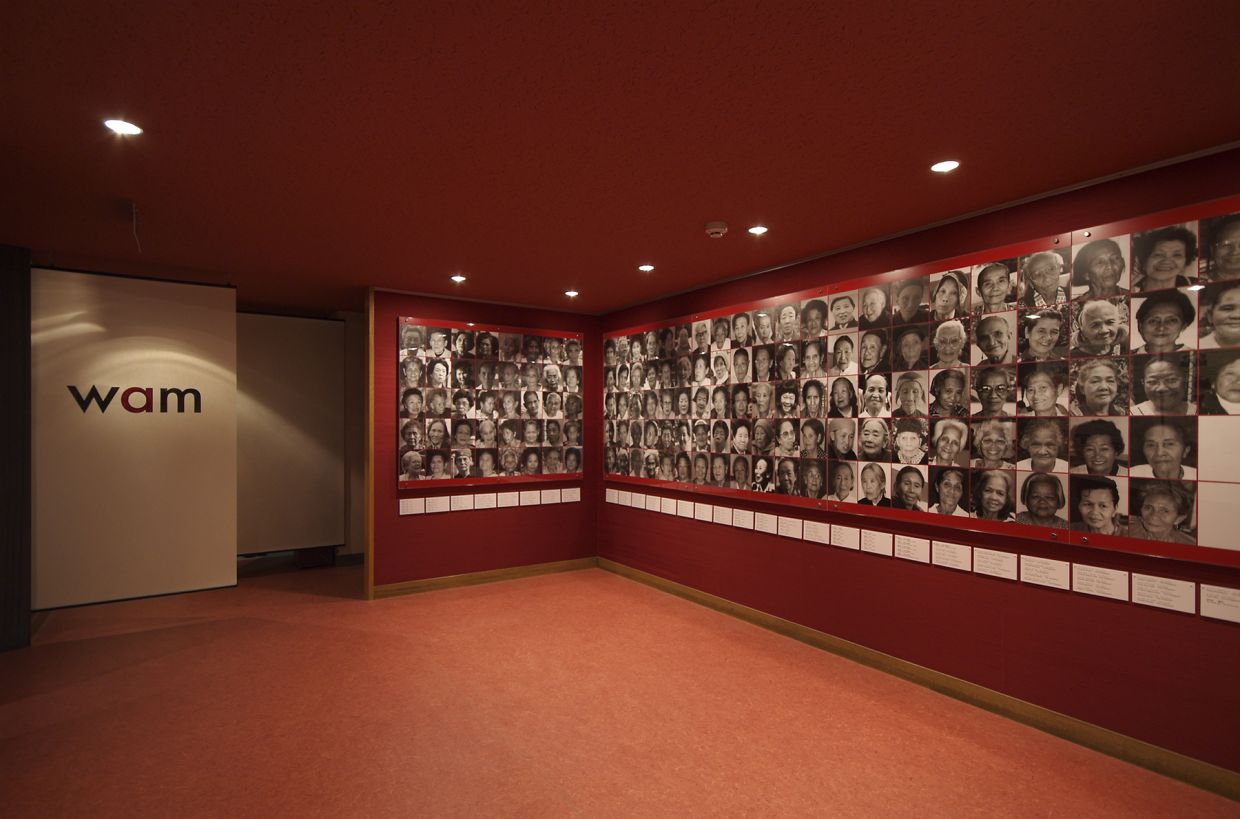
But perhaps there is reason to hope. One rainy Friday afternoon, I visited the Women’s Active Museum on War and Peace, a small, privately managed museum in Tokyo dedicated to documenting the comfort women’s experiences and trial proceedings in Japanese, standing in defiance of the spirit of historical revisionism.
At first, it was just me and another Japanese female researcher scribbling in our notebooks. However, soon the seats placed in front of the twenty-odd posters were occupied by various Japanese men around their twenties, all clutching Japanese pamphlets and respectfully perusing the displays before them. Right before I left the museum, I was shocked to discover that some of them were availing themselves of the books and court documents in the small library next to the displays.
I was heartened to see members of the younger generation in Japan choosing to spend a rainy weekday afternoon actively learning about the comfort women issue; even with that overarching approach to historical revisionism, it has not stamped out the flames of the people who see value in remembering the experience, nor has it stamped out the curiosity of the younger generation eager to familiarise themselves with unsanitised recounting of histories.
Familiarising oneself with uncomfortable truths, I believe, is the first step towards lasting reconciliation, and I found members of the younger generation doing that on a rainy weekend afternoon in Shinjuku.
Research analyst Wong Sook Wei honed her investigative skills with The Star’s BRATs programme. The views expressed here are solely her own.