A ROBUST Freedom of Information (FOI) Act is “long overdue in Malaysia”, Malaysian Bar president Anand Raj says, stressing that greater transparency could have funda-mentally altered the trajectories of past accountability crises, tragedies and disasters.
“It will undoubtedly stand as our strongest systemic infrastructural improvement in governance and the prevention of corruption,” he adds, noting that having an FOI Act is also a core requirement under Goal 16 of the United Nations Sustainable Development Goals, to which Malaysia is a signatory.
Anand welcomes the recent discussions at the Forum on Freedom of Information, which was jointly organised with the Centre for Independent Journalism. He describes it as “a vital platform to address the urgent need to establish a pragmatic, effective and federal-level FOI framework in Malaysia.”
“Transparency in governance is the foundational hallmark of a civilised, functioning democracy; secrecy remains anathema to the rule of law,” he states.
Anand recalls Pakatan Harapan’s 15th General Election Action Plan promise to enact an FOI Act to limit the application of the Official Secrets Act 1972, with exemptions determined by a Parliamentary Committee rather than left to ministerial discretion.
He also stresses that “an FOI Act cannot operate in a legal vacuum”, calling for a comprehensive legislative overhaul to override or repeal restrictive legacy statutes dating back to colonial times.
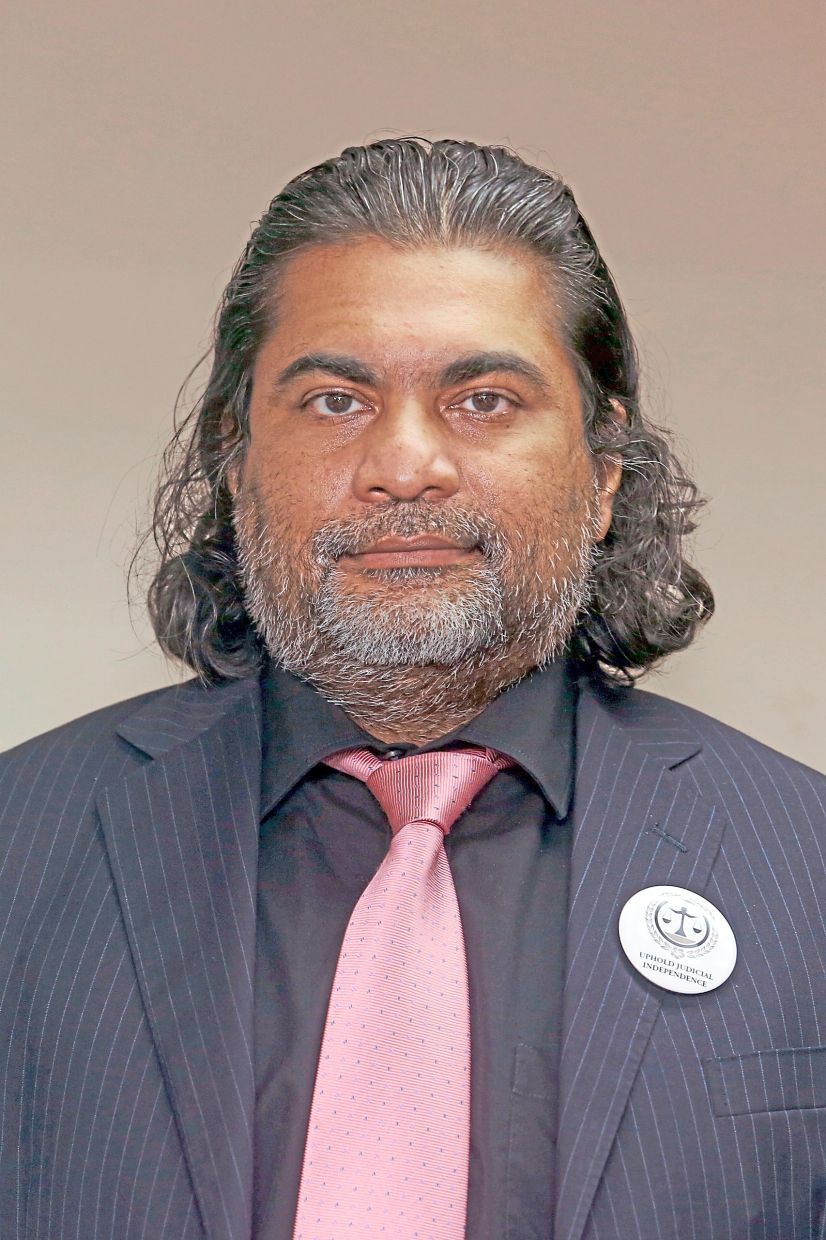
Anand insists that international standards, such as the Unesco-adopted Right to Information Rating Methodology, must form the bedrock of the new law.
Among the key principles outlined were that “every citizen has easy access to government information without exorbitant fees”, that applicants “must not be required to provide justifications for their requests”, and that decisions must be rendered “swiftly within a maximum one-month timeframe or less”.
Exemptions, he adds, must be narrow and subject to a rigorous “harm test”.
Anand also calls for an autonomous oversight body structured in line with the Venice Principles, annual compliance audits across public authorities, and proactive publication of information updates every three to six months.
“Ensure comprehensive protection for whistleblowers to foster an institutional culture of accountability,” he says, while warning that statutory sanctions should apply to public officers who obstruct access or destroy documents.
“The Malaysian Bar urges the government to walk the talk, entrench the right to FOI, adopt the highest watermark of compliance and governance, and avoid a mere perfunctory political exercise that misses its mark.”
Meanwhile, during the forum, Prime Minister’s Department Legal Affairs Division (Policy and Development) deputy director- general Datuk Dr Punitha Silivarajoo says the completed draft of the FOI Bill is currently awaiting Cabinet approval.
“But I don’t know how ideal the Bill is going to be in the eyes of the people. I think one important element is balancing. You have, of course, everyone wanting information to be out there. You talk about proactive disclosure, for example, and then you talk about the rights, constitutional rights, of the people to get information.”
At the same time, Punitha says convincing states and civil servants to support the FOI Bill was a “big hurdle”.

She says at least five states, at the time of briefing before com-pletion of the draft Bill, were reluctant to do so.
“When we first introduced the idea of freedom of information, that did not go down well. They were sceptical because every-thing was viewed as being reserved under the Official Secrets Act,” Punitha says, adding that ideally, amendments to the OSA should follow suit to avoid conflicts with the FOI Bill.
In response to a question, she said the ideal FOI Bill would be one that balances the needs of the government while ensuring information is disclosed to the public with minimum restric-tions.
“Minimum restrictions. That is something that I think is ideal. After all, information belongs to the people.”
Punitha also says that following the drafting of the Bill, there needs to be an oversight body to look into its implementation.
“We are looking at the ombud-sman to be the oversight body – how is the ombudsman going to function with reference to FOI? That is something for us to look at.
“The other thing is for it [the information application process] to be timely. You know, when you request for information, how soon can you get your information? That’s very important.”