
AFTER polishing off four helpings at a hotel buffet and sampling food from a roadside stall in Lesotho, Adam Ho brushed off the stomach discomfort that set in shortly after.
The pain soon became so severe that he ended up spending more time in toilets than taking in the sights of the African nation.
Looking back, he says he learnt an important lesson from the ordeal: “Remember to always eat at the hotel buffet at least one hour before going out, and stop at two servings.”
Ho’s experience is far from unique.
According to IMU University deputy vice-chancellor (Research) Prof Datuk Dr Lokman Hakim Sulaiman, between 30% and 50% of international travellers will fall ill or sustain an injury while overseas.
Yet despite Malaysians making 66.6 million outbound trips in 2025, Health Minister Datuk Seri Dr Dzulkefly Ahmad said a local study found that only 40.5% sought medical or health advice before travelling, while just 52.8% received pre-travel vaccinations.
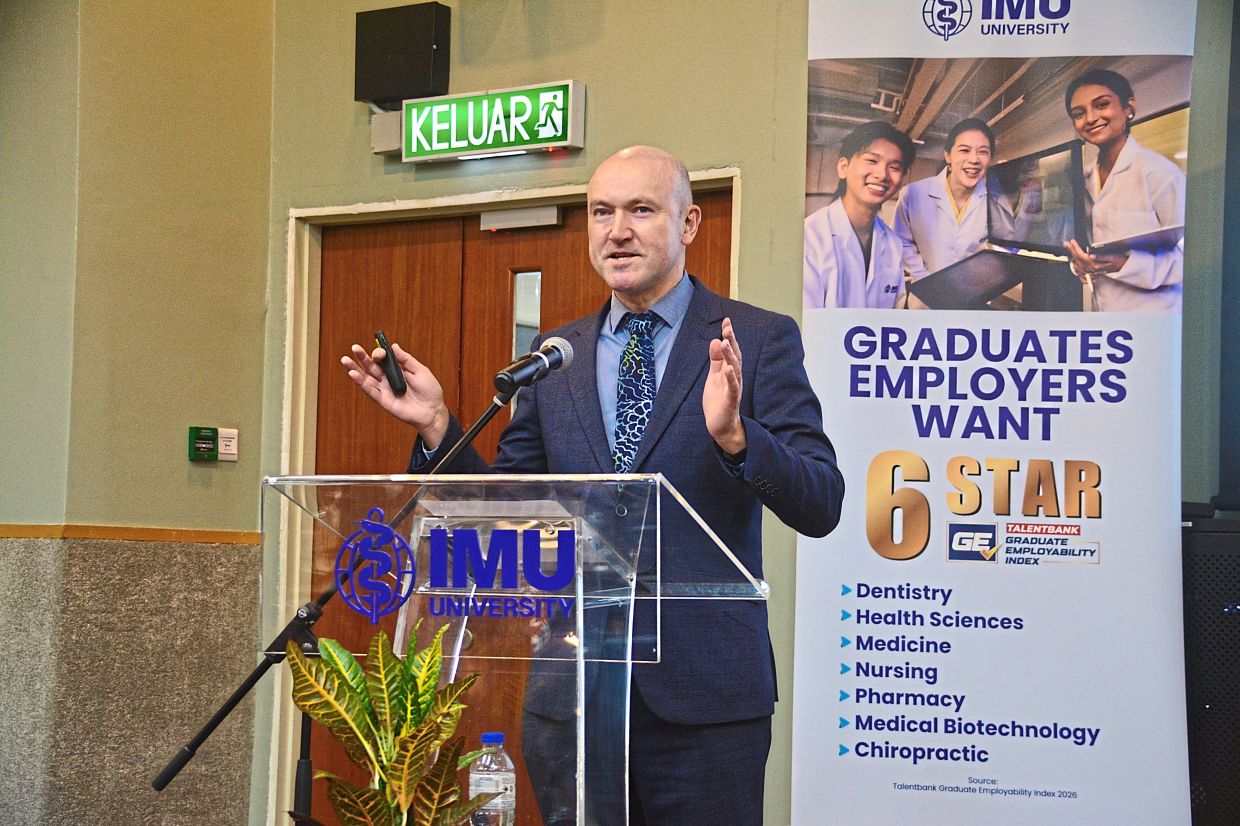
He was speaking at the 2nd IMU University Travel Medicine Seminar 2026 recently. Themed “Connecting Stakeholders for Healthy International Travel”, the seminar was organised by the IMU University in partnership with the Malaysian Medical Association, Malaysia Healthcare Travel Council, Malaysian Pharmacists Society, Malaysian Association of Tour and Travel Agents (MATTA), and the Association of Private Hospitals of Malaysia to discuss the evolving role of travel medicine in protecting travellers and strengthening Malaysia’s public health preparedness amid increasing global mobility and emerging infectious disease risks.
As Malaysians travel further and to increasingly diverse destinations, experts say understanding destination-specific health risks has become more important than ever.
While many travellers spend weeks comparing airfares, planning itineraries, and deciding what to pack, experts say far fewer spend time preparing for the health risks they may face abroad.
That preparation falls under a specialised field known as travel medicine, which focuses on helping travellers identify and reduce health risks before they travel overseas.
Contrary to popular belief, however, travel medicine extends well beyond vaccinations.
A pre-travel consultation considers a traveller’s destination, the length of the trip, planned activities, existing medical conditions, and even healthcare access at their destination before recommending ways to minimise potential health risks.
“The advice is the most important thing. Vaccines are actually secondary because many infectious diseases when you travel abroad don’t have a protective vaccine yet,” says Dr Gerard Flaherty, a professor of travel medicine and international health at the University of Galway in Ireland.
He stresses that pre-travel consultations should focus on helping travellers understand the risks specific to their itinerary rather than simply administering vaccines.
After all, the advice given to someone spending a week shopping in Tokyo, for instance, may differ significantly from the advice given to someone trekking through Uganda, diving in Indonesia, or performing the haj in Saudi Arabia.
“One size does not fit all,” Dr Flaherty says, noting that pre-travel advice should be tailored to each traveller’s itinerary and individual health needs.
Such consultations can cover everything from food and water safety, insect-borne diseases, and extreme weather to managing chronic illnesses overseas, understanding local healthcare systems, and knowing what to do should a medical emergency arise.
Jabs must be tailored, too
Vaccinations remain an important part of travel preparation, but experts stress that recommendations differ depending on the traveller’s itinerary.
Routine immunisations should first be brought up to date before considering destination-specific vaccines, says Dr James Koh Kwee Choy, a professor of internal medicine and infectious diseases at IMU University.
As with the advice given to travellers, recommended vaccines should also be tailored to every individual based on their travel plan.
“What activities they’re doing also determines what kind of vaccines they’ll need,” he says.
Koh recounts how patients sometimes arrive convinced they need a yellow fever vaccination, only for a discussion about their itinerary to reveal that they do not.
For example, travellers heading to South Africa often assume they need the vaccine simply because they are travelling to Africa.
However, whether the vaccination is required may depend on seemingly small details such as where they are travelling from and even how they transit through countries where yellow fever is present.
The timing of the vaccinations is just as important, Koh adds, as many vaccines require time before they provide adequate protection, while others involve multiple doses administered over several weeks.

As such, it is recommended to seek pre-travel advice several weeks before departure whenever possible, rather than waiting until a few days before boarding a flight.
The familiar dangers
But while diseases such as yellow fever or malaria often attract the most attention, experts say travellers are far more likely to encounter much more familiar health problems.
“People think of Ebola, they think of malaria.
“But the most common complaints we receive from travellers, especially on the first day of a trip, are one of two things: diarrhoea or constipation,” says MATTA president Nigel Wong.
Dr Flaherty also says gastrointestinal illnesses remain among the most common travel-related health problems, particularly when travellers are exposed to unfamiliar food, water ,or hygiene conditions.
Rather than avoiding local cuisines altogether, he says travellers should take sensible precautions, including paying attention to food hygiene and drinking safe water.
Fortunately, many of these conditions can be managed with prompt treatment and good preparation.
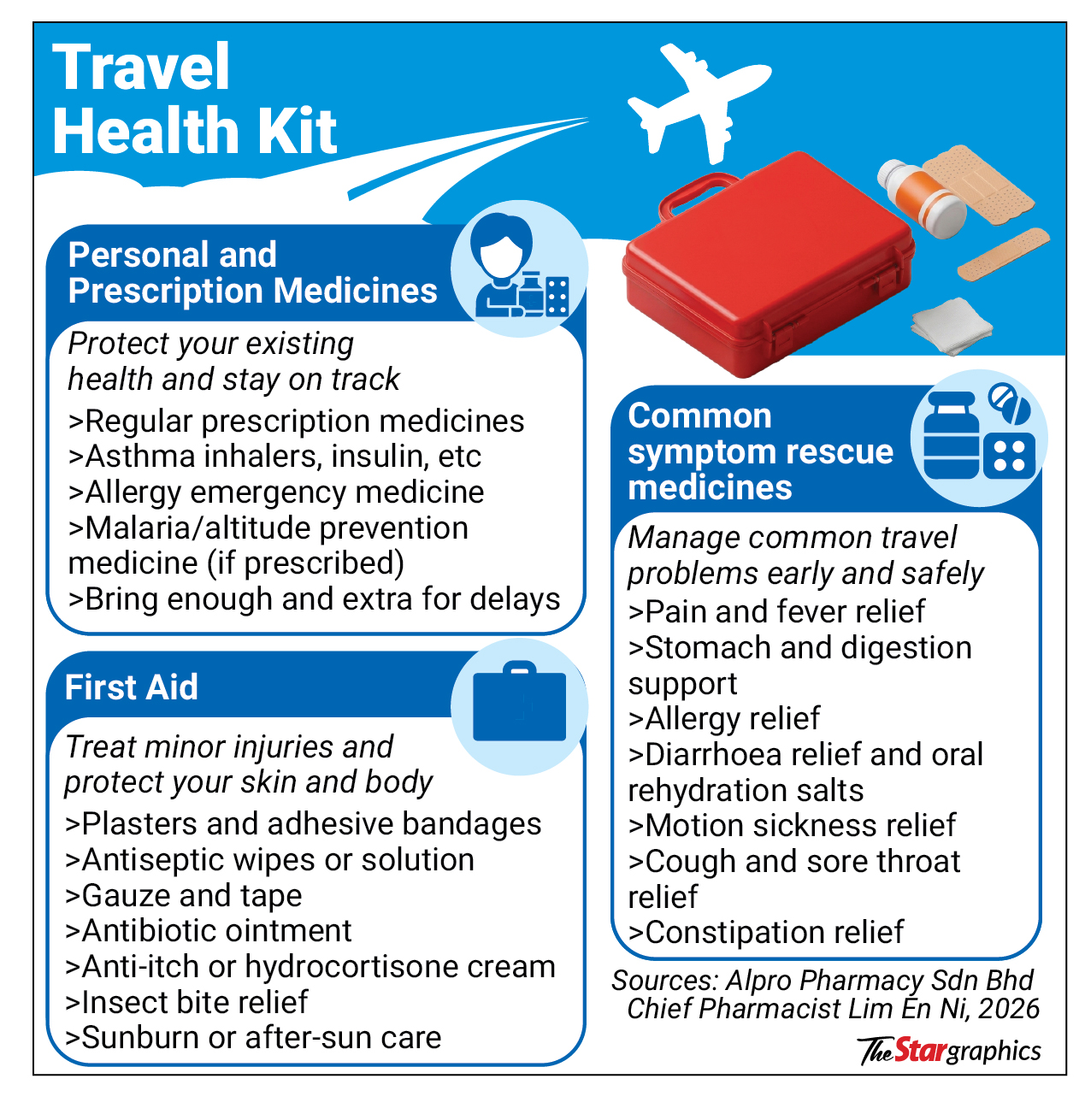
For example, chief pharmacist at Alpro Pharmacy Lim En Ni highly recommends packing oral rehydration salts along with general anti-diarrhoea medication to deal with dehydration from the condition.
Don’t stand in the way
The changing profile of travellers has also transformed travel medicine as people are living longer and managing their chronic diseases better.
Many travellers are also no longer willing to let their medical conditions prevent them from exploring the world.
Instead of discouraging travel for such individuals, Dr Flaherty says healthcare providers should help patients understand how their condition may affect their trip and how the trip itself could affect their condition.
He notes that medications prescribed for malaria prevention or altitude sickness, for example, may interact with medicines a traveller is already taking.
“Don’t stand in the way,” Dr Flaherty says, referring to older adults who wish to travel, adding that the goal of a pre-travel medical consultation should be to help travellers adapt their itinerary to suit their health needs rather than abandoning their plans altogether.
The importance of insurance
Yet, no matter how carefully a trip is planned, medical emergencies can still happen unexpectedly.
According to Wong, travel agents have helped coordinate hospital admissions, communicate with overseas healthcare providers, arrange insurance documentation, assist with flight changes, and, in some cases, even organise emergency evacuations or the repatriation of travellers who died overseas.
Those experiences, he says, underscore the importance of travelling with adequate insurance and understanding what it covers before departure.
“Unfortunately, some travellers still underestimate these risks and travel without adequate insurance coverage,” he says.
Dr Flaherty adds that preparation also includes knowing where to seek medical care at your destination, carrying sufficient medication for the duration of your trip, and discussing any concerns with your healthcare provider before leaving.
Ultimately, experts say the goal of travel medicine is not about making people fearful of travelling.
Rather, it is to help travellers anticipate potential risks so they can spend less time worrying and more time enjoying their trip.