
SAMANTHA Giraldo, 21, was at her family’s home in Colombia last Christmas when an email from a birding enthusiast in India, half a world away, arrived.
Merlin and eBird, the world’s most widely used birding apps, had highlighted the Giraldo family’s small hotel – named after the guacharo, or oilbird, often found on the property – as a birding hotspot. He was preparing, he wrote, to make the long journey to see it.
That was when Giraldo felt something fundamental had shifted.
“So many people tell us that’s how they found us,” she said, referring to the apps. “Not just avid birders but backpackers, retirees, people who are new to this passion.”
Colombia, home to the world’s largest number of bird species known to ornithologists, has long struggled to attract as many “avian tourists” as smaller but more politically stable countries, like Costa Rica.
Merlin and its sister app, eBird, both free and run by Cornell University’s ornithology lab, have initiated millions of people as amateur birders, building a bridge between the screen and the natural world.
The Giraldos have recently welcomed visitors from many countries, with the most coming from China.
“For us, it’s crazy; it’s life-changing,” Giraldo said.
EBird, on which users log their bird finds, has become the world’s largest online database for bird observations. Merlin allows users to record bird calls and tells them, with high but not perfect accuracy, what type of bird they are hearing.
The apps work in tandem. On eBird, users can upload recordings of bird songs and calls. Once a single species has 150 recordings and each recording is annotated by Cornell experts, the sound data is put into Merlin, which can identify roughly 2,300 species.
Since Merlin was rolled out in 2014, it has rapidly gained users.
Nearly 40 million people have installed it on their phones, and in 2025, 16.3 million were considered active users, up 35% from a year before. The numbers have accelerated since the pandemic.
EBird has also seen a jump in users.
Each year, on a Saturday in May, the Cornell lab challenges users to find as many birds as possible and submit lists of those they identify and attach recordings.

Some of that data is used for scientific purposes. But the day has also become an international competition to spot the most species.
Colombia wins every year. Though only the 25th-largest country in the world by land mass, it contains immense ecological diversity, from the Amazon rainforest to glacier-topped Andean peaks and palm-fringed Caribbean beaches.
Many Colombians turning to the birding business are hoping the new visitors will endure journeys over rutted roads and make do with rudimentary lodging.

In the mountains about four hours north of Medellin, Luz Dary Echavarria Morales, 53, and her husband are part of that new crop of hosts.
The couple spent more than a decade clearing the slopes of trees. With chain saws, they would cut hectares of trees a day, turning them into 50 sacks of charcoal a month that they would sell in the nearest town.
Slowly, they put milk cows onto the cleared land.
“It’s almost like we didn’t realise there were birds here,” Morales said.
“Now I know that many of those trees had nests in them.”
She has no formal education in ornithology and does not speak any language other than Spanish but she hopes that Merlin, with its images of birds and their scientific names, and Google Translate can bridge the divide.
“The birds are giving me a quality of life I could never have imagined,” she said. “I never realised how many people cared about birds.”
With a couple of years now under her belt as an amateur birder and more time to study because she’s not spending her days cutting down trees, Morales can expatiate on the minor differences between species.
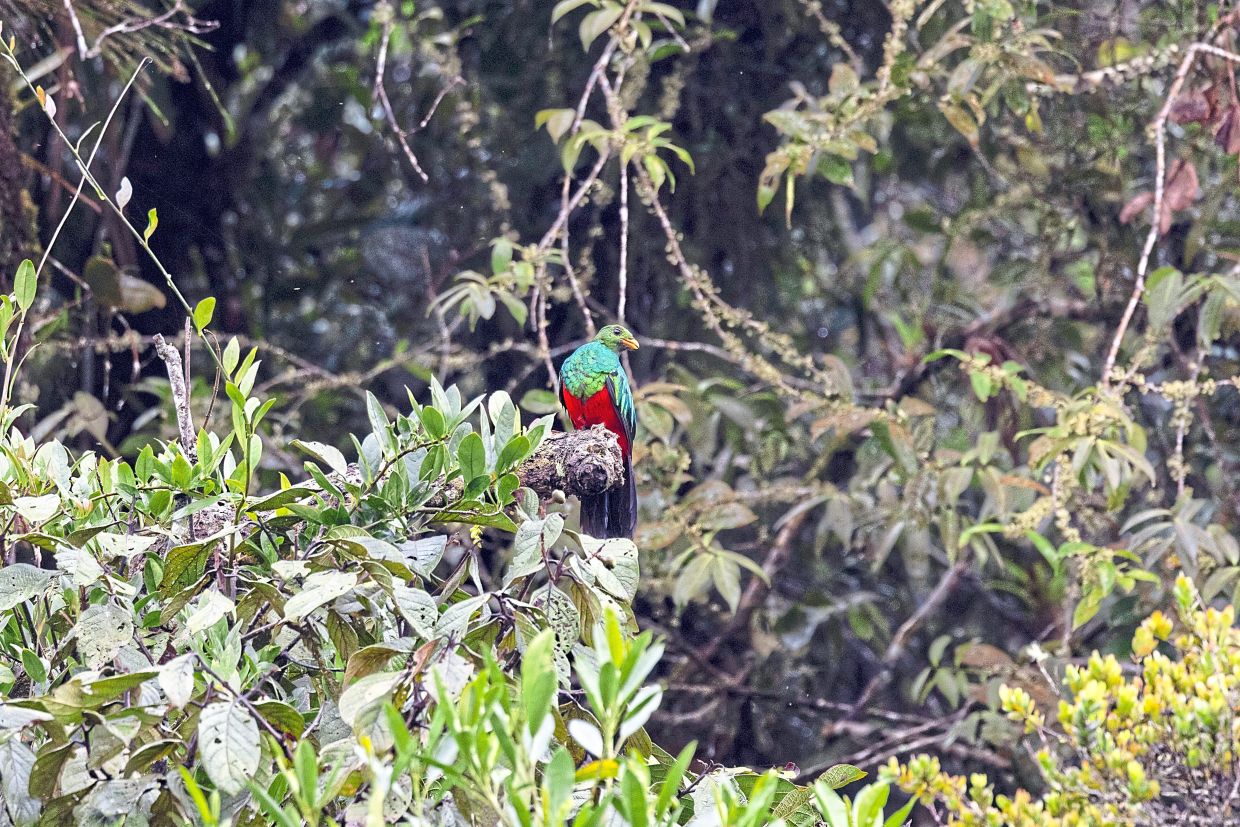
The couple said they are getting two visits a week at their humble property, where people look for a particularly elusive bird, the golden-headed quetzal.
The accommodation they offer is a small house of wood and cinder block, glued together with a bit of cement.
There are so many birds on the property that Merlin can barely keep up.
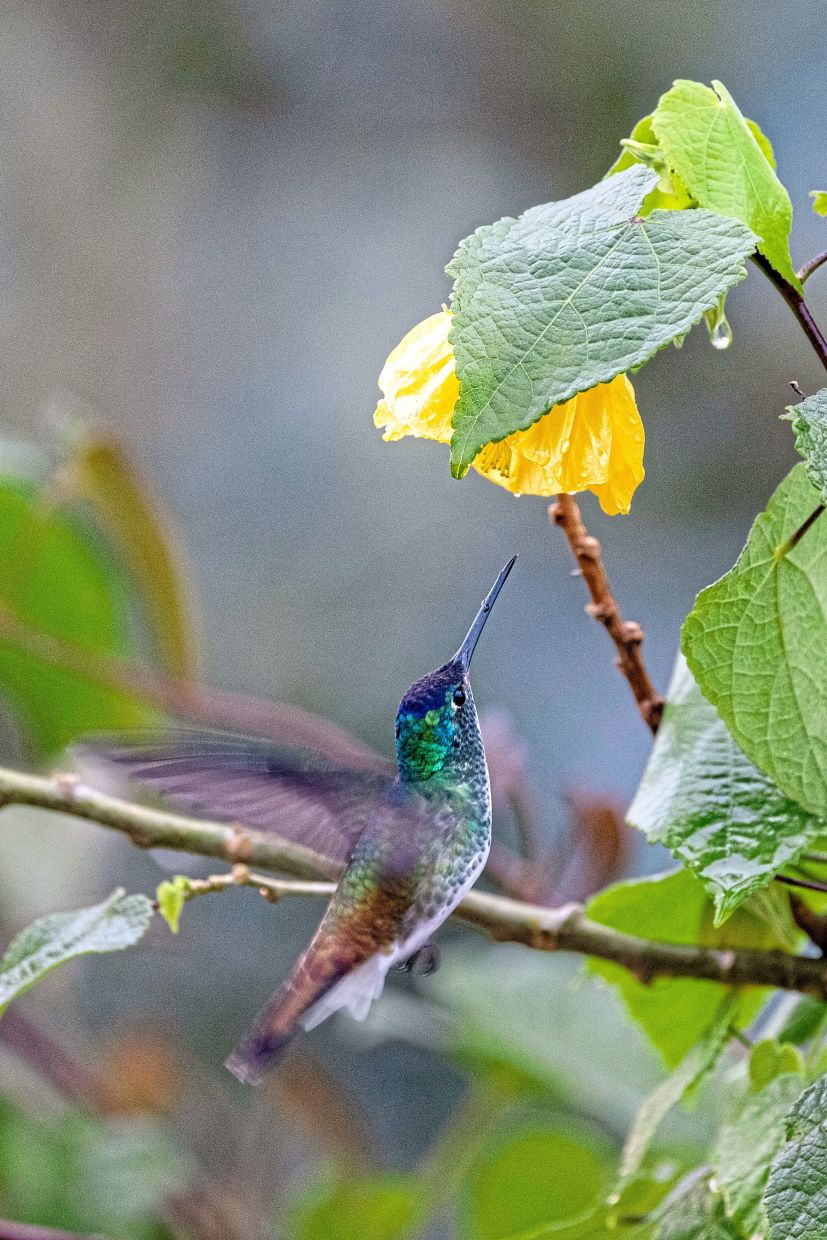
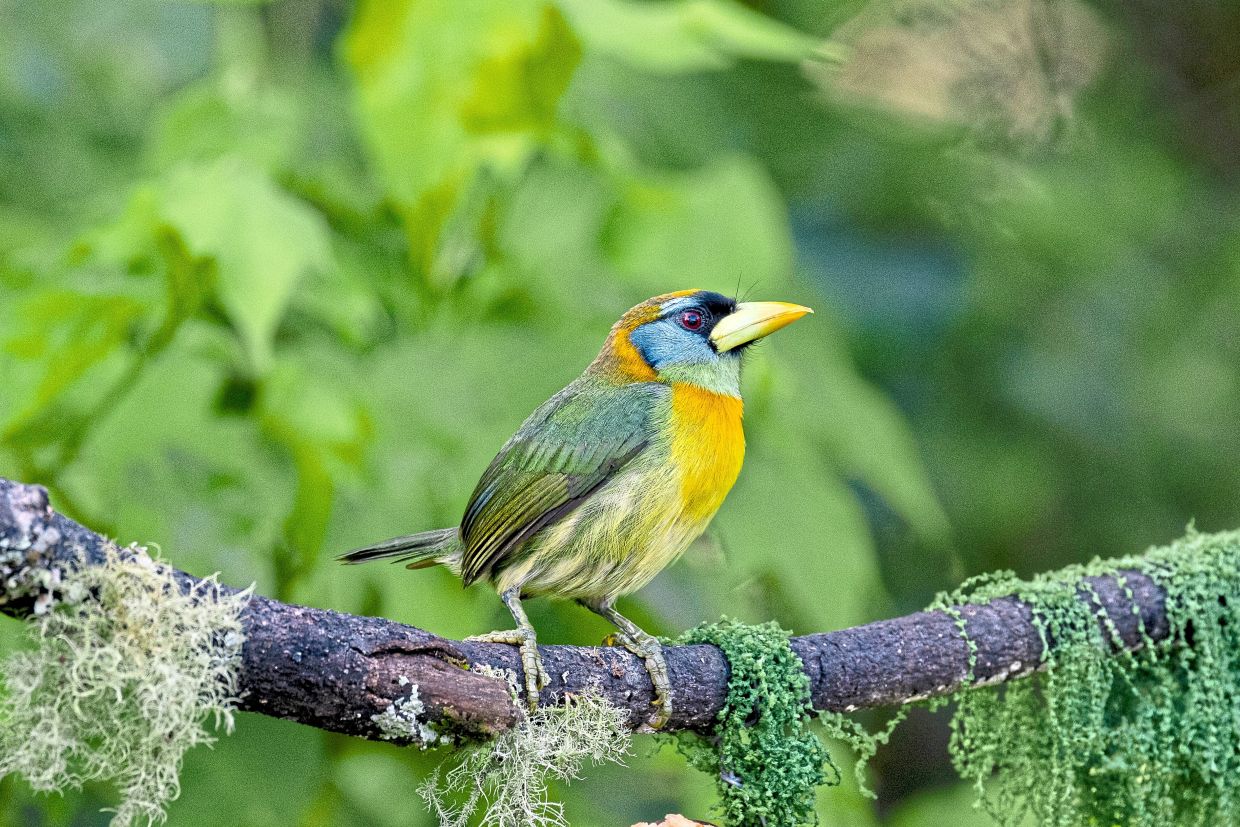
On the porch, over a breakfast of coop-fresh eggs, arepas and chocolate milk, I saw a dozen species in a few minutes.
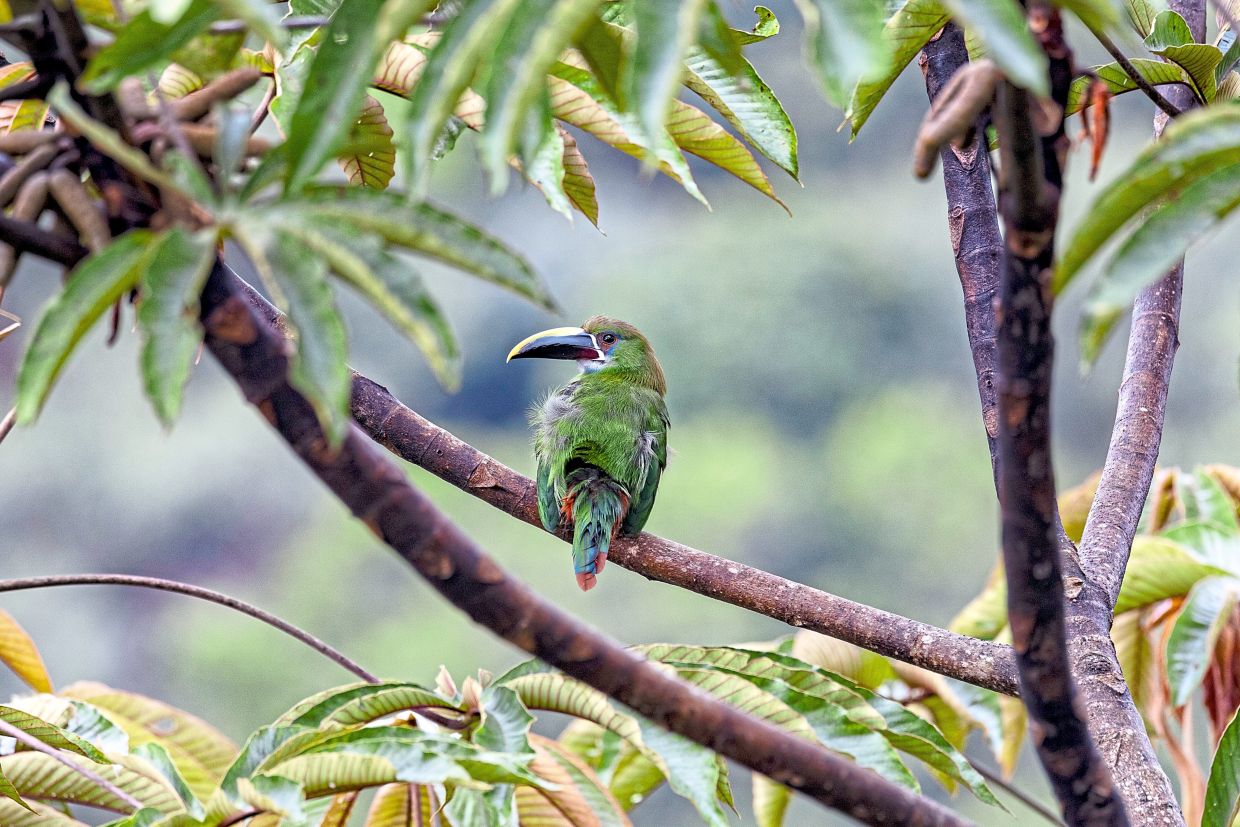
A low, enveloping cloud rolled in, and I simply breathed it in. Farther down the slope are rarer finds like the scarlet-rumped cacique and the southern emerald toucanet.
Morales is burnishing her credentials day by day. While her husband can beckon each of their 13 milk cows by name, she makes ever more convincing bird calls.
She finds herself preoccupied outdoors in the same way many other amateur birders do.
“Every odd sound I hear,” she said, “I feel like I need to record it on Merlin and find out what it is.”
On a recent day, she stood whistling the call of a golden-headed quetzal, which Merlin describes as a “mournful song, a repeated ‘go home, go home, go home’”.
Within minutes, a juvenile male silently swooped overhead and perched on a tree studded with bromeliads and whose branches were laden with the sagging, woven nests of the russet-backed oropendola.
She gasped, and with none of the hushed restraint typical of the birding elite, she called to the quetzal: “My little fledgling! My love! I’ve missed you!”
— ©2026 The New York Times Company
This article originally appeared in The New York Times