
A PATIENT knows when their medication arrived late.
They see when hospital staff are not communicating with each other.
And they notice when healthcare workers are not paying attention to issues they bring up.
These may seem like small details in the workings of a busy hospital, but to patient safety advocate Jocelyn Cornwell, they are valuable information that healthcare providers may otherwise miss.
Yet patients’ voices can easily become lost in a system preoccupied with its own processes and priorities.
“For all the talk of being patient-centred, I think what we can see again and again when there’s a failure is that the system finds it very difficult to centre on the patients.
“It’s very busy with itself,” says Cornwell, who is the chair of the board of trustees for Action Against Medical Accidents (AvMA), a United Kingdom-based patient safety charity.
Cornwell was one of the speakers at a Medical Law Conference in Kuala Lumpur recently.
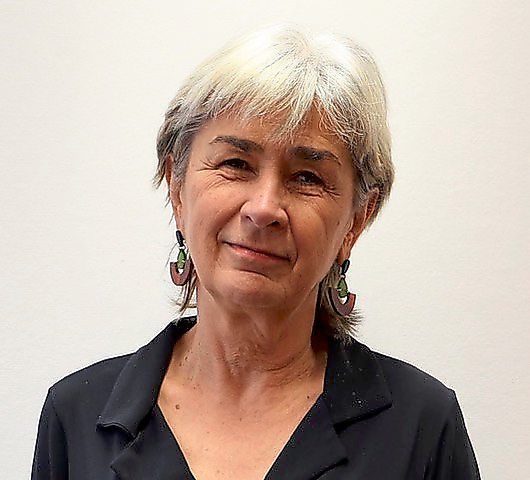
In Malaysia, the government has continuously moved to improve the quality and safety of healthcare, with the formation of the Patient Safety Council under the Health Ministry as well as establishing the Malaysian Patient Safety Goals.
But as our country continues its efforts to improve patient safety, Cornwell’s work in patient advocacy raises a fundamental question of whether patients are being treated simply as recipients of care or as people whose experiences can help identify weaknesses in the system.
AvMA has spent more than four decades supporting people affected by medical accidents in the UK, where Cornwell says repeated patient-safety failures have demonstrated the importance of listening to patients and their families.
Their accounts, such as noticing when their medication was not administered on time or when their special dietary requirements were overlooked, can provide a view of care that may be missed by those working within the healthcare system.
Yet getting healthcare institutions to listen can itself be difficult.
Cornwell says doctors and other healthcare professionals generally want to do their best for patients, and it is natural for them to feel upset or defensive when something goes wrong or when they receive a complaint.
This defensiveness can unfortunately become institutional, as it did in the UK, she says.
The problem, she explains, is that patients asking questions about their treatment are not necessarily criticising those who cared for them.
They may simply be trying to understand what happened.
She also points out that there is an inherent imbalance of power when an individual patient or family member seeking answers finds themselves facing a hospital or medical professionals.
Healthcare providers, she says, could actually learn a lot from listening to patients’ experiences, rather than treating them as mere complaints to be resolved.
“What patients say has validity, and we should be learning from it if we want to run a good-quality service.
“The senior people need to look at the pattern of complaints, and they need to collect good complaint data and analyse it,” she says.
Listening to patients could also mean recognising that patients who raise concerns after suffering medical harm may not necessarily be looking for financial compensation.
Cornwell says it is understandable that healthcare systems may worry that making it easier for people to complain could lead to a surge in legal claims.
However, she says evidence from the UK indicates that the majority of people instead want an apology and an explanation.
An excessive focus on the financial cost of negligence can therefore distract from understanding why harm occurred in the first place and preventing it from happening again.
“Understanding and preventing harm and responding early to what patients are really saying; it’s not about cost at all.
“It’s about stopping suffering,” says Cornwell.
Cornwell is cautious about prescribing what Malaysia should do, noting that she is not sufficiently familiar with the local healthcare environment.
However, drawing from the UK’s experience, she believes that ensuring patients have a voice independent of the institutions providing their care could be a useful starting point.
For example, she says, AvMA itself was established back in the early 1980’s following public outcry over a BBC play, which dramatised the real-life case of a patient injured during surgery.
Cornwell says any equivalent approach elsewhere would have to develop according to the needs and circumstances of that country rather than simply replicating the British model.
For Malaysia, she says there is one underlying principle worth considering.
“I would say that having some sort of entity that amplifies the patient voice and having an organisation that can provide a listening ear to patients would be a very good place to start.”