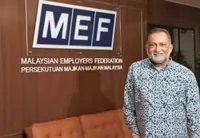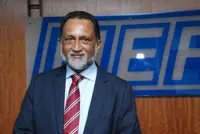
FROM the Covid-19 pandemic in 2020 and shifting labour policies to growing demands for better workplace standards, Datuk Dr Syed Hussain Syed Husman has led the Malaysian Employers Federation (MEF) through a period of significant change.
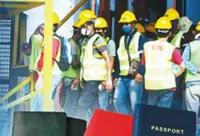
He is known for speaking up on fair and sustainable practices, especially in tackling forced labour and helping Malaysian employers meet global standards – making MEF more inclusive, bringing together voices from industries as varied as banking, hospitality, insurance and mining.
And as the end of his third term leading the MEF nears, Syed Hussain talks to the Sunday Star about how the federation has striven to advance synergies among the government, employers and unions, both locally and internationally.
> You took over the MEF during the pandemic, a critical time for the employment market. How did you navigate the challenges then?
I was first elected in 2020. It was a period of uncertainty due to Covid-19, something that none of us had experienced. And I had a two-fold challenge to look into: one was maintaining the federation and the staff members’ morale, and the other was their job security.
Therefore, one of the first things I did was to make sure that our people remained positive. We communicated to them that this is all part of life, a phase that we will all go through.
What we need to do is be very strong, focused and positive in our thinking. And we must continue working as if nothing went wrong. That mental stability is what I had to work on with our people, to ensure all of the assignments given to them, even though they were challenging and difficult, could be carried out with the energy level of our staff always maintained.
The other issue we had at the time was calls for help from federation members, trying to get advice on how they were going to manage their organisations.
Their organisations were also going through this phase. The demand for MEF services was really high. I think it took me about a year to implement the changes.
> What do you consider your most impactful achievement in advancing employer interests as the president of MEF?
Today, we have positioned MEF as the voice of employers and a centre of knowledge, research and data. We have also built relationships with the relevant ministries.
For example, our relationship today with the Human Resources Ministry is very, very strong. When I took over MEF in 2020, we probably were sitting on two of the councils.
Today, we sit on many of the councils, including all major committees or councils, for example, the National Labour Advisory Council, which is a big council chaired by the Human Resources minister.
We are also part of the MQA (Malaysian Qualifications Agency), which gives approval for all academic and technical qualifications. If a university wants to come up with a new bachelor’s in commerce or a PhD, it has to get approval from MQA. And MEF is involved in that because we take the employers’ perspective into those programmes.
We are also on the board of the EPF (Employees Provident Fund) because we are the largest contributor to the EPF as employers. We want to ensure that the money that we have invested into the EPF is properly managed.
> You’ve called for ‘constructive tripartism’ between employers, unions and government. How has that worked so far?
MEF was seen as a body which constantly challenged the government’s stance. When I became president, I took the stand that we all have to work together – the three stakeholders: the government, the employers and the unions.
We all need to work together because, at the end of the day, who are we taking care of? We take care of your employees.
And employees are your asset. So I have managed over the years to change the mindset of the unions that used to think that employers were their opposite [in interests]. Today, we can sit at the table and work together.
I’ve always said that unions are very important in this country. That’s the position I have taken, not only in Malaysia, but also in MEF’s representation at the International Labour Organisation (ILO) in Geneva.
A good relationship does not mean we agree on everything;
it means we can disagree professionally, present evidence and find solutions.
MEF is not interested in opposing the government for the sake of opposing. I strongly believe that genuine tripartism must move from consultation to co-creation and problem-solving. It also requires evidence-based policymaking and a mutual recognition of each other’s legitimate interests – businesses need a sustainable environment, workers need decent wages and the government needs economic growth.
> Speaking of the federation’s representation in the ILO, how far have you positioned MEF globally?
Today, MEF is well recognised in the sense that I was elected to the governing board of the ILO, and I’m the first Malaysian sitting there after 144 years.
In order for you to sit on the governing board, the employers of the world choose representatives from each region. And I was chosen from Asia.
I’m also the president of CAPE. CAPE is the Confederation of Asia-Pacific Employers, which consists of 30 countries.
And I’m also elected by the International Organisation of Employers (IOE) to sit as its representative in the global programme called the Global Coalition for Social Justice, whose patron is Brazilian President Luiz Inacio Lula da Silva.
The programme is designed by the ILO. I was selected out of all the employers’ members as the representative co-chair for employers. Our relationship with IOE is very close. We also managed to bring the ILO director-general, Gilbert F. Houngbo, to Malaysia last year.
To be the MEF president, it is not just about occupying the seat, as you have to build the brand as well, and that is not easy.
> Would you like to continue staying as the MEF president if the opportunity arises?
First and foremost, I am deeply humbled by the continued trust from our members. Elevating MEF’s voice has been a collective effort alongside our council and the secretariat. Our constitution does permit a sitting president to serve another term.
Given the strong mandate and the critical work we still have ahead in navigating this evolving labour landscape, I would certainly be honoured to continue serving the federation if the members wish for me to do so.