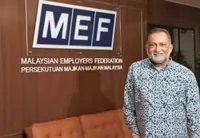
THE workplace of 2030 will look substantially different from the workplace of today, says the Malaysian Employers Federation (MEF): Some jobs may disappear, evolve and new occupations will emerge as technology becomes increasingly capable.
However, according to MEF president Datuk Dr Syed Hussain Syed Husman, the fundamental importance of people will remain.
“Technology may transform the way we work, but people will continue to determine how successfully organisations transform,” he said in his speech at the recent MEF HR National Confe-rence and Convention 2026.
Themed “People First. Technology Forward. Future Focused”, the two-day convention focused on how private employers in Malaysia can navigate technological disruptions while strengthening human capability, productivity, workplace resilience and business competitiveness.
Artificial intelligence (AI) was singled out as a key force accelerating workplace transformation.
Citing the International Labour Organisation’s 2025 findings on generative AI and jobs, Syed Hussain says that one in four workers globally is employed in occupations with some exposure to generative AI.
“The question for employers should therefore not simply be: ‘Which jobs will AI replace?’ It should be: ‘How will AI change the jobs we already have, and how do we prepare our people for that change?’”
This shift in perspective, he says, can move organisations from fear of replacement towards redesigning work, developing skills and fostering human‑technology collaboration.
Syed Hussain says Malaysia is entering this transformation from a relatively resilient position.
He highlighted the Department of Statistics Malaysia data which showed unemployment at 2.9% in the first quarter of 2026, alongside 194,800 job vacancies, including 48,700 in skilled occupations.
For the MEF, the challenge is not just filling jobs but ensuring the right skills for the economy’s evolving needs.
“Our challenge is not simply whether we have enough jobs or enough workers. Increasingly, it is whether we have the right skills for the jobs that our economy is creating,” says Syed Hussain.
The convention also highlighted five priorities for preparing organisations and workers for the future:
> Employers must invest in upskilling and reskilling, identifying capabilities needed in the next three to five years.
> Businesses should link AI use to genuine productivity and service improvements, supported by governance on data privacy, cybersecurity, transparency and accountability.
> Malaysia cannot sustain competitiveness through low-cost labour alone. Reward systems should recognise skills, performance and contribution, creating a virtuous cycle where better skills lead to higher productivity and wages.
> Mental health, burnout and psychosocial risks should be central human resources concerns, as they directly affect retention, safety and performance.
> Place more focus on human rights, migrant‑worker welfare and social compliance as these factors are now increasingly tied to market access and reputation.