ALBERT Tee does not want to know everything – just what matters.
For the 35-year-old executive from Kuala Lumpur, trans-parency is not about unrestricted access, but about accountability. Without it, he says, there can be no real checks and balances on those entrusted with running the country.
The Freedom of Information (FOI) Bill is expected to be tabled soon, and Tee sees it as a long overdue step towards empowering Malaysians as stakeholders in their own democracy.
Still, a key question remains: Where should the line be drawn between public interest and personal privacy?
“I would surely want to know about each and every sen of taxpayers’ hard-earned money that is spent by the government. But at the same time, I do not want to know about other people’s personal information.”
Tee’s dilemma mirrors a broader debate now surfacing as Malaysia moves closer to tabling its FOI law.
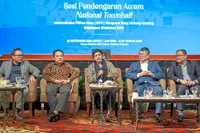
His concerns aptly reflect one of the key issues discussed at a recent FOI forum jointly organised by the Bar Council Constitutional Law and Human Rights Committee (CLHRC) and the Centre for Independent Journalism (CIJ).
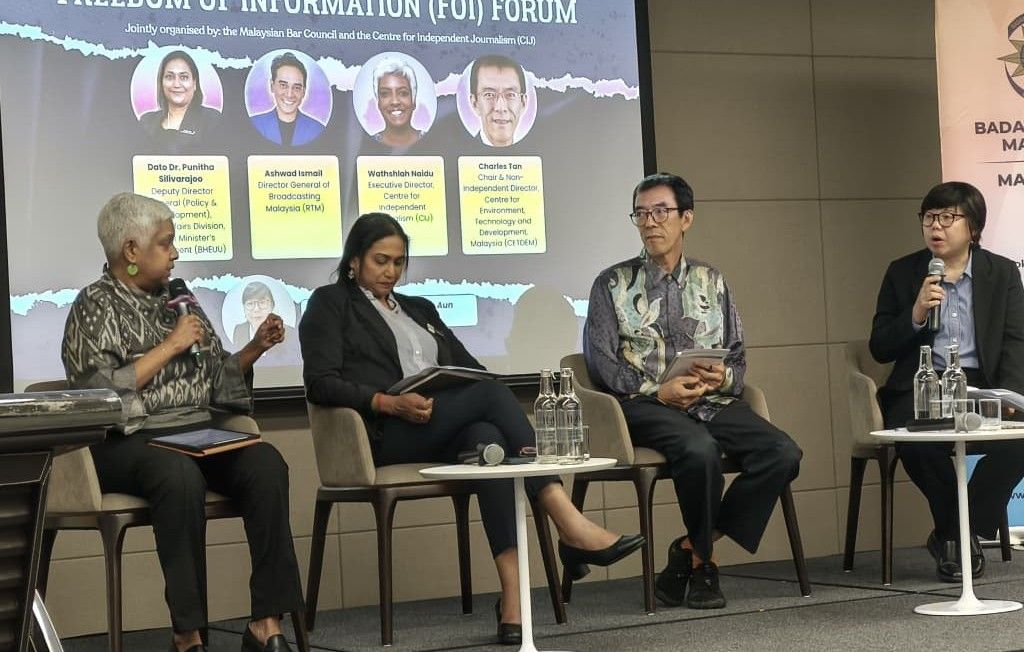
The panel featured Prime Minister’s Department Legal Affairs Division (Policy and Development) deputy director- general Datuk Dr Punitha Silivarajoo, CIJ executive director Wathshlah Naidu, and Centre for Environment, Technology and Development Malaysia (Cetdem) chairman Charles Tan. It was moderated by CLHRC co-deputy chair Sonya Liew Yee Aun.
“I think there are a few things we need to understand. First of all, what kind of information do we want? We don’t want everything. Trust me, I already have enough – way too much information while scrolling through my social media every day.
“We want reliable information, timely information held by public bodies,” says Wathshlah.
At the states
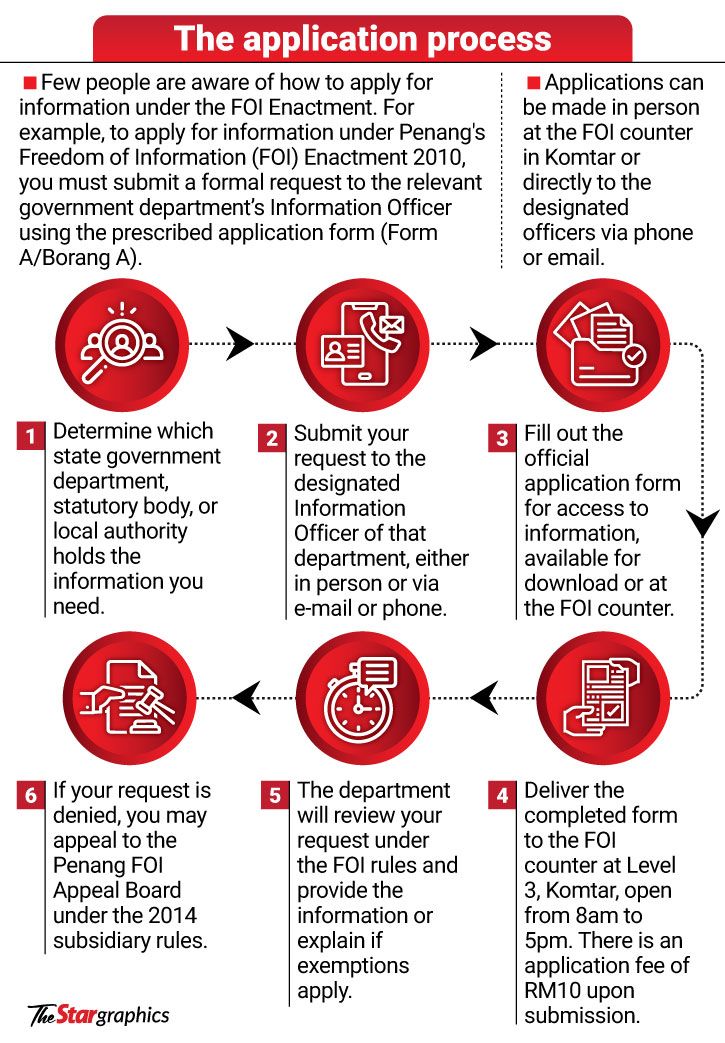
Freedom of Information laws are not entirely new to Malaysia. At least two states – Selangor and Penang – have had their own FOI enactments in place for more than a decade.
In Selangor, for instance, the FOI Enactment came into force in 2013. The public can apply, subject to approval, to access information such as policy documents, meeting minutes, public project details and state expenditure reports.
In practice, however, access is not absolute.
Information tied to national security, commercial confidentiality, or sensitive policymaking processes remains protected. This includes material classified under the Official Secrets Act 1972, information obtained from third parties that could breach confidentiality or harm commercial interests, as well as data received in confidence from other governments or international organisations.
There are also safeguards for internal decision-making, where disclosure could undermine the effective formulation of policy.
That said, exemptions may be lifted on several grounds – including public interest, the need for investigations into offences or misconduct, or if the information relates to matters that occurred more than 20 years prior to the application.
Wathshlah says the public’s interest is typically centred on matters that raise legitimate concerns.
“We want to have access to the environmental impact assessments [EIA] and traffic impact assessments [TIA]. Who’s getting the concession?
“Because these affect us – the budgets, the legislation, the rules, the guidelines. Those are the things that we need. We don’t want to know what my neighbour is doing in his backyard. No, that’s privacy.”

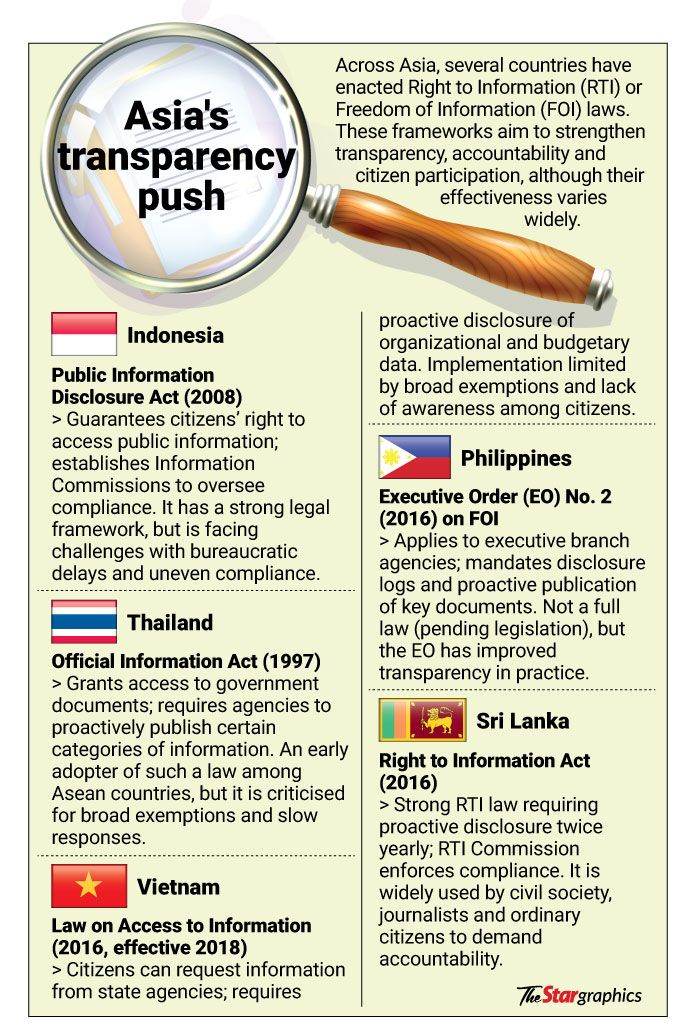
At the same time, she calls for proactive disclosure, similar to practices in countries such as Australia, where since 1982, laws have required agencies to publish a broad range of information online without waiting for formal FOI requests.
“Australia actually defines information as a ‘natural resource’. Sri Lanka does the same [through proactive disclosure]. When you have maximum disclosure together with a proactive publication scheme, it is already the first step to changing our culture [on secrecy].”
Still a challenge
Tan argues that while FOI laws are essential for civil society to address concerns over development projects that affect quality of life, timeliness is just as critical as access itself.

He suggests that civil society groups should adopt a more evidence-based approach, using data to challenge decisions more effectively rather than relying on general objections.
Tan cites the PJD-Link controversy – involving a proposed elevated highway cutting through Petaling Jaya – where residents and civil society groups struggled to obtain traffic, social and environmental impact assessments.
They eventually secured disclosure through a High Court ruling in 2025, but only after years of delay.
The complainants “couldn’t get the documents under the FOI. Unfortunately, they had to go through judicial review. And in 2025, the High Court made a positive judgment. I’m glad to say that in May 2025, the documents were finally made available. But it took two years, right?”
He says such delays undermine the very purpose of FOI, as access to information is most valuable when decisions are still being made.
“Access to information is obviously key, but timeliness is crucial. If you don’t have the information, things move. And by the time you get it, it’s already a moot point.”