How Malaysia is building a stronger food system
When the conflict in the Middle East disrupted shipping through the Strait of Hormuz, supplies of oil – a key component in fertilisers – and plastics, which are essential for food packaging, were affected.
Consumers braced for shortages and higher prices, and tightened their belts by prioritising essential spending amid rising global energy costs.
In reality, food prices in Malaysia have remained relatively stable despite the global uncertainties, due to a series of government interventions to ensure adequate food supplies and stable prices.
For example, the government swooped in to take immediate action with increased targeted subsidies and incentives.
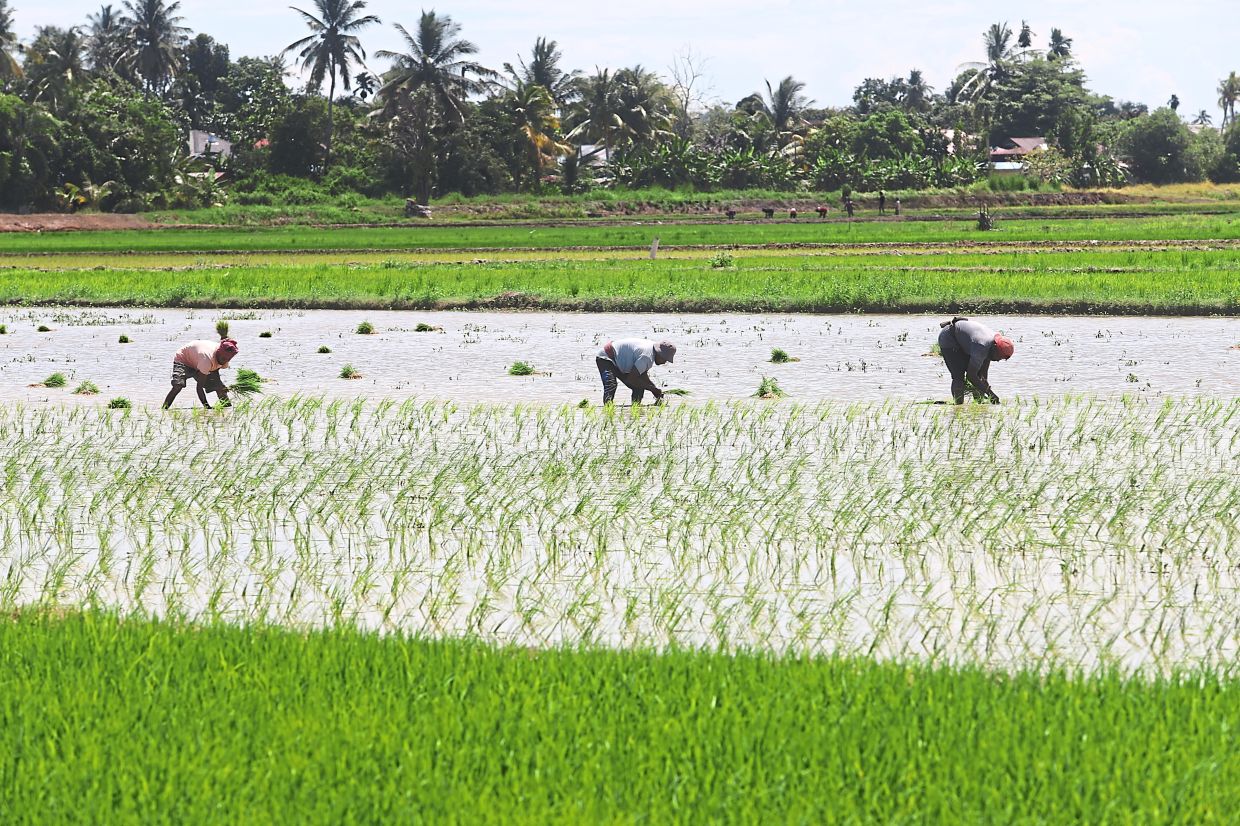
In April, the Ministry of Finance (MoF) announced that Budi Agri-Komoditi – a diesel subsidy for agricultural machinery – would be increased to RM400 from RM300, a substantial 33% hike.
To reduce paddy production costs, a ploughing incentive (Insentif Pembajakan kepada Pesawah, IPKP) will be almost doubled from RM160 to RM300 per hectare for the 2026 planting season.
Farmers in Peninsular Malaysia will also receive an advance payment of RM200 per hectare under the incentive to help them prepare their land before the planting season.
These helped farmers offset rising fuel costs and reduce production expenses, allowing them to sustain agricultural output.
“The Budi Agri-Komoditi and IPKP provide timely financial relief to farmers,” said Prof Datuk Dr Nasir Shamsudin, the agricultural economist at Putra Business School and professor emeritus at Universiti Putra Malaysia’s Faculty of Agriculture.
The RM400 monthly assistance under Budi Agri-Komoditi helps offset rising diesel and transportation costs, while the increase in IPKP incentive from RM160 to RM300 per hectare improves farmers' cash flow before the planting season, he said.
“As short-term cost-mitigation measures, these initiatives have helped ease production cost pressures, sustain agricultural output, safeguard farmers' livelihoods and moderate upward pressure on food prices,” he said.
The initiatives are proven to be effective, according to Prof Nasir.
“This is reflected in Malaysia's food inflation, which remained relatively low at 1.4% year-on-year in May 2026, compared with 1.2% in April. The resulting cost savings are a positive development that can contribute to greater food price stability for consumers,” he said.
Beyond temporary relief
Describing smallholders and entrepreneurs as “the backbone of the country’s economy”, Prime Minister Datuk Seri Anwar Ibrahim said in a Facebook post in May that he recognised the pressures created by rising living costs and global economic uncertainty, prompting the decision to extend Budi Agri-Komoditi.
The subsidies for the agricultural sector are not just temporary relief.
Under Budget 2026, the government has allocated RM2.62bil for various subsidies and assistance programmes related to paddy prices, crop cultivation, fertiliser, seeds and production incentives.
For the fishing community, there is an allocation of RM160mil to provide a living allowance of up to RM300 per month and catch incentives, while RM55mil has been earmarked to support local fruit growers through incentives and infrastructure funding for pineapples, soursop, water apple and pomelo.
Although these initiatives were introduced before the US-Iran war which started in February, they have strengthened the resilience of Malaysia's agricultural sector against external shocks and helped ensure a stable food supply.

Prof Nasir noted that the full benefits of government subsidies will depend on how effectively these savings are transmitted throughout the food supply chain and reinforced by sustained improvements in agricultural productivity and supply chain efficiency.
“Over the longer term, sustainable food price stability will depend less on subsidies and more on raising agricultural productivity and strengthening the resilience of the food system.
“Investments in mechanisation, precision agriculture, climate-smart technologies, high-yield seed varieties, efficient irrigation, post-harvest facilities and integrated supply chain logistics can permanently reduce unit production costs, enhance competitiveness, and lessen the sector's dependence on continuous government assistance,” he noted.
Sufficient stocks
The government has assured the public that the country has sufficient stocks of essential food items, including chicken, eggs, fish, milk and fruits, which will last for at least a month despite ongoing global supply chain disruptions.
Rice supplies, including the national buffer stock, are also stable and sufficient for five to six months.
On food production, the country has sufficient fertiliser for about nine months.
The Agriculture and Food Security Ministry is also promoting a shift towards organic fertilisers, biofertilisers and Effective Microorganisms (EM) products to reduce dependence on chemical fertilisers, whose prices are more vulnerable to global market fluctuations.
A RM5.5mil project under the 13th Malaysia Plan has been approved to strengthen the circular economy through the conversion of agri-food waste into compost and organic fertilisers.
Import dependency dilemma
Malaysia's greatest challenge, said Prof Nasir, is structural dependence on imported food and agricultural inputs. As a net food importer, global logistics and supply chain disruptions inevitably affect domestic markets, he said.
“Although domestic production has shown improvement, Malaysia continues to import a substantial portion of its basic food requirements such as rice, wheat, dairy products and meat.
“In 2024, the country’s agri-food trade deficit reached RM39.34bil, reflecting a high level of dependence on global markets. This exposes Malaysian consumers and producers to external price shocks,” he explained.
Reliance on imported inputs also exists in sectors that appear to be self-sufficient in terms of domestic production.
“For example, the poultry industry, which serves as the country’s main source of protein, still depends on imported animal feed such as grain corn and soybeans. The rising cost of these inputs, driven by increasing energy prices and logistics costs, eventually raises production costs and, consequently, consumer prices,” Prof Nasir said.
Shield against external shocks
The agricultural economist said Malaysia cannot eliminate external pressures such as geopolitical conflicts, rising shipping costs, climate change, and now the issue of El Nino.
To minimise the adverse effects of external shocks, Malaysia should reduce its vulnerability by improving its resilience, which depends on how effectively it strengthens domestic food systems, diversifies supply sources and improves productivity, he said.
Prof Nasir stressed that while short-term subsidies remain essential to cushion farmers and consumers against rising food costs, the long-term priority should be to reduce Malaysia's structural reliance on imported food and agricultural inputs.
Achieving sustainable food price stability, he added, requires an integrated ecosystem built on sound policies, technological innovation and entrepreneurial development.
Government policies should encourage private investment by providing incentives that make food production as attractive as competing sectors such as oil palm, Prof Nasir said.
Technologically, he recommended greater investment in agricultural research, mechanisation, precision agriculture, artificial intelligence, drones, robotics, sensors, and climate-smart technologies to improve productivity and resilience.
He also recommended developing agro-entrepreneurs through initiatives such as the Agro-Entrepreneurship Incubation Programme at UPM to accelerate technology adoption, promote commercial scale farming and enhance the competitiveness of the agricultural sector.
Reduce food imports
The government has already signalled its intention to reduce Malaysia’s reliance on imported food.
It aims to cut food imports – currently totalled about RM80bil annually – by up to 50% by 2050.
Deputy Prime Minister Datuk Seri Ahmad Zahid Hamidi said the target would be achieved in stages, beginning with a reduction of at least 15% by 2030 and 30% by 2040.
He said cooperation between ministries and agencies would accelerate efforts to boost local food production, and one key strategy is to utilise underused or idle government-owned land for high-impact agriculture and livestock projects, such as broiler chicken, layer chicken and beef cattle farming.