
JUST as employers begin to understand their Gen Z workers, a new cohort is knocking on their door: Generation Alpha.
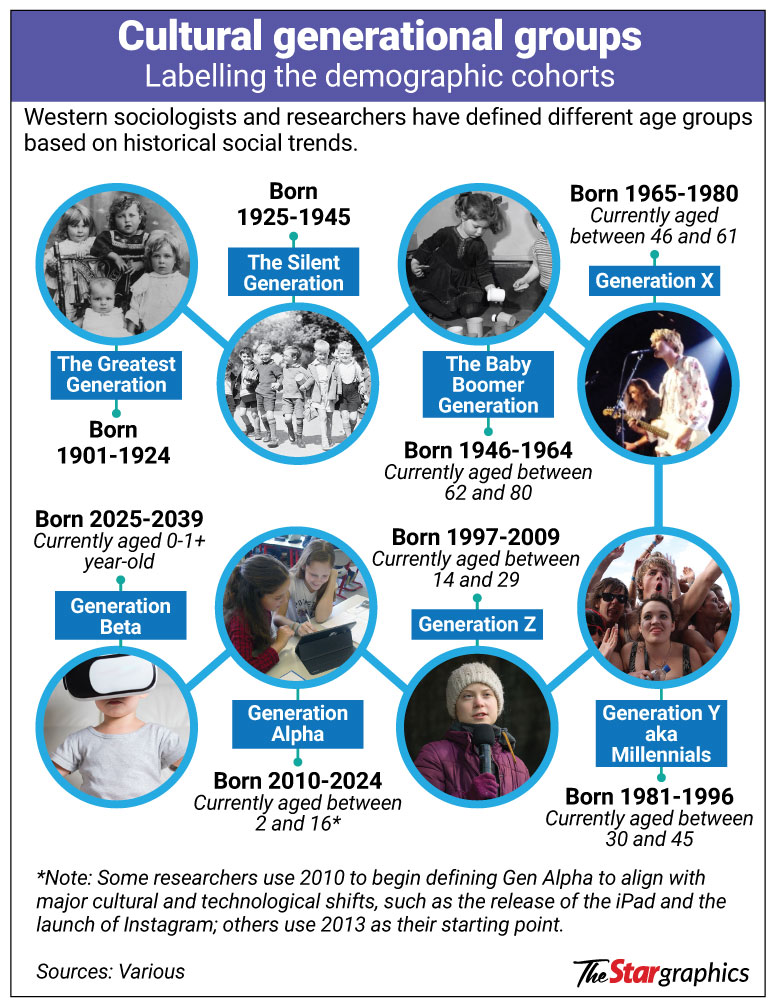
Gen Z (born between 1997 and 2009) is reshaping the Malaysian working environment through shifting expectations around flexibility, pay transparency, and workplace culture; the question to ponder now is: How will Gen Alpha (born between 2010 and 2024) change the labour market, and how will rapid advances in artificial intelligence (AI) shape this cohort in return?
Gen Z entered the working world as a force of disruption, and mostly for the overall good of employees around the world. Where many of the generation before them, Gen Y or Millennials, viewed work as a core part of their identity, sought a stable income, and were more tolerant of traditional hierarchies, Gen Z demanded strict boundaries, prioritising mental health, and were not shy about moving jobs if something else offered better benefits and faster career progress.
Gen Alpha will not only grow up preparing for jobs that do not yet exist, but employers will also need to prepare for this future of work. The government, too, faces the task of ensuring meaningful employment pathways for an estimated seven million Gen Alphas who will enter Malaysia’s workforce in the coming years.
The oldest members of Gen Alpha are now aged 16. The first group is expected to enter the workforce within the next one to two years through SPM pathways, followed by diploma and STPM graduates in four to six years, and degree holders in about seven to eight years. With that in mind, how will Malaysia’s labour market evolve when Gen Alpha joins the fray?
Fast-evolving labour market
The defining feature of Gen Alpha is not necessarily who they are, but the labour market they are entering, says PNB Research Institute associate director of research Dr Mohd Amirul Rafiq Abu Rahim.
He explains that workplace attitudes and behaviours are shaped by a combination of generational, life-cycle, and economic factors.
While younger cohorts may have different preferences and expectations, these are often influenced by labour market conditions, including wages, job quality, career progression opportunities, living costs, and broader economic realities.
“Unlike Millennials, who witnessed the rise of the Internet, or Gen Z, who grew up alongside the rapid growth of digital technologies and social media, Gen Alpha is likely to encounter AI as a routine feature of work rather than a new technology to be adopted,” he says.
According to the World Economic Forum’s Future of Jobs Report 2025, AI and information- processing technologies are expected to be among the biggest drivers of labour market transformation over the coming decade, reshaping both job tasks and skill requirements.
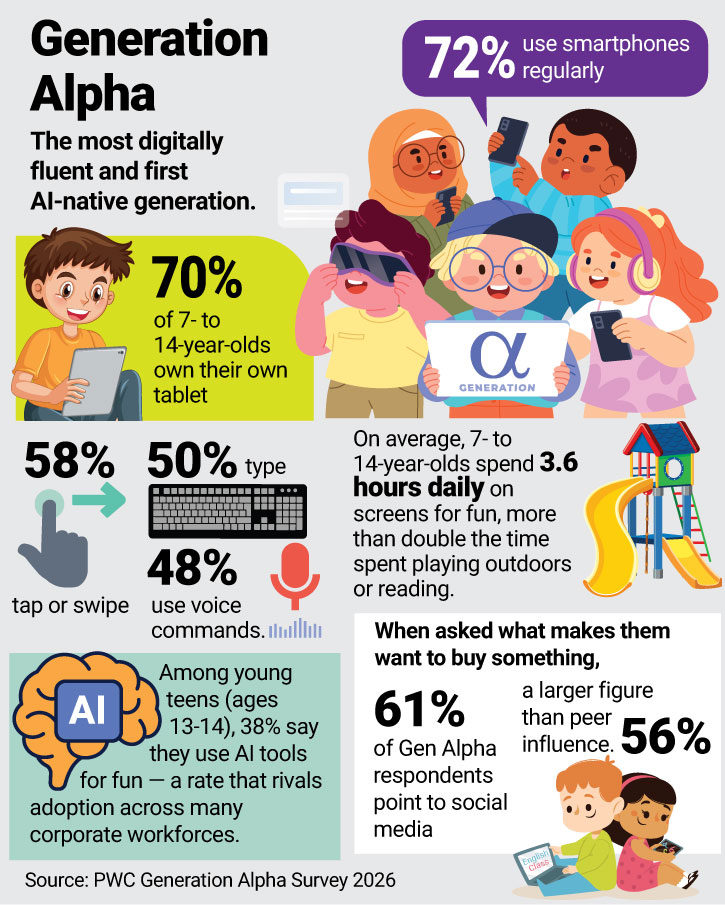
“As the first cohort to grow up fully with AI, smartphones, and on-demand digital ecosystems, Gen Alpha is expected to treat advanced technology as a basic requirement rather than a workplace benefit.
“Surveys indicate that around 40% of Gen Alpha already expect AI, virtual reality, and smart tools to be integral to their future careers,” says Mohd Amirul Rafiq.
As a result, organisations may move towards flatter and more networked structures, with human-AI collaboration taking on a larger role as routine work becomes automated.
Changing expectations
Employer practices are also likely to shift towards greater flexibility and more personalised employment models.
Mohd Amirul Rafiq foresees traditional office-based work arrangements steadily giving way to hybrid, outcome-based, and project-driven structures, while career development pathways become less linear and more tailored to individual needs.
For Gen Alpha, career success is likely to be measured by more than salary alone.
“Studies suggest that younger cohorts increasingly value happiness and meaningful work over traditional financial incentives,” he says, highlighting a shift where younger generations prioritise sustainable careers and work-life balance over rapid advancement.
In practice, employers may need to incorporate psychological safety, flexible workloads, and broader well-being initiatives into workplace design.
Growing up in a highly connected world may also shape expectations around diversity, ethics, and organisational values. As a result, workplace culture could become more inclusive and socially conscious.

With many future roles yet to be created, Mohd Amirul Rafiq says continuous learning and reskilling will become essential.
“Gen Alpha is poised to redefine the employer-employee relationship, shifting it towards greater individual agency and reduced organisational loyalty,” he says, indicating a future where employees view organisations less as long-term institutions and more as platforms for growth and opportunity.
“Employers will thus need to strengthen engagement strategies, internal mobility, and meaningful work offerings to retain talent.”
As knowledge becomes outdated more quickly and job requirements continue to change, he says education systems must focus on developing adaptable, lifelong learners.
Employers, meanwhile, may need to play a larger role in developing talent through continuous training and upskilling rather than assuming graduates are fully job-ready from the outset.
The future ahead
The most important challenge is not whether Gen Alpha will be able to use AI technologies, but whether Malaysia can adapt quickly enough to ensure technological change leads to higher productivity, stronger wage growth, and better employment outcomes rather than widening inequality, says Mohd Amirul Rafiq.
“Too often, the conversation about younger generations centres on whether they are less loyal, more entitled, or too quick to switch jobs. But this framing misses the point. What looks like a shift in attitudes is, in many cases, a reflection of a changing labour market,” he says.
For decades, employment was seen as a pathway to upward mobility, where a steady job could provide a home, savings, and a better future than the previous generation. But that link is no longer guaranteed.
“The real issue isn’t whether Generation Alpha is ready for work, but whether the future of work can still deliver stable careers, rising incomes, and genuine upward mobility.”