JOSEPH Kabila was waiting for me. But I didn’t know exactly where.
I crossed the border from Rwanda into Congo and scrambled into a jeep driven by one of his aides.
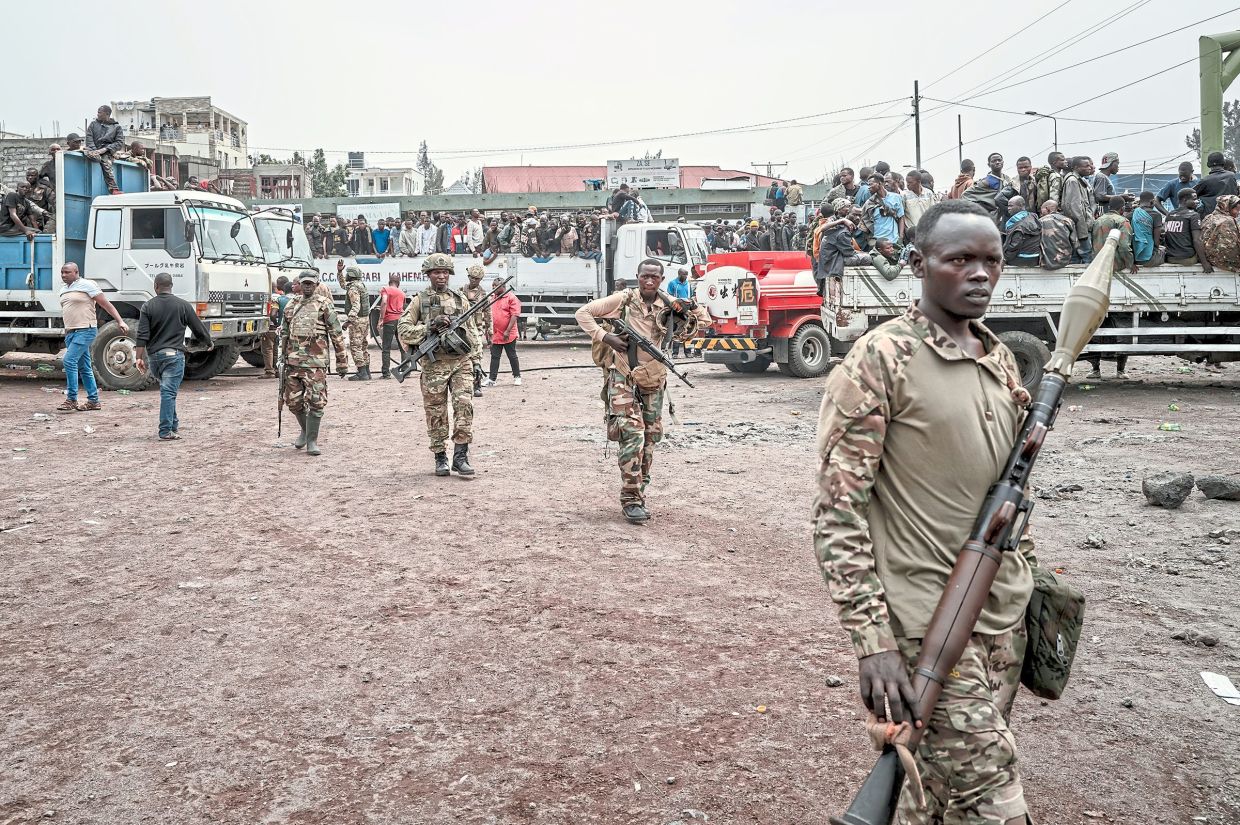
We whizzed through Goma, a city that was seized in a bloody takeover by a Rwanda-backed militia last year.
“I hope you do not expect me to give you the address,” read a message I received from one of Kabila’s advisers. “But rest assured, it will be a maximum-security venue.”
Kabila, 54, was president of Congo for 18 years. Now, the country wants him dead, after a spectacular falling-out with his successor, Felix Tshisekedi.
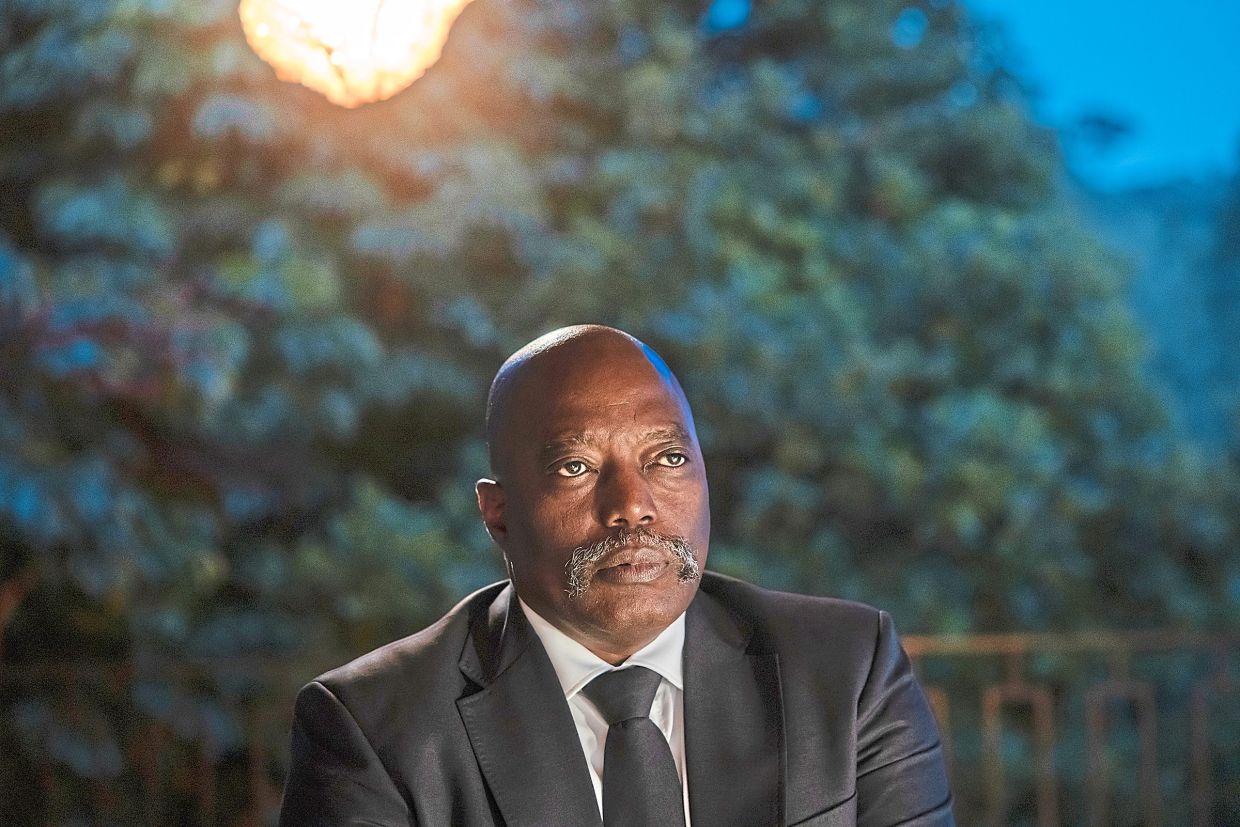
He was convicted of treason and sentenced to death in absentia last year, accused of covertly leading M23, the militia now occupying Goma.
The week before our interview, a drone attack killed a French aid worker just metres away from one of his properties on Lake Kivu.
The rebels said Congolese forces were responsible for the attack. The government denied that accusation.
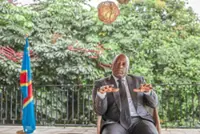
Our interview was held at another lakeside property owned by Kabila, hidden behind two gates, lush gardens and men holding guns. He emerged unobtrusively from a door on the mansion’s wide terrace and sat down for his first major interview in eight years.
Over the next few hours, he hinted at his role in rigging Congo’s 2018 election, vigorously defended living in territory occupied by a ruthless rebel group and was evasive about wanting to lead Congo again.
When he first became president, Kabila took over a fractured nation that had been led by his father, a rebel-turned-president who was assassinated in 2001 in the capital, Kinshasa.
At just 29, Kabila proved a canny political operator, introducing a new constitution and holding Congo’s first free elections in four decades, in 2006.
He oversaw Congo’s first peaceful transfer of power in 2019, with the inauguration of Tshisekedi.
But that election was marred by accusations of rigging and backdoor deals, and after an alliance between the two men collapsed, Kabila went into self-imposed exile in South Africa. He returned to Congo after M23’s takeover of Goma last year.
I asked him why he came back.
“I’m home,” he said. “The real question is, why am I not in Kinshasa?”
Tshisekedi’s government sees Kabila as “the undisputed leader of M23”, as declared by the military judge who convicted him last year.
The rebel militia was founded in 2012 and is backed by Rwanda, according to the United Nations. It is by far the strongest of dozens of armed groups in eastern Congo, which is rich in the valuable minerals that power smartphones. M23 lay dormant for almost a decade before reemerging in 2021.
In a statement, Congo’s communications minister, Patrice Muyaya, said Kabila was “visibly in the pay” of Rwanda, “whose false narrative he regularly relays”.
Kabila said he is living under the protection of M23 – rebels he fought in office – simply because it controls Goma.
He called Tshisekedi’s government institutions illegitimate.
“Trying to link the rebellion to Mr Kabila is just stupidity,” he said, referring to himself in the third person.
Though Kabila is a man of spectacular wealth, he portrayed himself during our interview as a humble man of the land.
“I basically am a farmer,” he said.
Since he left office, however, investigators have uncovered the kleptocratic system he and his inner circle used to enrich themselves in a country where teachers earn around US$100 a month.
He denied reports of embezzlement.
After the assassination of his father Laurent-Desire Kabila, who was supported by Rwanda, Joseph Kabila was installed as leader of a nation that was “close to nonexistent”, he said.
But his legacy as a transformative leader violently unravelled when he clung to power for two years beyond his constitutional mandate, resulting in deadly protests. When the election finally took place in 2018, leaked data showed huge electoral fraud.
Kabila is said to have engineered a backroom power-sharing deal that installed Tshisekedi as his successor, even though the data and observers indicated that opposition candidate Martin Fayulu had won.
In the interview, Kabila hinted at manipulating the vote.
“We, in our very wise way of thinking, we thought in order for the situation to continue to be as stable as it was, it was important for the president to have the majority and for there to be a coalition,” he said. “And that’s the agreement that was signed.”
Seven years later, he has some regrets.
“You can play games with quite a lot of things, but one of those should not be the leadership of a country,” he said. “With hindsight, those are things that we could and should have changed.”
The relationship between Kabila and Tshisekedi soured quickly.
Kabila accused Tshisekedi’s government of targeting opponents, denying his own administration’s oppression.
“I’d like to see someone who’ll tell me who the political prisoners were at that time,” he said.
In Goma, Kabila is safe from the death sentence imposed on him at his trial, which Human Rights Watch called “blatantly unfair”.
As crickets struck up and glassy Lake Kivu disappeared into the night, he said his main failure as president was not transforming the Congolese into “better citizens”.
Then, he said, “you get better leaders”. — ©2026 The New York Times Company
This article originally appeared in The New York Times