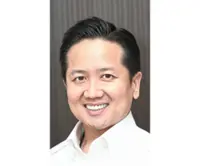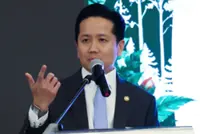
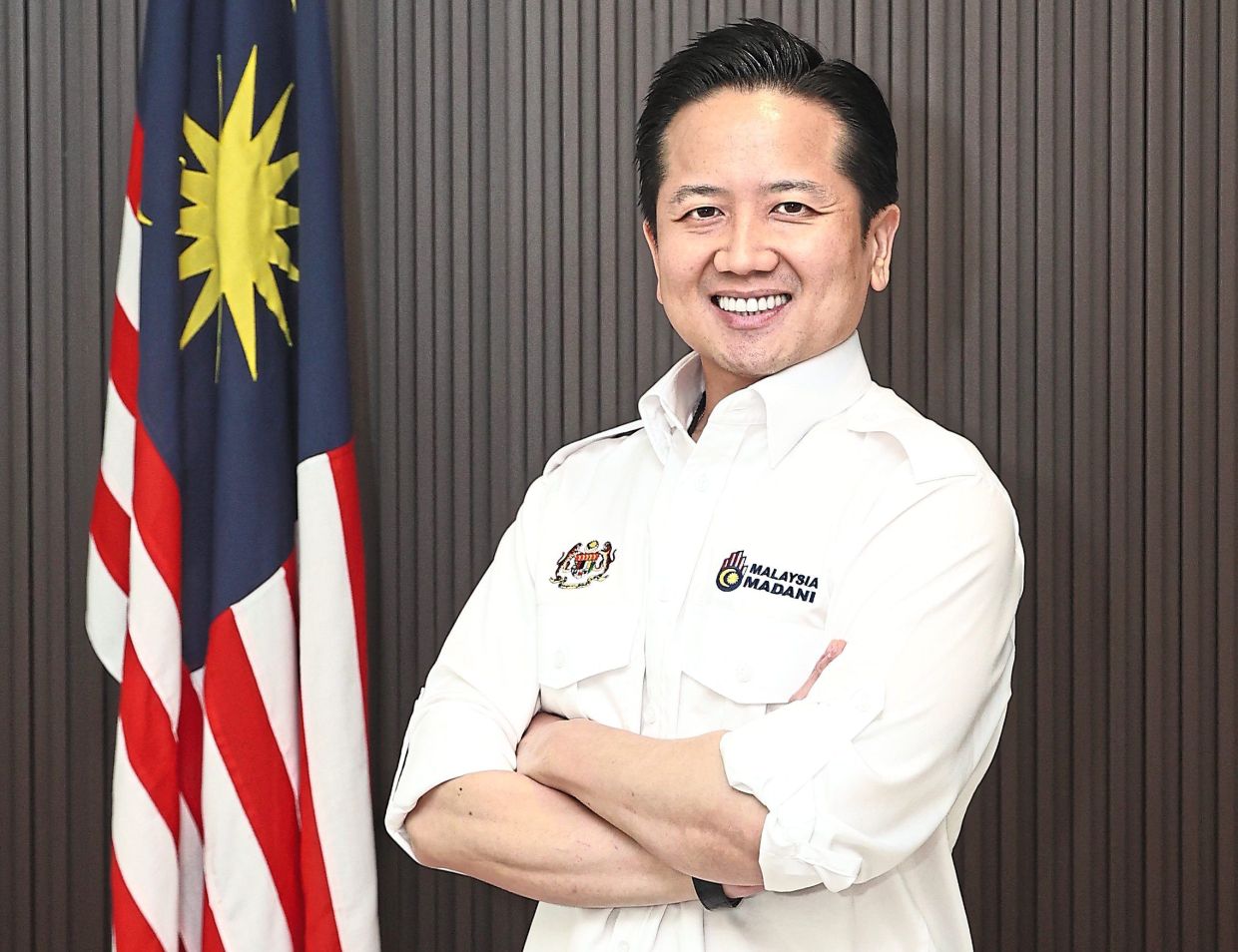
DATUK Seri Arthur Joseph Kurup has a mission to fulfil and he intends to achieve it before he leaves his post, and it is to ensure the nation has a framework to rely on when it comes to climate change.
His slight frame along with boyish looks and a cheeky grin may belie the fact that his ministerial portfolio – that of Natural Resources and Environmental Sustainability (NRES) – carries a serious, existential responsibility, not only for Malaysia but also the planet.
However, when Kurup starts talking about the need for the country to be at the forefront of staying as green as possible and reducing its carbon emissions, you know that this is one man intent on fulfilling his mission.
His main concern for now is pushing the National Climate Change Bill (RUUPIN) – which is a proposed piece of legislation driven by NRES – to create a comprehensive legal framework to address climate change.
“The ministry is fighting to establish this Act to shift Malaysia from voluntary climate actions to binding, structured, and legally enforceable measures.
“We would have a lot of explanation to do, but I think the awareness of our society is actually quite high now.
“Now it’s not a matter of whether we need to persuade people about the effects of climate change.
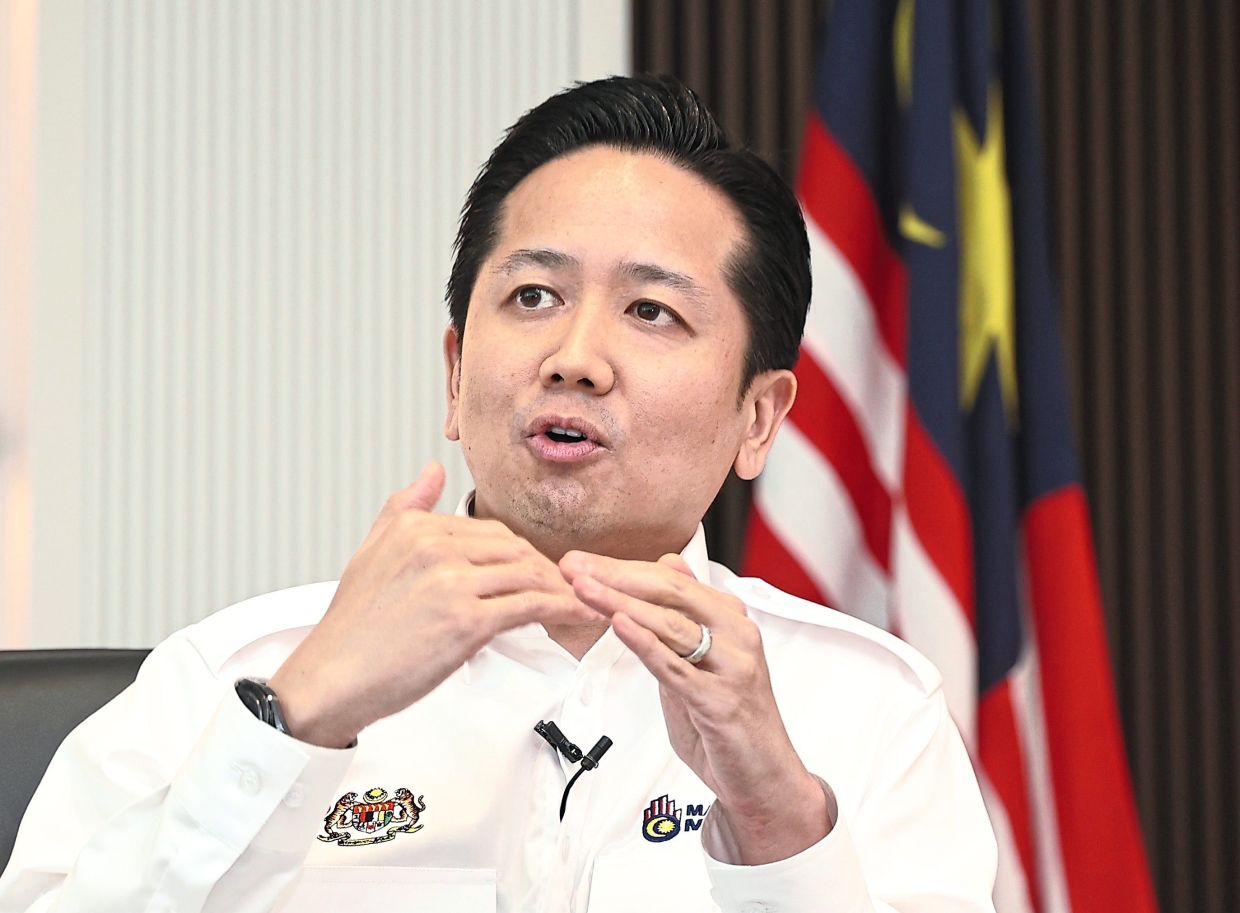
“The questions now being directed at us are how fast we can implement our climate change agenda.
“We know all the basics, reducing plastic waste, trying to transition away from fossil fuels.
“And I think all the hard conversations have already been done. The convincing has already been done. Now it’s a question of implementation,” says Kurup.
The two-term MP representing Pensiangan in Sabah shares that while he had enjoyed his previous stint at the World Trade Organisation in Geneva, Switzerland, before making the decision to return home, his heart always was and will be with Malaysia. Kurup, 43, who is a trained lawyer and economist, is also president of Parti Bersatu Rakyat Sabah (PBRS).
Another immediate matter Kurup is handling at the NRES is the issue of carbon trading. This is a plan to offset Malaysia’s carbon emissions while also educating the public on using carbon credits and taxing corporate Malaysia if checks are not made on its carbon emissions.
“When we look at carbon trading, we need to look at both the carbon tax and also the carbon credit. That’s where the trading is.
“If you read the RUUPIN together with the National Carbon Market Policy, the NCMP, our main intention there is to make sure our carbon emissions can be monitored, verified, and then traded.
“We want to achieve a framework where we first recognise our carbon credits. We have a carbon sink and how do we price that?
“Once we price it, how do we then start to trade it so that our industries can use that to offset their carbon emissions?
“And if they pollute more than the threshold, then they’ll pay the tax,” says Kurup, before laying out what else is in store for Malaysia’s climate action to Sunday Star.
Act on climate change
> What is the timeline for the National Climate Change Bill?
The National Climate Change Bill or Rang Undang-Undang Perubahan Iklim Negara (RUUPIN) is the framework for issues pertaining to climate change in Malaysia – the legal teeth, so to say, the legal enforcement power.
I hope that we’ll be able to bring RUUPIN to Parliament by the middle of this year, which is the next session. It’s currently at the AGC [Attorney General’s Chambers]. And we are working to refine all the finer points.
Carbon trade and carbon tax
> Can you tell us more about the National Carbon Market Policy (NCMP)?
When we look at carbon trading, we need to look at both the carbon tax and also the carbon credit. That’s where the trading is.
Carbon tax is where we collect revenue or we penalise those that are polluting our environment. And the carbon credit is where it’s used to offset that.
Under the policy, we need to first say what we want to achieve in a framework where we first recognise our carbon credits.
We have a carbon sink [a natural or artificial reservoir that absorbs and stores the atmosphere’s carbon] such as our vast forests. And how do we price that? Once we price it, how do we then start to trade it so that our industries can use that to offset their carbon emissions?
And if they pollute more than the threshold, then they’ll pay the tax. The threshold will be determined under the RUUPIN.
> What is the framework for carbon trading?
We have the National Policy on Climate Change 2.0 – the framework designed to transition the nation towards a low- carbon economy and achieve net zero greenhouse gas emissions by 2050.
All my predecessors have done a lot of work as well to get things into the pipeline.
So I’d like to see my time here, especially in the first year, to be more about implementation rather than planning.
> How are stakeholders reacting to the carbon trading proposals ?
We’ve had a lot of engagement sessions with industries, even for RUUPIN and also the carbon market. We’ve already had more than 20 engagement sessions, including with all the states as well. So it hasn’t been as hard as I initially thought it would be.
Now it’s more a question about implementation and how soon we can push it through.
> How do we monitor and verify the carbon credits?
It can be quite a complex task. How do you measure carbon? So that's where we've got the mechanisms like the verra standard or the gold standard.
How do we measure it and then how do we price it?
Even after we price it, how do we make sure it's recognised by the other authorities or other countries?
Because we are part of the Paris Agreement and we want to trade our carbon across borders.
So how can we make sure other countries also recognise the price that we impose on our carbon credits?
(The Paris Agreement is a legally binding international treaty adopted in 2015 to combat climate change).
> How do you harmonise carbon capture in the different states as forests come under state purview?
In the states, the state governments are the legal owners of the land, including the forest reserves. And the forest reserves are really the hard assets that produce the carbon credits – but they belong to the states.
So we need to make sure that all the carbon credits across all the states are harmonised.
Now why must it be harmonised so that we have a standard trading price? Because as the central government, we are the ones that report our international obligations under the Paris Agreement.
So we cannot have different prices. The Federal Government has to harmonise it. Then we report our international commitments. If you want to trade it, there must be a national price.
> Which areas will these carbon taxes go to?
With this national adaptation fund from the tax that we collect, it’s going into real world infrastructure projects, more EIA [environmental impact assessment] studies that will make sure that we can have longer-term solutions.
Plastic pollution
> Why do you think Malaysians love our plastics – especially plastic bags – so much?
In terms of awareness I think it's no question everybody knows the threats of single use plastic.
But our technology is getting better and we've got a lot of containers that are made from biobiodegradable material such as from paddy waste or pineapple husk, all that.
All these things are now available. We need to also see how we can make it more cost effective for the industries.
Perhaps, the culture as well – in the school canteen we'd buy our noodles in a plastic bag or our drinks and people still have some sentimental values about that.
> What is our target to eliminate single plastic usage?
Our target is to eliminate single use plastics by 2030.
We are halfway there and a lot of that I have to thank all the states that have really been cooperative in this regards like Penang, Sabah, Selangor have been very cooperative.
We need to engage the states more and perhaps do some intervention.
> How do we create more awareness to curb people’s usage of single-use plastic?
We would have to introduce alternatives that are available to them and perhaps this again would have to work with the state governments and the local authorities so that they can locally produce it at their level.
The fuel crisis and renewable energy
> You have repeatedly spoken about how Malaysians should start looking at renewable energy seriously. Why?
We are now at a time when fossil fuel is of major concern. When the Hormuz Strait was cut off, then everybody started thinking, “OK, I’ve got to save gas, I’ve got to save petrol – the ships are not coming”.
Suddenly petrol becomes a huge concern when before this we just go to the pump and just pump it. We didn’t think of how much we are using, how much we are burning before the conflict in West Asia.
> Is the spike in public interest in fuel usage a good thing for the NRES?
The geopolitical crisis has showed us that, first of all, as a globalised world and as a trading nation, we cannot be isolated from what happens in other parts of the world.
Number two, it also shows that with the volatility in the price, we cannot keep on relying on fossil fuels.
Number three, this is when people need to actually make more green transitions, for example, to EV [electric vehicles].
Those that have made the transition to EV earlier, they may not be feeling the pinch of the rise in the petrol price right now. That’s why we are being flexible in terms of when we implement the carbon tax.
> What sources of renewable energy have we taken for granted?
First of all, the sun’s renewable energy. Our rate of sunlight here is so much higher compared with other countries, seasonal countries even.
Number two, we are very high in our forest coverage and that is a huge advantage which we must make use of. Our international obligation is to keep our forestry coverage above 50%. That was our obligation made at the Rio de Janeiro Summit back in 1992.
> How do we harness Sabah and Sarawak’s vast forests to ensure that Malaysia’s carbon emissions are offset?
In the peninsula, our forestry coverage is only left at 43%. But in Sabah and Sarawak, it’s about 63% and 64%.
So Sabah and Sarawak are the ones helping the whole of Malaysia to meet its international obligations. Without Sabah and Sarawak, we wouldn’t reach the minimum 50%.
That’s why in Sabah, we are a carbon sink. We are producing negative carbon. That’s how Sabah and Sarawak help the peninsula to offset carbon emissions.
> How would you promote the use of energy-efficient vehicles in the middle income group as EVs are the top-end when it comes to prices?
This would really need a whole nation, whole of government approach if we were to introduce, or really to promote higher use of EV, for example, number one, we’d have to make it more affordable, and then we would engage with the other relevant industries, Miti [Ministry of Investment, Trade and Industry] and other ministries.
For example, how do we provide tax incentives as well for those who are making the transition from fossil fuel-based to renewable energy-based?
> Even if more people could afford EVs, will the infrastructure support their use – for example, are there enough charging stations?
People might say, hey, we don’t have enough charging stations or our building can’t even get a charging station approved.
So we also need to work with all the state governments to make sure how we have enough, not only the infrastructure, but the frequency, the availability of it. Because if you go to Sabah, for example, the distances are very far.
People still have a high reliance on diesel-powered vehicles. Range anxiety is a big factor when it comes to using EVs outside cities compared with city-based driving.