
LAST year was challenging for the Association of Southeast Asian Nations (Asean). Its leaders struggled to find viable solutions to addressing the ongoing conflict in Myanmar, while border clashes between Cambodia and Thailand were a jarring reminder of long-standing territorial disputes and cultural tensions that historically beset the region. And yet, even in challenging times, the bloc hasn’t faltered in its overriding purpose. During 2025, it recorded two milestones – its expansion to 11 members and the “substantive agreement” of the Asean Digital Economy Framework Agreement (Defa) – both partnership models that merit exploration.
Timor-Leste’s accession to Asean in October 2025 stands as a heartening example of the power of partnership in challenging times. It underscores Asean’s long-standing commitment to one vision, one identity, and one community, and highlights how the bloc’s members can trade years of enmity for mutual support to achieve an outcome that ultimately benefits the bloc as well as its composite parts.
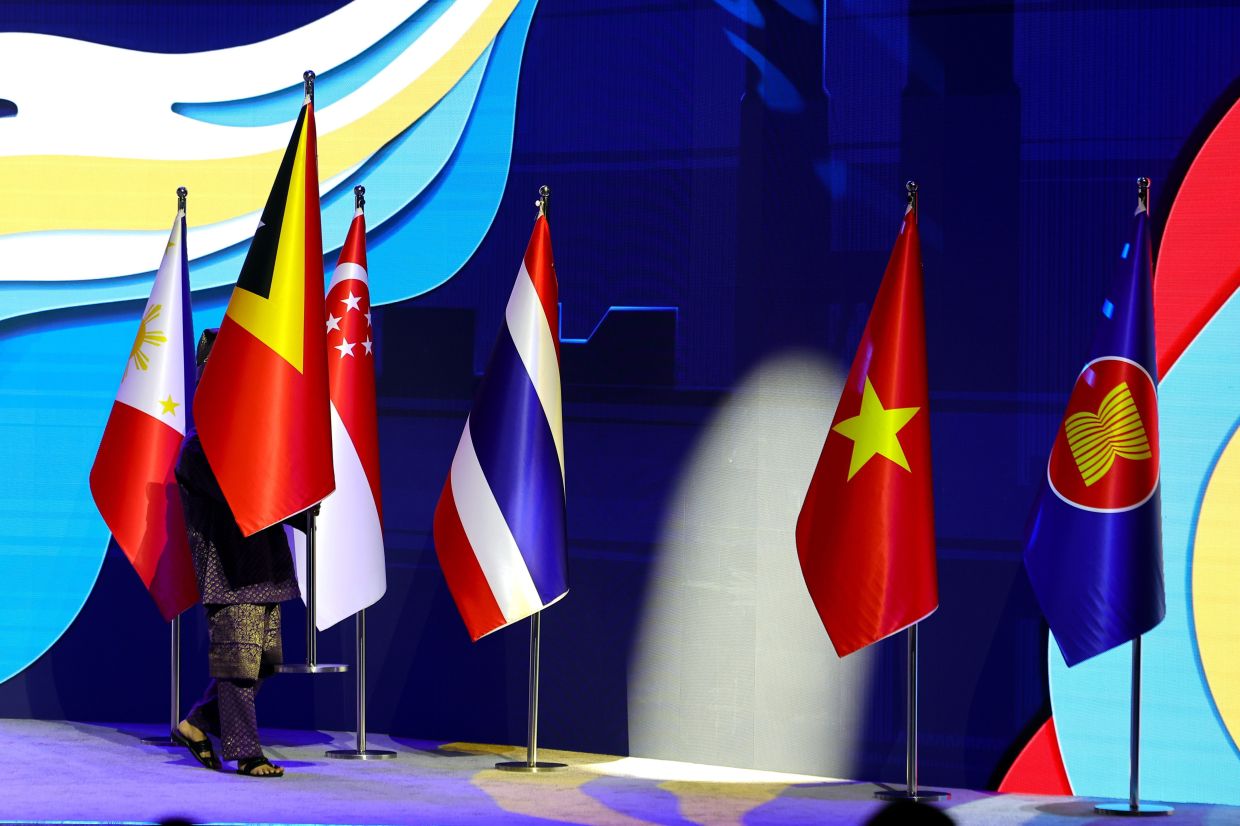
It’s taken 14 years for one of the world’s youngest democracies to become part of the bloc, and to achieve this, both Timor-Leste and Indonesia have put years of animosity behind them.
It’s both a symbolic and transactional partnership. Asean offers the small, young nation regional solidarity, economic development through enhanced opportunities and market access, security, a boost to its sovereignty and a belief that it is ultimately stronger as part of the union.
In turn, Timor-Leste’s accession further boosts Asean’s integrity, particularly in areas like its democratic standing and political inclusivity. It potentially offers new market access, and – given its positioning and relations – greater leverage of its strategic location between the Indian and Pacific Oceans.
With accession accomplished, there is much work to be done, not least of which is bringing Timor-Leste’s developing economy into the wider economic union. Highlighting one means by which Asean works in this respect is Defa. This is the world’s first region-wide agreement focused on digital economy governance and is due to be signed this year.
It aims to accelerate digital transformation throughout the region by establishing an open, secure, interoperable digital economy. It will provide a dedicated framework for the whole bloc, in which digital trade rules will be harmonized, cross-border data flow supported, and coherent regulations in areas like e-commerce and digital payments established.
Among its main proposals is the creation of a comprehensive, frequently updated data regulation repository, designed to boost transparency and reduce compliance costs for business.
On the face of it, it would seem impossible that a bloc with such differing levels of economic and legal diversity can agree to a set of standards, particularly one in such a sophisticated area, but that’s exactly what member states have done.
Nor have Asean nations settled for the lowest common denominator, but instead are pursuing a phased approach, with highly developed economies like Singapore being first to satisfy the framework’s requirements before others are included as they make the requisite progress.
In working in partnership, Asean nations stand to develop a regional digital economy that forecasts suggest could reach US$1 trillion by 2030, potentially doubling once Defa is fully implemented.
Looking at Asean in microcosm, it is, like many other regions, a hotchpotch of different ethnicities, religions, political and economic priorities, and levels of development. Zoom out, however, and what it represents, achieves, and values, is impressive.
Each of its members remains committed to its core beliefs. It has functioned as a cohesive, viable economic, and political block for almost 60 years, and despite its significant differences in culture, political models, and socioeconomic indicators, hasn’t divided into competing blocks.
Much like the rest of the world, the bloc had a tough 2025, but Asean still recorded progress by retaining a focus on its core beliefs and working in partnership.
Among the report’s major findings is that while cooperation continues, it’s emerging in different forms to the past. Providing an example of this, it notes that Asean’s Defa represents an example of “coalitions of smaller economies,” a feature of new styled cooperation.
It also reveals that groups of nations are combining goals; in Asean, for example, decarbonisation targets have been combined with energy security goals.
In an era of large and often shared challenges, Asean’s approach reveals that while at a micro-level, collective differences can be sizable, through a collective approach and strong partnerships, far-reaching, wide-ranging, and substantive progress becomes possible. — Asia News Network
Joo-Ok Lee is the head of regional agenda for Asia-Pacific and a member of the executive committee at the World Economic Forum.