JALEEL Hamdan is running out of room to hold his prices steady.
The retailer is unsure if his store can afford not to raise prices, let alone absorb rising transport costs driven by higher diesel prices, among others. Although the government has already announced that diesel will be subsidised under the Budi Diesel programme starting next month, the 45-year-old from Shah Alam remains sceptical that things will become cheaper soon.
“Transport companies may not want to lower their fees too quickly. They may want to recoup earlier losses or are just preparing for future setbacks. We can only hope for things to be better.”
The father of four, who has been in the retail business for 20 years, is among those doubtful that recent developments in the Middle East – following the US-Israel-Iran conflict that saw the Strait of Hormuz closed – alongside ongoing peace talks between the US and Iran will quickly restore global supply chains.
The two countries are now navigating a fragile 60-day interim truce after a war that lasted nearly four months. The provisional agreement includes reopening the Strait of Hormuz, lifting the naval blockade, removing transit fees for ships passing through the strait and easing sanctions through a temporary licence allowing Iranian crude to be sold in US dollars. However, progress on other contentious issues – especially nuclear power development – remains delicate.
Nevertheless, in the Malaysian context, while recent developments in the Middle East have raised concerns about energy security, shipping costs and global trade, the situation should not be viewed solely through the lens of disruption, says Universiti Malaya’s Institute of Public Policy and Management deputy executive director (academic and student affairs) Dr Muhammad Danial Azman.
“For Malaysia, the more important question is whether the country can transform geopolitical uncertainty into strategic opportunity. The current environment highlights not only the vulnerabilities of global supply chains but also the advantages enjoyed by countries that are resilient, well-connected and diplomatically flexible.”
Real concerns
The immediate concern for Malaysia is less about physical shortages and more about increased volatility in global energy and logistics markets, says Muhammad Danial.
He points out that even in the absence of direct military escalation, uncertainty surrounding US-Iran relations and broader Middle East developments tends to raise risk premiums in global oil markets.
“This can contribute to higher fuel prices, transportation costs and operating expenses for businesses. However, the greater risk may not be oil prices alone. Modern supply chains are often affected first by rising maritime insurance premiums, war-risk surcharges, freight charges and financing costs. These additional costs are frequently passed along supply chains long before consumers notice significant changes at petrol stations.”
Consequently, the impact of the conflict has led Malaysia to ink a deal with Russia, seen as part of broader efforts to diversify energy sources, under which the latter will supply oil, gas and diesel over the long term.
Muhammad Danial says Malaysia’s efforts to diversify its energy partnerships, including cooperation with Russia and other energy-producing countries, may contribute positively to long-term energy security.
“Nevertheless, Malaysia remains closely integrated with global energy markets and cannot fully shield itself from international price fluctuations. The key challenge is therefore managing volatility rather than expecting complete price stability.”
And how might Malaysian businesses – especially manufacturers and exporters – turn these global shifts into opportunities to strengthen supply chains rather than merely absorb shocks?
Sunway University economics professor Dr Yeah Kim Leng says the global oil price shocks and resulting shortages in various petrochemical by-products and feedstocks caused by the closure of the Strait of Hormuz, serve as a wake-up call for manufacturers and producers to diversify their sources of supply and end-user markets.
“The crisis also reinforces the need to strengthen business resilience and implement business continuity plans.
"In the process, Malaysian businesses are discovering new sources and markets, and importantly, reducing vulnerabilities by cutting dependency on single energy sources, enhancing fuel efficiency, finding alternative critical inputs, and implementing strategies to mitigate margin compression, cost hikes and demand contraction due to more cautious consumer and business spending.”
What this means for people and businesses
With the US-Iran deal and Malaysia’s recent energy agreement with Russia, will fuel prices stabilise in a way that could ease household costs in the months ahead?
Yeah says oil prices appear to be stabilising, with Brent crude softening to below US$80 (RM331) per barrel as more positive developments – particularly increased shipments through the Strait of Hormuz – emerge from US-Iran peace negotiations within a 60- day window to secure a lasting deal.
“While households may not feel the impact of lower fuel prices if they use less than 200 litres of petrol a month, those who exceed the limit will see lower pump prices in the coming weeks. Topping off the positive news is Malaysia’s recent energy agreement with Russia, which will help the country avert debilitating fuel shortages, rationing and a potential energy crisis.
“The scenario is fortunately fast fading with these latest developments, although the oil market remains fragile and volatile.”
Yeah also says inflationary pressures and expectations will ease considerably if oil prices settle around US$70-US$80 (RM289-RM331) per barrel, leading to lower transportation and logistics costs, as well as cheaper imports with the resumption of energy and trade flows.
“Business and consumer confidence are expected to rebound under this risk-on environment as war premiums decline and supply shocks dissipate.
“Due to its large exposure to global trade and investment, Malaysia will likely rebound quicker as its industries and production capacities remain intact, supported by new capacities coming online from its large investment pipeline built over the past few years.”
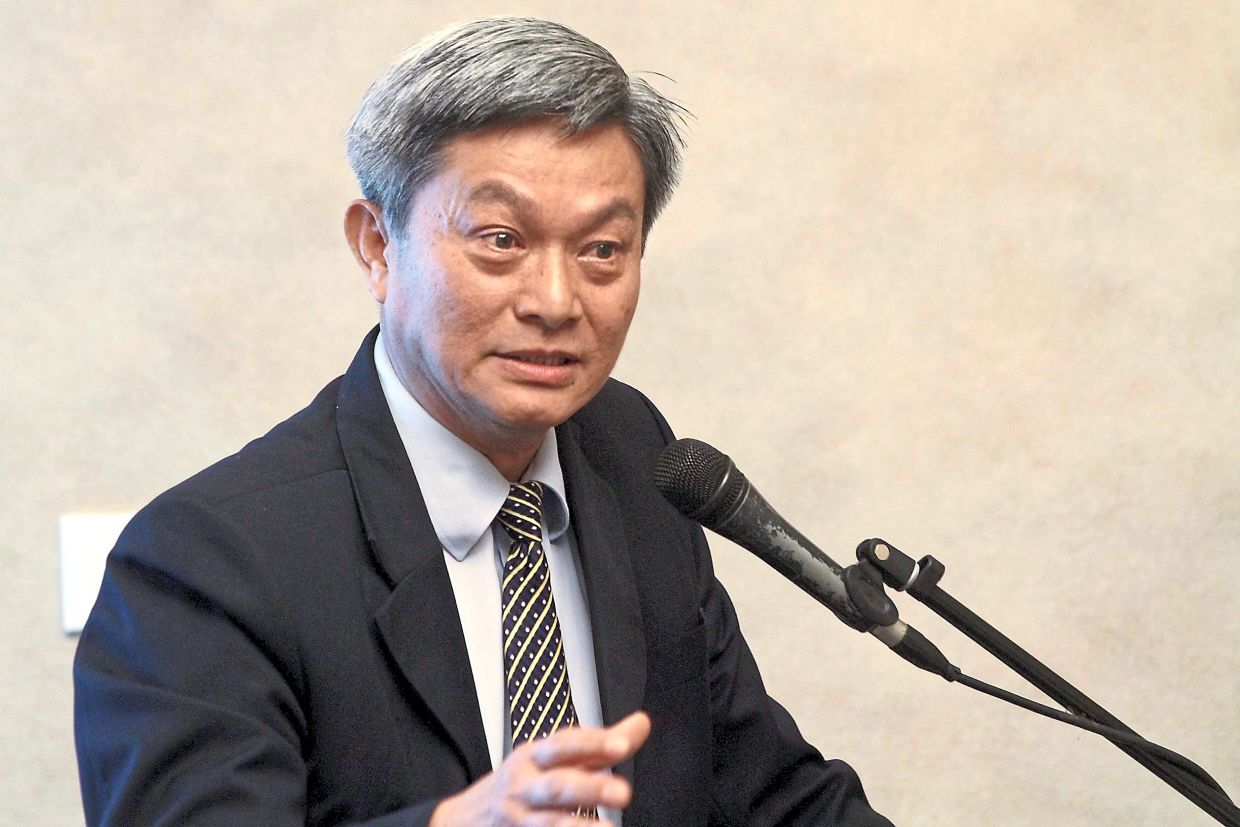
Industry-wise, Muhammad Danial says Malaysia’s manufacturing and logistics sectors are considerably more resilient today than during the 2020 Covid-19 pandemic; many businesses have since diversified supplier networks, improved inventory management and strengthened contingency planning. He says while some industries may face higher costs or temporary delays – particularly those dependent on imported raw materials, chemicals, industrial components and energy-intensive production – widespread disruptions are unlikely in the immediate term.
“Larger firms generally possess greater capacity to adapt through alternative sourcing arrangements and regional supply networks. The more important question is not whether Malaysia can continue obtaining supplies, but whether Malaysian businesses can remain competitive if energy, logistics, insurance and financing costs rise simultaneously.”
At the same time, he notes that periods of geopolitical uncertainty often trigger supply chain restructuring, with global corporations increasingly seeking politically stable, well-connected and reliable locations for manufacturing, warehousing, logistics and regional distribution.
“This presents an opportunity for Malaysia to attract new investment if it can position itself as a trusted and efficient regional hub.
“Geopolitical uncertainty often creates both winners and losers. While many countries focus primarily on managing risks, Malaysia should also recognise the opportunities emerging from supply chain diversification and investment relocation.
“If current geopolitical pressures persist over the next three to five years, it is likely that more multinational firms will relocate selected logistics, warehousing and manufacturing activities into South-East Asia. Malaysia is well positioned to capture part of that transition, provided it continues to improve investment facilitation, infrastructure development and business-friendly reforms.”
Way forward
In terms of recovery, Yeah says the signs that households and businesses should watch for include strengthening of retail trade and services output, employment and wages, bank lending, stock market performance and other indicators pointing to rising spending.
“Malaysia’s industrial output surprisingly rose 8.2% in April amid the Gulf crisis, pointing to inventory rebuilding and stockpiling, while merchandise exports and imports rose 5.2% and 4.6% respectively in the January-March quarter, which covered a full month of global crisis impact.”
He also says the energy agreement with Russia is a good example of leveraging intergovernmental relationships to boost energy security.
“Similar agreements – such as those related to food security and environmental safety – could be forged either bilaterally or through Malaysia’s membership in various regional trade agreements.
“The energy shock to Malaysia, despite being a net exporter, highlights the need to build larger reserves or secure adequate buffers through bilateral arrangements with partner countries.
“Given the uncertainty surrounding the US-Iran peace deal, further refinements to fuel subsidy systems should continue to achieve better targeting and reduce leakages while rebuilding fiscal space and resilience to shield against any new or recurring crisis.”

Muhammad Danial says the government should focus on building resilience before disruptions intensify – including diversifying sources of energy and strategic imports, strengthening domestic stockpiles of critical goods, improving port and logistics efficiency, and providing targeted assistance to sectors most exposed to rising transportation and input costs.
“Malaysia should also deepen regional cooperation through Asean. No country can completely shield itself from global disruptions, but Asean’s combined market of more than 680 million people, production capacity and logistics networks can provide an important buffer against external shocks.
“More broadly, policymakers should recognise that economic security has become inseparable from national security. Energy security, food security, technological resilience and supply chain stability are no longer purely economic concerns but strategic issues that directly affect national competitiveness, economic growth and social stability.”
On whether Malaysia should remain dependent on Middle Eastern supply chains, Muhammad Danial adds that much will in turn depends on how geopolitical developments unfold in the coming months.
“If diplomatic engagement resumes and tensions ease, some pressure on energy and shipping markets may gradually subside. However, businesses are unlikely to return fully to pre-crisis assumptions. The global economy is entering an era in which uncertainty is becoming a structural feature rather than a temporary disruption. Businesses and governments are increasingly incorporating geopolitical risks into long-term planning, investment decisions and sourcing strategies.”
He stresses that rather than asking when conditions will return to normal, the more relevant question may be how quickly countries can adapt to a new environment characterised by heightened geopolitical competition, supply chain diversification and economic fragmentation.
“Malaysia’s prospects remain relatively positive because the country possesses a diversified economy, strong regional connectivity and established manufacturing capabilities. However, resilience and adaptability will be more important than simply waiting for conditions to normalise.
“The public should not expect widespread shortages or empty supermarket shelves. However, both businesses and governments will need to place greater emphasis on preparedness, diversification and resilience in the years ahead.”