



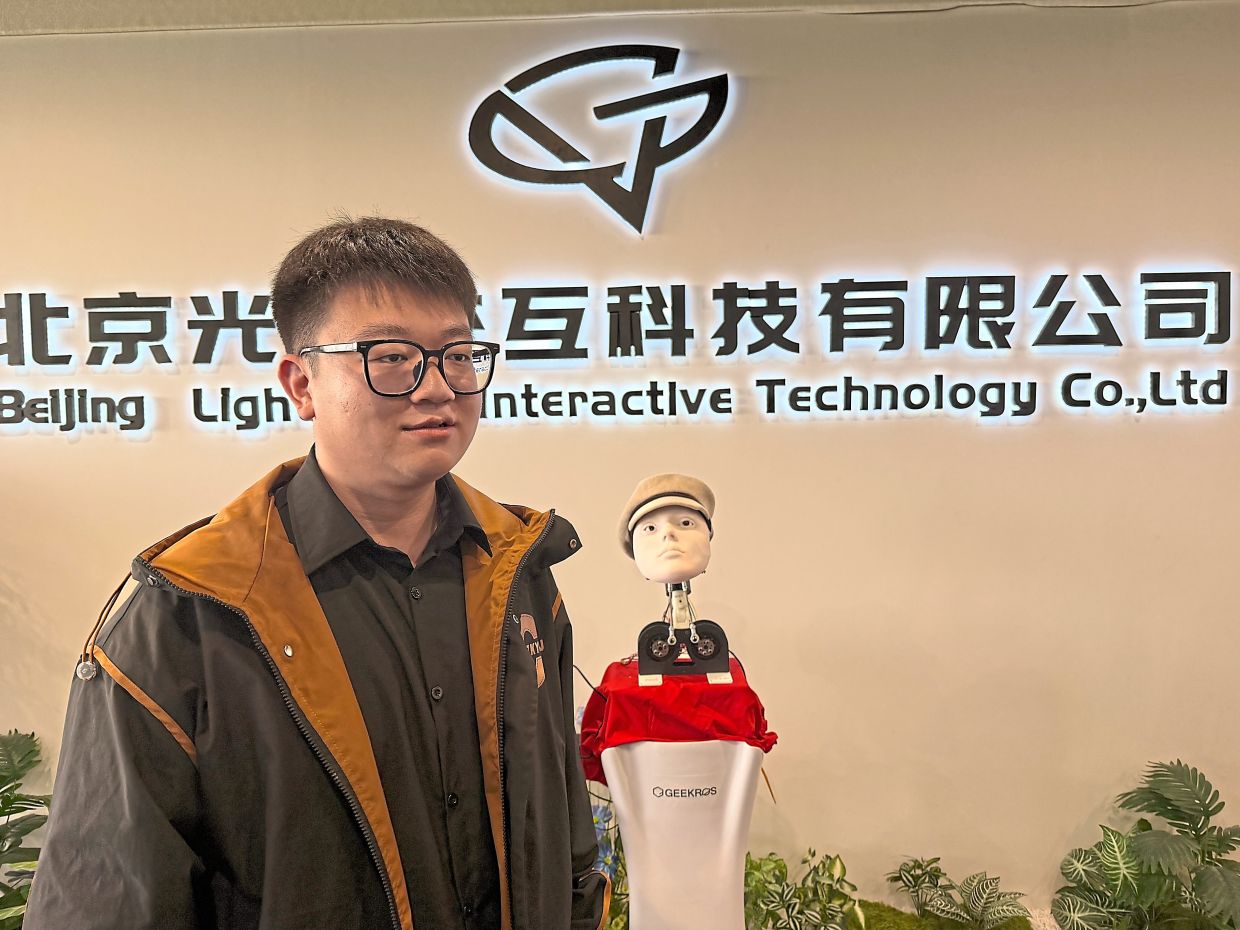
ITS name, PolyFace X, befits a cold, scientific robot but its creators have billed it as an “emotional humanoid robot”.
It is now used mainly at scenic attractions and cultural events in China to interact with visitors.
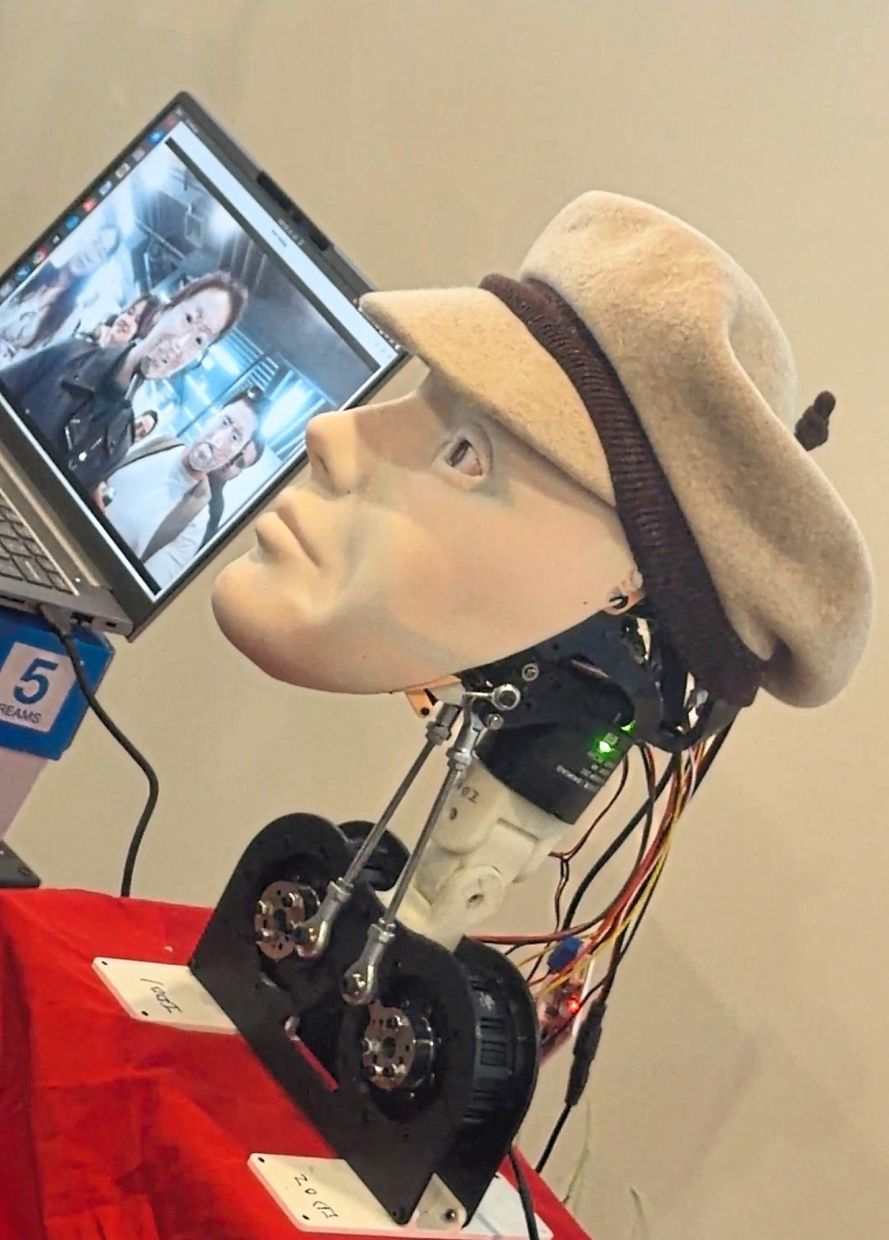
With high-precision motors in its face, the robot can mimic a range of expressions – from curiosity and surprise to exaggerated dramatic poses.
A creation of Beijing Light Cone Interaction Technology, the robot took about six months to build.
PolyFace X is designed to draw crowds and create a talking point, says Liu Zhi Kang, co-founder of Light Cone.
The humanoid robot was recently presented to a group of journalists from 16 media organisations across Apec (Asia-Pacific Economic Cooperation) economies during a seminar at the China Foreign Affairs University in Beijing.
The seminar, followed by a 14-day study tour, was organised by the China Public Diplomacy Association, the university, and other bodies, and was held to showcase how China sees technology, talent, and innovation.
It is part of Apec China 2026, which will culminate with a summit in November in Shenzhen.
During the tour, reporters met developers in Beijing and Shen-zhen who are building different kinds of robots – from machines which “express” themselves at tourist spots to heavy-duty workhorses for factories.
Liu says the development of humanoid robotics is still at an early stage.
“At this point, they are specialised robots, not general-purpose ones. It may take around a decade before the technology really matures.”
From heavy-duty workhorses to home companions
For now, Liu says, most real-world deployments are limited.
Instead, the robots are more for research labs, universities, demonstration halls, and narrow industrial settings, rather than for being deployed in the millions in homes and offices.
Even so, he is optimistic about what comes next – and where humans fit into that future.
He says developers are now working on more lifelike versions, with future models potentially deployed as companions for the elderly and children, blending entertainment with simple educational functions.
People worry that artificial intelligence (AI) and robots will take their jobs, he says.
“In reality, it is people using AI who will replace other people. The real potential lies in human-machine collaboration.”
In his view, the first major shift will be around safety. Robots will increasingly step into hazardous environments – from chemical plants to disaster zones – while humans move into roles where presence, empathy, and creativity matter.
“Sectors like the arts, creative industries, and tourism could actually see more opportunities, not fewer,” he says.
Some are made bigger
In Shenzhen, EngineAI is taking a broader approach. Founded in October 2023, the company focuses on general AI and humanoid robots for industry. It has already launched several models.
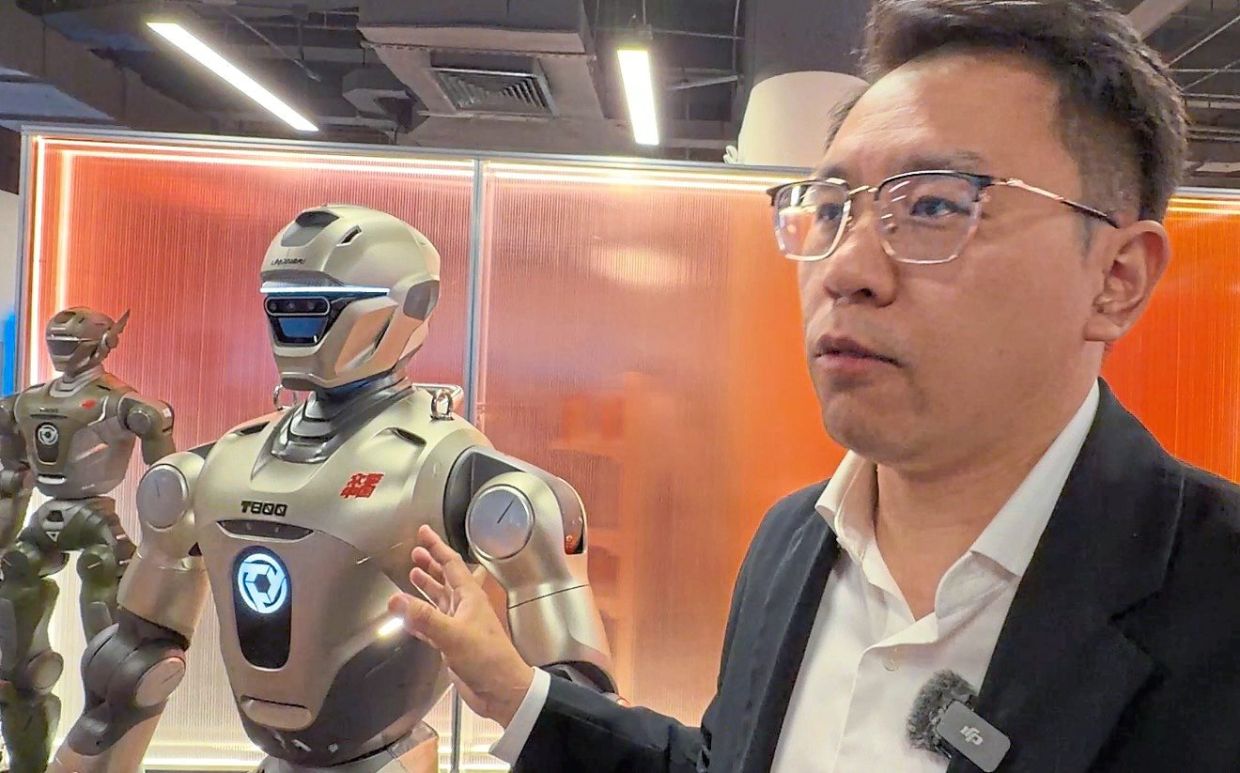
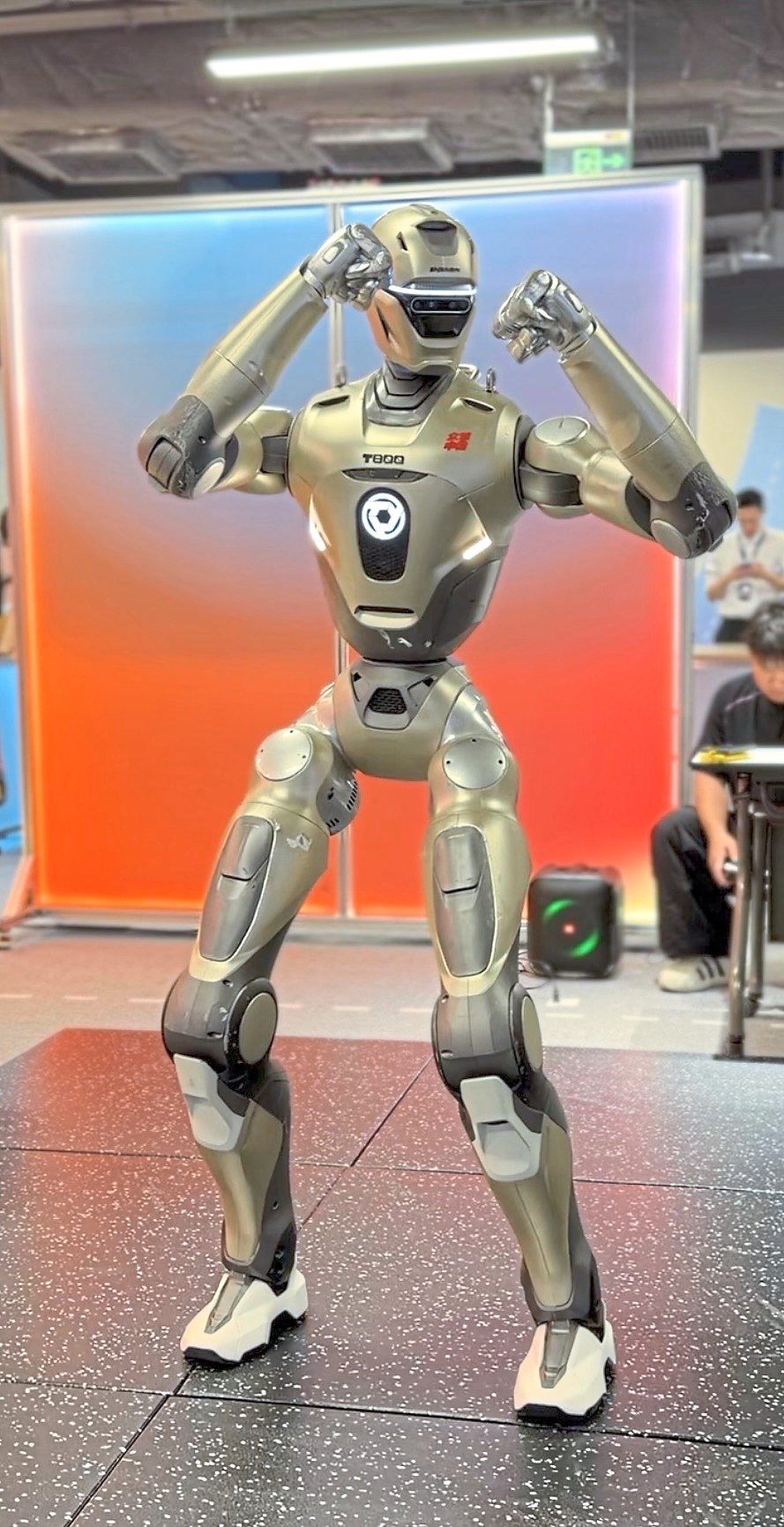
One of them is the T800, a heavy-duty, full-size humanoid robot that is 173cm tall, and that has 29 moving joints across its body, not including the hands. Each hand has seven joints of its own and can carry loads weighing up to 5kg.
The T800 is built for tough jobs, from factory work to public security patrols, and even robot combat. It uses high‑torque joints (up to 450Nm) and autonomous navigation to handle demanding tasks that would be exhausting or risky for humans.
With active cooling in its leg joints and a modular solid-state battery, it can run for about four hours of continuous, high‑intensity work.
The EngineAI SA01 is an open-source, bipedal robot platform designed for scientific research, academic education, and embodied AI development. It allows developers to test machine learning algorithms, experiment with natural gait movements, and perform dynamic manoeuvres like running and jumping
The EngineAI JS01 is a high- mobility, heavy-duty quadrupedal robot (often called a “robot leopard”) designed to carry heavy payloads of up to 60kg and navigate rugged, dangerous, or slippery real-world terrains.
Evan Yao, the company’s co- founder and general manager of marketing, says the real turning point will come when robots enter households in larger numbers.
“They’ll help you clean your house, take care of family members, and even act as personal tutors or companions.”
To reach that point, cost is crucial; EngineAI’s current prices start at US$49,000 (RM230,300) and go up to about US$80,000 (RM376,000).
Yao says that these figures are competitive compared with international labour costs for hazardous or repetitive roles.
But he believes that mass production could slash costs by roughly half.
“We think we can cut production costs by about 50%. In the future, the cost of this robot could be roughly around US$20,000 [RM94,000].”
‘Humans’ with better tools
Taken together, the message from Beijing and Shenzhen are similar: humanoid robots are coming, and they are getting cheaper and more capable – but the goal, at least for now, is not to make human resources obsolete.
Liu says the “winners” in the next decade are likely to be those who have learned to work alongside the machines.
Yao shares a similar view, saying that robots are tireless co- workers that can take on dangerous and mind-numbing tasks while humans move up the value chain.
The real test, both suggest, would not be whether robots can replace humans – but whether they can help build a world where humans are safer, more creative, and less stuck doing the jobs nobody wants.
The spurring of technology is fast becoming a highlight this year, which has been marked as the Apec “China Year”. The country has set three priorities for the summit: openness, innovation, and cooperation.
Officials want to move the idea of an Asia-Pacific community from words to action.
Shenzhen, which will host the summit, was chosen for a reason. The city transformed from a small fishing village into a global technology hub in four decades.
It is home to Huawei, Tencent and BYD, and spends over 6% of its GDP on research and development.
The city’s robotics firms, AI startups and electronics supply chains show the kind of growth that Apec aims to promote across the region.
For Apec delegates, Shenzhen offers a real-world example of what happens when an economy opens up and invests in innovation.
Roaring robots
Yao believes humanoid robots will take on dangerous, repetitive work while people move into safer, more creative roles.
Liu says the real promise of humanoid robots lies in human-machine collaboration, not a robot takeover.
PolyFace X, an ‘emotional humanoid robot’, pulls a dramatic pose for visitors using high‑ precision facial motors to switch from curiosity to surprise in seconds.
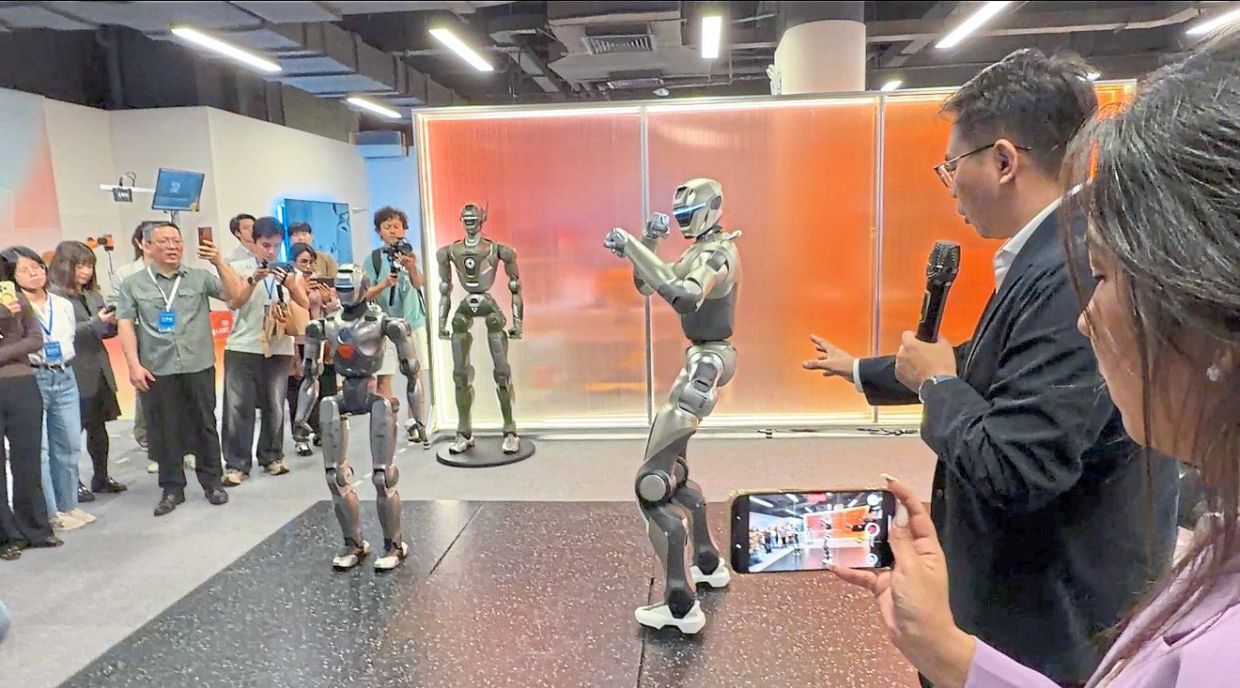
People snapping photos with a humanoid robot on display during a live demonstration, turning a tech showcase into an impromptu meet-and-greet with the future.
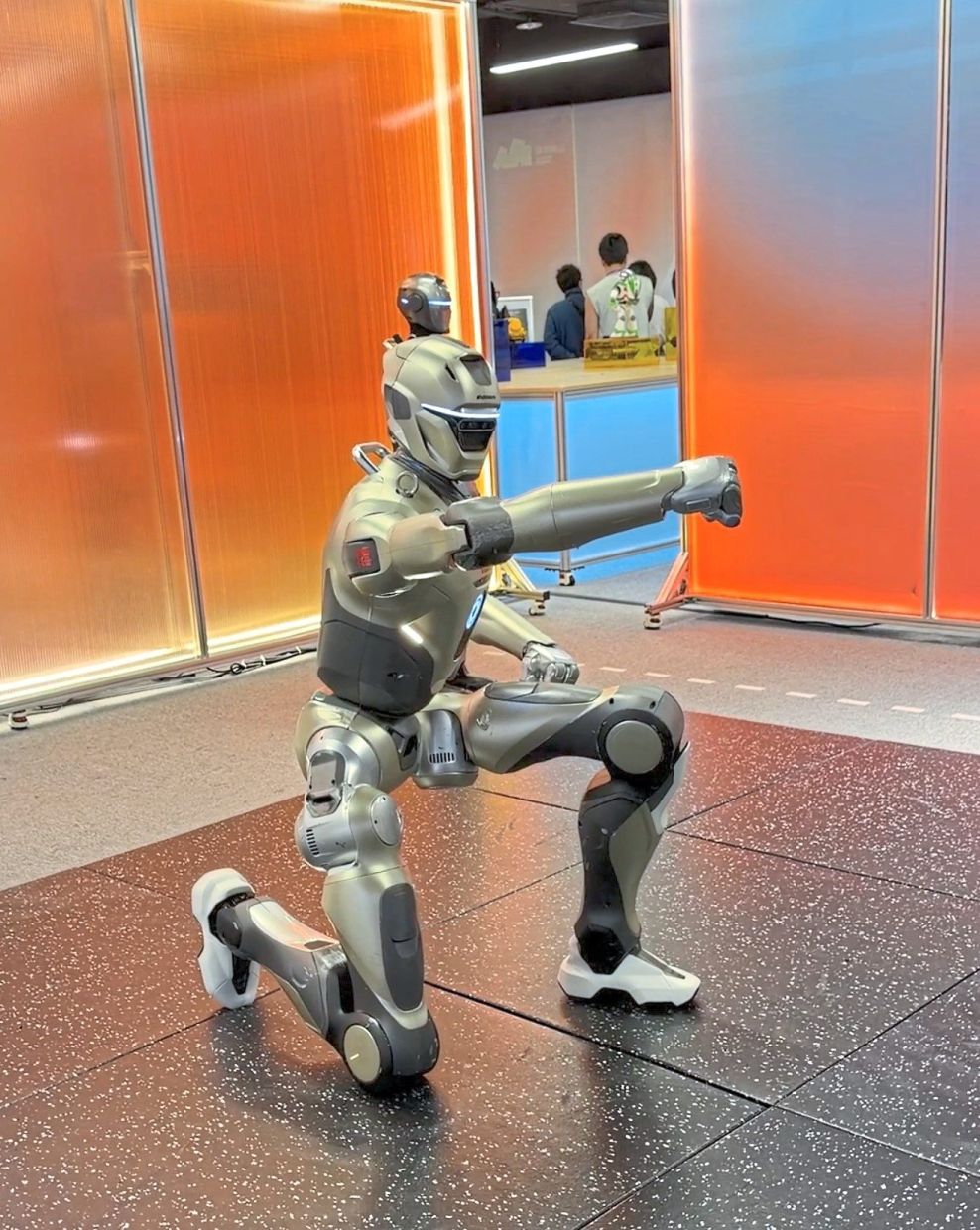
EngineAI’s T800 heavy-duty humanoid robot is designed for tough jobs such as factory work and public security patrols, using high‑torque joints and autonomous navigation to handle tasks that are exhausting or risky for humans.
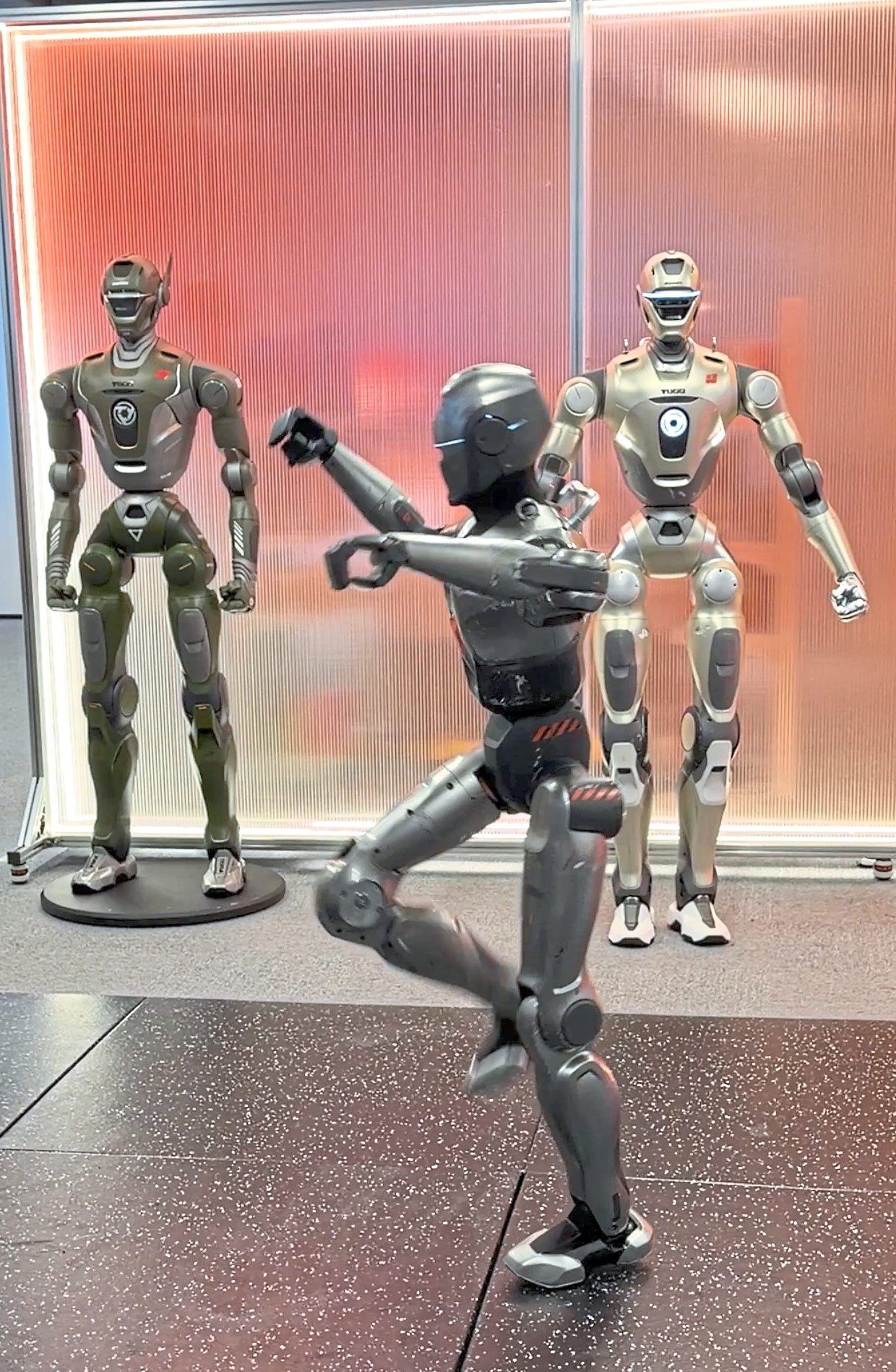
Next-generation machines: EngineAI’s PM01, billed as the world’s first fully open general embodied intelligence humanoid robot, can run, dance and even perform front flips, as it has been trained to move more like humans in real-world settings.
EngineAI’s T800 heavy-duty humanoid robot can use its high‑torque joints and autonomous navigation to handle tasks that are exhausting or risky for humans.
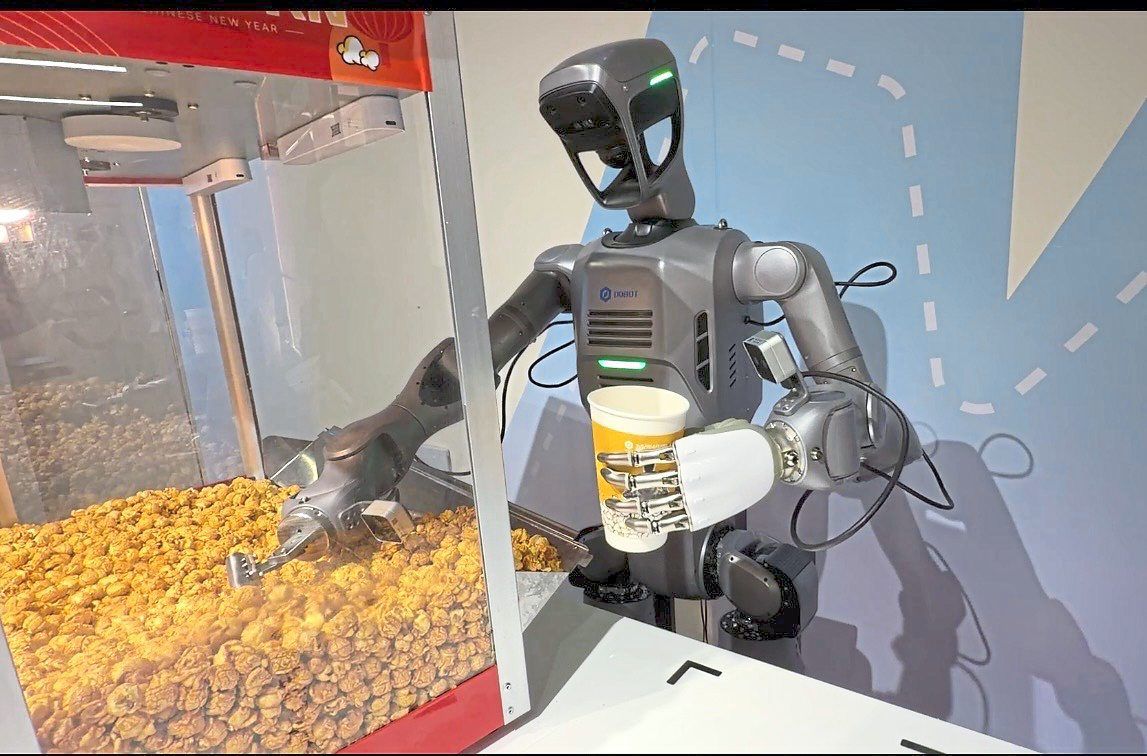
A humanoid robot sharing a tub of popcorn with visitors, offering a lighthearted glimpse of how machines are being designed to interact more naturally with people.
