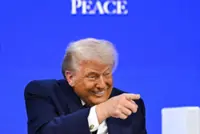
South Korea is facing gruelling tariffs by Trump. — Others
IN a sudden move, US president Donald Trump targeted South Korea, declaring that tariffs on Korean goods would be reverted to pre-trade deal levels.
On Jan 27, Trump said he was raising tariffs on South Korean exports to 25% from the current 15%, citing a delay in the country’s parliament approving the Seoul-Washington trade deal agreed upon last year.
Although Trump did not name a specific Bill, he appeared to be referring to the Special Act on Managing Korea-US Strategic Investments. The Bill was introduced to the South Korean National Assembly by the ruling Democratic Party on Nov 26, 2025, but has yet to be passed.
Under the Korea-US joint fact sheet outlining a broader package on security and trade, however, tariff reductions would apply retroactively from the Bill’s submission date, not its passage date.
Trump has essentially introduced the final passage of the Bill as a new prerequisite for lowering tariffs. This demand clearly runs counter to the purpose of the two countries’ agreement on tariffs.
The National Assembly has never expressed opposition to the tariff negotiation results and is currently following the standard legislative review process. Trump’s tendency towards unilateralism and unpredictability is well known, but completely reversing the terms of an agreement without prior notice is an action rarely seen in stable diplomatic relations.
But Seoul cannot afford to simply blame his nature. Discerning his true intentions is a matter of urgency; only then can Korea formulate an optimal response.
Trump’s sudden tariff hike may be a pressure tactic designed to force an expedited legislative process, as he has publicly signalled. Also, he appears intent on locking in South Korea’s US$350bil (RM1.4bil) investment pledge as an irreversible commitment, especially as the US Supreme Court prepares to rule on the legality of his reciprocal tariffs.
The Lee Jae Myung administration needs to consider whether the tariff bombshell is a sign that Washington’s underlying grievances regarding recent South Korean issues are now coming to the surface.
The US has voiced serious concern that the ruling party’s unilateral amendment to the Infor-mation and Communications Network Act creates “non-tariff barriers” against US tech companies.
Investigations and parliamentary hearings into Coupang, a Korean-based but US-listed company, over a massive data breach appear to have drawn the ire of the Trump administration, which views them as discriminatory actions against American business interests. Two weeks ago, a letter voicing apprehension over the digital regulatory legislation was delivered via James Heller, the acting US ambassador to South Korea.
More concerning is that the Korean government was seemingly blindsided, failing to detect the seriousness of these shifting US sentiments.
The latest tariff announcement came just one day after Prime Minister Kim Min-seok’s self-congratulatory remarks about his US trip. Kim touted the establishment of a hotline, noting that Vice President JD Vance had personally shared his direct phone number.
Upon the conclusion of the tariff talks, the Democratic Party hailed the deal as a “landmark diplomatic achievement in Korean history”, while lauding President Lee as a “brilliant negotiator and diplomatic genius”.
Lost in self-praise, the government failed to address the sluggish pace of legislation in the National Assembly, and the Prime Minister’s touted “hotline” with Washington proved useless the moment Trump dropped the tariff bombshell.
Admittedly, the implementation of South Korea’s investment commitments in the US is lagging behind the pace set by Japan and the European Union.
Nevertheless, this was an issue that could have easily been resolved through dialogue. Instead, the US bypassed consultation altogether, choosing a surprise announcement to hike tariffs.
The situation raises a fundamental question: How informed is Seoul, really, about what is happening behind the scenes in Washington? It is concerning that there may be gaps in Seoul’s dialogue channels and information networks with Washington. — The Korea Herald/Asia News Network