



THE global order has become increasingly transactional ever since United States president Donald Trump started leaning heavily on tariffs as a tool to apply geopolitical pressure, prompting countries around the world to reassess how to protect their interests without being forced into binary choices between major powers.In late January, Canadian Prime Minister Mark Carney argued that middle powers need to work more closely together in response to these shifts, rather than navigating them alone.
For a highly trade-dependent country like Malaysia, the challenge is not just how to respond to tariffs imposed by major powers but also how to preserve the space to deepen relationships with existing and new partners amid an evolving geopolitical landscape.
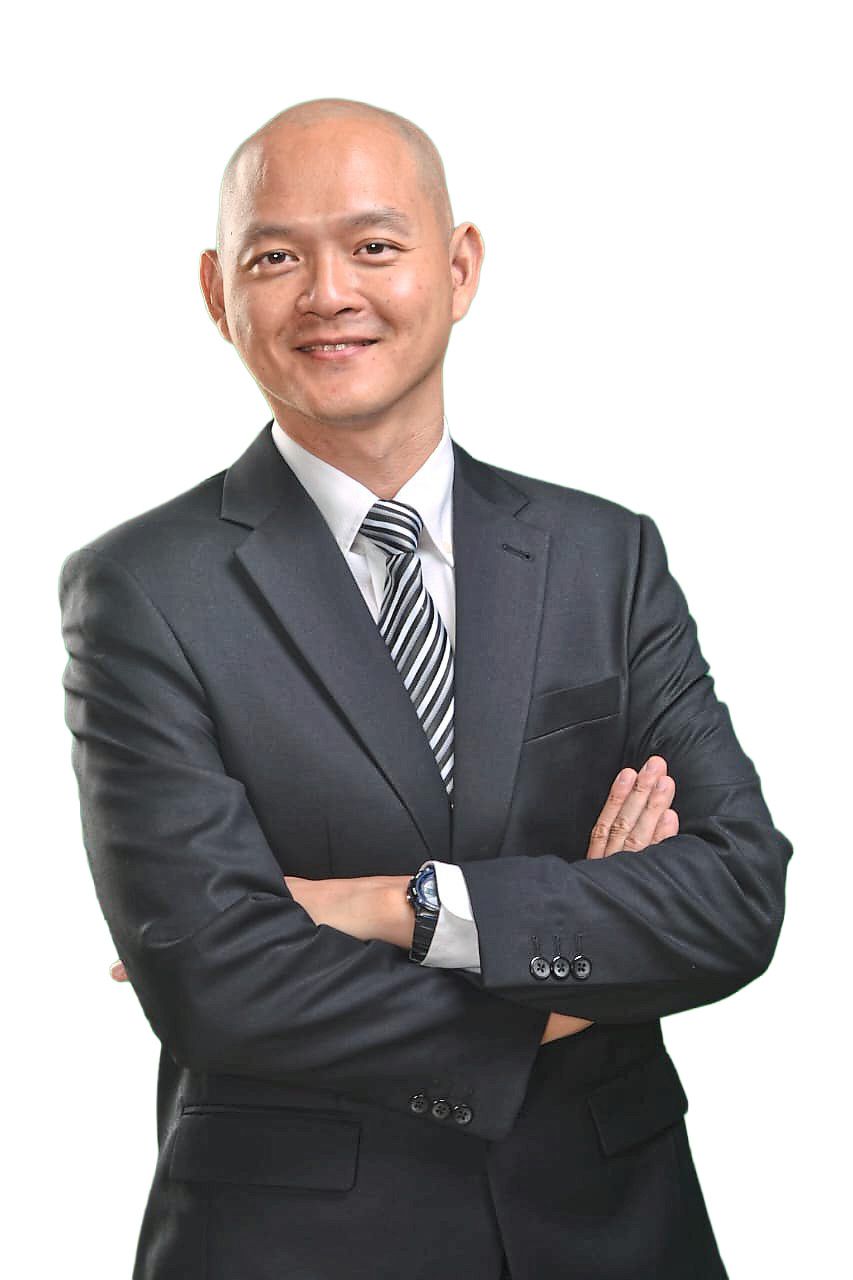
To better understand how Malaysia fits into this changing environment, and what strategic options remain available, Sunday Star speaks to former international trade and industry deputy minister Ong Kian Ming about tariffs, middle-power strategies and how these global shifts could play out domestically.
> President Trump has openly used tariffs as a geopolitical tool. Do you think that way of thinking about trade has now become normalised beyond Trump himself?
Thankfully, other than countries such as China wanting to use tariffs and other trade measures against the US, I do not see other countries normalising these tactics as a way to engage with their trading partners because they can see the negative effects that such tariffs have on relations with one’s important trading neighbours.
In fact, one of the silver linings to the Trump tariffs is that other countries are much more willing to negotiate for trade deals with one another as a way to diversify their trade to countries other than the United States.
For example, Malaysia concluded our FTA (Free Trade Agreement) with the European Free Trade Area (EFTA) last year and is looking to conclude the EU-Msia FTA within two years, a timeline which would have been unthinkable before the Trump tariffs.
> In this environment, what are the realistic strategic options available to Malaysia?
There are a few strategic options available to Malaysia and they are not mutually exclusive.
The first thing that we can do is to try to project an image where Malaysia is open to doing business with the so-called East and the so-called West without taking any obvious sides.
Secondly, coordinating with fellow Asean countries so that we can be aligned on some common approaches, such as not imposing any punitive tariffs against the US in response to the “Liberation Day” tariff.
Thirdly, trying to see how we can maybe get an edge over our neighbours by having strategic engagements with the White House, including signing and perhaps later amending the US-Malaysia ART.
All of these strategic options can be undertaken by Malaysia concurrently, although perhaps the point of emphasis and focus may be different at different junctures of the negotiating cycle and dependent on external circumstances, such as who is the US ambassador in Malaysia, what's happening in the US, whether or not President Trump is distracted by other things, and whether or not Malaysia or South-East Asia is being focused upon or not.
Generally speaking, less direct attention from Washington would allow South-East Asia to continue operating the way we have been all this while.
> Asean is often described as a buffer for smaller economies in turbulent times, so how effective can the bloc be right now?
Asean can only be a good buffer for the smaller economies if they are more integrated into the Asean markets compared to China, the US or the EU.
Intra-EU trade currently stands at around the 55% to 65% range while intra-Asean trade is at most 25% of its total trade.
In this context, it may not be such a bad idea to make use of the more transactional tone to speed up discussion between certain Asean countries to allow for greater market access in order to increase intra-Asean trade.
This includes removing or relaxing some of the non-tariff measures which are more common in some of the larger economies in Asean such as Indonesia and Thailand and to a lesser extent, Malaysia and Vietnam as a reciprocal arrangement.
> Malaysia is a highly trade-dependent country but as we see tariffs becoming increasingly weaponised, what does that mean for a country like ours?
For Malaysia, we have to be careful to balance our relationship with our main trading partners as best as we can, so that we can limit the upside risk for some of the major industries in the country which are most exposed to global trade flows.
We're talking about the semiconductor sector, the furniture sector, the power sector, just to name a few.
With that in mind, I support the US-Malaysian Agreement on Reciprocal Trade (ART), even though I agree with the viewpoint that the wording of the ART could have been more balanced and not written in a way which seems to infringe upon Malaysia’s sovereignty but given that Prime Minister Datuk Seri Anwar Ibrahim wanted to deliver a positive message to President Trump during his visit to Malaysia, this may have been the best deal we could have negotiated at that time.
The new Investment, Trade and Industry (MITI) Minister Datuk Seri Johari Abdul Ghani has a challenging task ahead of him in terms of trying to clarify and perhaps amend some of the wording in the ART in order to better spell out Malaysia’s commitments in this agreement.
It's also good for Malaysia to diversify its trading relationship to other areas, such as Mercusor in South America, and perhaps deepen the quality and implementation of existing FTAs, including the Asean FTAs, the Asean+ FTAs with China and with RCEP (Regional Comprehensive Economic Partnership) as well as CPTPP (Comprehensive and Progressive Agreement for Trans-Pacific Partnership), so that we're able to expand into new markets and deepen integration with existing markets, especially outside the US.
> How vulnerable is Malaysia to being caught in the crossfire of U.S.-China tensions?
I would say that Malaysia has, on the whole, benefitted more than it has been harmed by US-China tensions.
If you look at the benefits, you can see more FDI (Foreign Direct Investment) flows in Malaysia at record levels over the past couple of years, according to MIDA (Malaysian Investment Development Authority) data as a result of China+1, and maybe to a lesser extent, Taiwan+1 investment diversification and trading strategies on the part of foreign investors.
We also have been helped by quite a bit of front-loading in terms of trading.
We saw a trading volume surge to more than RM3 trillion in 2025 despite or maybe even because of global trade uncertainties.
We are seen as a good place where both Chinese and US companies, and maybe even from other countries, can do business in Malaysia.
For the time being, we have not been put in a position to have to choose between US-China, and hopefully we can keep it that way so that we can benefit from these kinds of external challenges that we have no control over.
> What trade-offs do middle-income countries like Malaysia increasingly face when trying to stay economically open while navigating all this geopolitical pressure?
The pressure will increasingly be on these countries to have to choose in some way between China and the US depending on the issue at hand, be it bilateral deals with the US or restrictions on certain countries in terms of access to US or China technology, and choosing whether or not to join certain international groupings
President Trump has talked about how he’ll take action against those countries who are joining BRICS, if he sees the BRICS countries trying to replace the US dollar or threaten the might of the US dollar in terms of the international trading currency.
Then now we see President Trump trying to invite countries to join the Board of Peace, so to speak, and that would be his way of trying to force countries to choose sides.
The silver lining is that President Trump and China President Xi Jinping are going to meet about four times this year at various summits, including visits to Washington DC and also to Beijing.
So these could be ways in which the temperature between the two countries could be tamped down.
There is pressure on President Trump to want to try to at least open some doors to work with China, so if those doors are open, then hopefully there will be less pressure on countries like Malaysia.
> You said Malaysia has done a pretty good job of balancing both sides. But does it risk sending mixed signals to our major partners?
No, everyone involved in this crazy geopolitical world that we live in, in terms of the challenges, understands that countries like Malaysia have to navigate, just like many countries in South Asia, whether it's Indonesia on a big scale or Singapore on a smaller scale in terms of the size of Indonesia.
So it's a challenge that everyone faces and everyone has to navigate this sticky balance between the two giants.
> There’s been a lot of discussion about supply chain diversification and “friend-shoring”. Do you think Malaysia has been able to benefit from this so far?
While I would say that Malaysia has benefitted from the FDI inflows from largely good quality investors over the post-Covid timeframe, much more can be done in terms of facilitating, coordinating and providing incentives and regulatory frameworks for supply chain localisation for foreign companies to invest and work with local companies, especially those foreign companies coming from China where the temptation is to rely almost exclusively on the supply chain which has been built up over the past two decades in China.
The regulations and incentives should be announced and implemented carefully so as to reduce the probability of the disruption of FDI and supply chain flows into the country and into specific areas of the economy.
> When you say supply chain localisation, what do you mean exactly?
For example, people are very familiar with the automotive sector and Proton has been on the bounce back ever since Geely took the significant stake in Proton, and lent Proton many of its expertise and also injected some new car models such as the X70, which I still drive to this day, the X50, the X90, and then now with the Proton E-Mas.
When Geely came into the picture, there was a pressure for them to localise the supply chain, meaning the CKD (Completely Knocked Down) parts and components for the X70, X50, X90.
That's just one area with regards to the automotive sector.
We probably can point to other sectors as well that can benefit from this kind of localisation strategy.
We don't have to localise everything, but we have to look for opportunities where there are good local partners that these foreign direct investors can work with, that can benefit the local economy.
> If protectionism remains a feature of the global economy, what does Malaysia need to get right in terms of our policies moving forward?
We need to be proactive, and one of the ways that we can be proactive is to expand our global footprint even more.
The kind of ways that we can do it is providing more targeted incentives to attract identified foreign companies that want to set up shop in Malaysia and perhaps even diversify away from Singapore for certain regional HQ roles and activities.
We should also assist our companies to expand their footprint abroad even more with the necessary backing of government agencies such as Matrade (Malaysia External Trade Development Corporation), MIDA and perhaps some GLICs (government-linked investment companies) backing, such as Khazanah under their Gear Up programme.
Then, we should work with our partners in Singapore, and perhaps later Indonesia to grow the Johor-Singapore Special Economic Zone (JSSEZ) ecosystem to attract even more companies to invest, grow and export into the global market.
At the same time I do want to acknowledge the fact that many SMEs in Malaysia are also suffering.
There's over-capacity in China and many of these exports come in and undermine many of the goods that are produced in Malaysia by different companies at some of that cutthroat price.
So we need to be cognisant of this.
The Finance Ministry has imposed a 10% sales tax on some of these e-commerce activities, but that may not necessarily slow down the kind of exporting prowess that China has.
> How would the effects of all these global shifts manifest in domestic policies in Malaysia?
We want to see higher wages for local workers as a result of these FDIs and we can see that already.
So when we see these kinds of wage growth, and I think the Madani government is trying to do its best to facilitate these processes, then we will be able to see domestic policies being aligned to help the locals.
The other thing is also to make sure that we communicate the fact that Malaysia hasn't given up our right to self-determination and sovereignty, especially with regards to our relationship with the US as expressed by the US-Malaysia ART.
There's a lot of alignment that is going to be done internally in Malaysia and this requires a whole-of-government approach by the various ministries and agencies that are working together.
> We spoke a lot about the increased FDI numbers but how would it look like for people on the ground in Malaysia to feel the effects of these increased FDI?
It's already being felt in the form of higher wages in certain sectors.
In Selangor, for example, the Selangor IT and Digital Economy Corporation has started this IC design centre where some companies are even offering graduates with the right skills RM6,000 a month as a starting salary.
Of course, we do not just want it to be at the very top among the skilled workers.
We also want there to be more trickle-down effect, more positive wage growth among the lower-end workers.
This requires coordination, for example, thinking about how we want to slowly and gradually raise the minimum wage in a controlled way so that SMEs don't get shocked by minimum wage increases.
Also, if the government is collecting more corporate or income taxes, the people need to see the government is using the money properly.
It's good that the government is giving out SARA handouts but those are more populist in nature.
The longer-term policies that the government can put in place is to improve our infrastructure, our education system, and show the people that the money is well-used to reduce corruption and increase transparency.
The government is trying its best.
It's just that many people still see the glass as being half-empty.
I happen to see it as half-full, and there are many opportunities for different stakeholders to work together to achieve those things.
