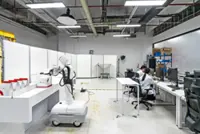
Artificial intelligence (AI) can write your emails. It can summarise your reports, generate your slides, and answer your messages faster than you ever could. In the time it takes you to make a cup of coffee, AI has already completed tasks that once took an entire afternoon.
So here is the real question: what exactly are you bringing to the table that AI cannot?

The shallow end
Newport draws a sharp line between two kinds of work. Shallow work is what AI handles effortlessly: formatting, summarising, replying and retrieving. Deep work is everything AI cannot do well: the original thinking, the difficult judgement calls, the ideas that require you to hold complexity in your mind long enough to see something new.
Here is the uncomfortable truth: most of us spend the majority of our working hours doing exactly what AI does better.
Microsoft studied data from its own workplace tools and found that employees were interrupted on average every two minutes. Hot desk offices, instant messaging, and social media have engineered a working environment that keeps us permanently in shallow mode, precisely the mode AI is replacing, job by job, year by year.
Sun Tzu wrote that the soldier who knows both himself and his enemy wins every battle. The enemy here is not AI. It is our own inability to think deeply in a world designed to prevent it.
Why has nothing changed? Because deep work is invisible. You cannot count insights the way a factory counts units. So organisations reward what they can see: fast replies, full calendars, and the performance of being busy.
Researchers call this pseudo-productivity. The employee who is always online looks productive. The one who disappears into three uninterrupted hours and produces something genuinely original often does not.
People learn to optimise for what gets noticed, while the tasks that get noticed are exactly the ones AI is quietly learning to handle instead. Recognising this pattern is already a step forward. Once you see it, you can begin making choices that push against it.
Deep work
The good news is that deep work is a skill. It can be built, gradually and deliberately, by anyone willing to try.
Start small. Block 15 minutes each morning for one task that genuinely requires your thinking. No phone, no tabs open in the background, no notifications. Just you and the problem.
The following week, stretch it to 30 minutes. The week after, 45 minutes. Most people are surprised by how quickly the capacity returns once they stop fighting it.
It also helps to treat deep work like an appointment you keep with yourself. Choose a consistent time each day, preferably when your energy is at its peak, and protect that slot the way you would protect a meeting with your most important client. Over time, the routine itself does half the work.
As AI absorbs more of the shallow end of knowledge work, the professionals who have trained themselves to operate at depth will not be competing with AI. They will be the ones directing it, deciding what questions to ask, what problems are worth solving, and what the answers actually mean.
As the ancient Chinese saying goes, “A good sword is not made in a day, but once forged, it cuts through anything.” The noise around you is real. But so is what you are capable of, if you give yourself the space to find out. With deep work, you will never be obsolete. It is precisely what keeps you irreplaceable.
Dr Lau Chee Yong is an assistant professor and programme leader for computer engineering at the School of Engineering, as well as the lead of the Visionary AI Studio at the Asia Pacific University of Technology & Innovation (APU). His professional credentials include a PhD in Bioelectronic Engineering. He is a Chartered Engineer in the United Kingdom, a Professional Engineer in Malaysia, an Asean Chartered Professional Engineer, a European Engineer, an International Professional Engineer, and a Malaysian Registered Technology Expert. He serves on the committee of the Electronic Engineering Technology Division at the Institution of Engineers Malaysia. The views expressed here are the writer’s own.