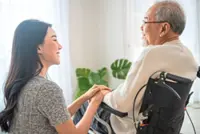
CAREGIVING is a skilled profession, yet in many Malaysian households, it remains a responsibility shouldered by family members.
With Malaysia losing billions of ringgit annually to unpaid care work and reduced workforce participation, experts are calling for urgent action to strengthen the nation’s care ecosystem.
They say building a professional care workforce by making caregiving an attractive career choice for young people is key to future-proofing the country’s care system.
The issue has come into sharper focus following recent remarks by Women, Family and Community Development Minister Datuk Seri Nancy Shukri, who said enabling greater workforce participation through more accessible and reliable care systems could contribute RM77bil a year to the economy – equivalent to about 5% of Malaysia’s gross domestic product.
She added that unpaid care and domestic work is valued at RM379bil annually, citing a 2024 study by the Institute of Strategic and International Studies Malaysia.
“Yet 3.2 million Malaysians, mostly women, remain constrained from full workforce participation. That is why we must expand the care ecosystem, so families can contribute fully to the nation’s growth,” she said at the Apec Business Advisory Council’s Malaysia Care Economy Roundtable 2026 on June 8.
Beyond its economic implications, the issue also carries a social cost.
Without a reliable network of professional caregivers, Sunway University School of Nursing senior lecturer Dr Lim Gek Mui warned that Malaysia’s healthcare system will come under increasing strain, leaving families to shoulder an unsustainable emotional and financial burden.
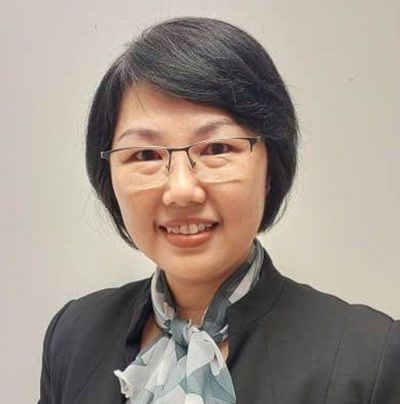
“Ultimately, the deepest consequence is the impact on the lives of our parents and grandparents.
“Without enough trained professionals to guide them through their golden years, the daily comfort, well-being, and overall quality of life for our elderly community will sharply decline,” she told StarEdu.
Changing perceptions
To encourage more young people to pursue the field, Universiti Malaya epidemiology and public health professor Dr Noran Naqiah Mohd Hairi called for the establishment of a structured and accredited caregiver career pathway.
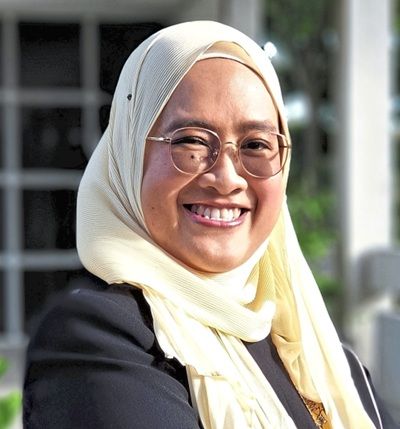
She said caregiving is rarely viewed as a primary career choice among students because society has traditionally regarded it as an informal family obligation instead of a skilled profession.
“We have spent decades building a society that equates success differently. Nobody puts ‘caregiver’ on a career aspiration poster in school.
“When something is invisible, it doesn’t feel like a profession,” she said.
Prof Noran Naqiah, who is also the deputy dean for research at the varsity’s Faculty of Medicine, argued that caregiving must be recognised as essential work, backed by clear training pathways and meaningful career opportunities.
“This should not be limited to volunteer programmes or short-term training courses. Rather, it should provide a clear progression route from certificate-level qualifications to diplomas, advanced diplomas, degrees and specialist practice pathways,” she emphasised.
Such a framework, Prof Noran Naqiah added, would professionalise the sector, create opportunities for career progression and provide greater recognition for those dedicated to eldercare.
Multiple career routes
Weighing in, Lim said universities must look beyond traditional classroom lectures to help students understand that nursing and caregiving skills can support varied and self-directed career paths.
Beyond bedside care, she noted that a background in healthcare opens doors to “diverse, highly lucrative and exciting corporate pathways”.
“Graduates can become healthcare corporate executives or product specialists, step into roles as nurse educators and university lecturers, or manage entire facilities as hospital administrators.
“There is even a strong path for entrepreneurship, allowing professionals to start and run their own senior living residences, specialised eldercare centres or confinement centres,” she shared.
Educational institutions, Lim added, must also highlight the “incredible flexibility and financial stability” a nursing background offers.
“By inviting successful graduates back to share their stories, we can show how a nursing career can beautifully adapt to different stages of life.
“For instance, moving from busy, high-stress hospital shifts to community-based care offers regular daytime hours with no night duties. This makes it an incredibly attractive and sustainable path for working mothers with young children,” she said.
Learning through exposure
Another strategy is providing early hands-on exposure.
Prof Noran Naqiah said fostering opportunities for intergenerational engagement can be a powerful tool in inspiring students to pursue caregiving.
“Bringing older adults into schools, organising visits to community centres, or involving students in community-based activities allows them to develop a better understanding of ageing and the contributions older people make to society,” she explained.
Agreeing, Lim said students should be given more opportunities to experience caregiving beyond hospitals through community-based learning and real-world placements.
“For example, students can engage in community service and visit patients at home to see how well they are recovering and to make sure families understand how to provide care.
“By checking if the home environment is safe or needs simple adjustments, students learn that nursing is not just about treating an illness, but also about supporting a whole family,” she said.
Volunteer programmes offer another excellent “soft entry” into the profession, Malaysian Healthy Ageing Society vice president Dr Wong Teck Wee said.
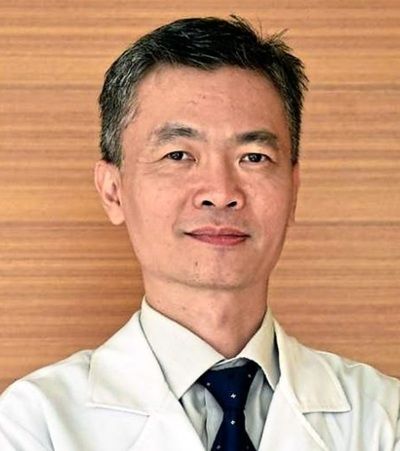
They allow individuals, particularly the youth, to experience the personal rewards of eldercare without immediate academic or professional pressure.
“By implementing structured integration – where volunteers are mentored by professionals and given pathways to formal certification – we can turn a charitable interest into a lifelong career,” Wong, who was previously an associate professor of medicine at Universiti Putra Malaysia, said.
He also called for a formal framework that bridges community volunteering with vocational training, demonstrating to young people that caregiving is not merely an act of compassion but a modern, respected and future-proof career.
Winning over the youth
"Growing up surrounded by family members and relatives who are healthcare professionals, I saw firsthand the profound impact of this work.
For me, caregiving is driven entirely by passion. There is no better feeling than watching a patient steadily recover under your care.
To attract young people to the profession, we need to start by looking at practical changes, like revised salary packages and better workplace benefits. But just as importantly, we need to take this conversation into secondary schools and wider society.
We have to clearly explain what a nurse actually does, breaking the outdated stereotype that the job is just about cleaning up after patients. If the government uses national media to regularly project a modern, accurate and respected image of nurses, more young people will proudly step forward." --Quek Jian Ru, Diploma of Nursing student, Sunway University
"There is an incredible sense of satisfaction in being able to take the clinical knowledge I absorb in my lectures and use it directly to help someone in need.
Young people often hesitate to enter healthcare because of fear or anxiety about what the job entails. We can change that by using engaging multimedia and social platforms to show what nursing students and professionals actually do every day.
We need to show the youth that the skills and compassion they develop in nursing can provide them with strong leverage: global demand and the freedom to live the lifestyle they want, anywhere in the world." --Anonymous, Bachelor of Nursing student, Sunway University