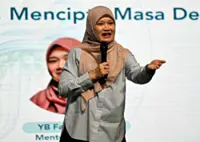
Education Minister Fadhlina Sidek has announced that the co-teaching method, with two teachers managing a single classroom, will be introduced under the 2027 school curriculum to balance academic achievement and character development. This is an interesting development.
When I retired from school leadership 20 years ago, co-teaching was not part of our educational vocabulary.
Classrooms were singular spaces: one teacher, one group of students, and a daily rhythm shaped by the teacher’s own planning, personality and perseverance. Teaching was, in many ways, a solitary craft – rewarding, yes, but often isolating.
So, when I first heard about the growing practice of co-teaching, I was intrigued. Two teachers sharing responsibility for one class, planning together, instructing together, assessing together, would have sounded radical in my day. Yet, the more I read, observed and reflected, the more I realised it is a natural evolution of ideas we always valued: collaboration, differentiation and inclusion.
In the schools I led, we spoke often about teamwork and professional support. But once the bell rang, each teacher closed the door and worked largely alone. We had collegiality, but not genuine collaboration.
Co-teaching, as I understand it, opens those doors. It invites teachers to blend their strengths, to learn from one another, and to ensure that every learner, particularly those with additional needs, receives richer, more responsive instruction.
Of course, I can imagine the challenges. Two professionals sharing one classroom must navigate differences in style, pace and philosophy. It takes humility to adjust long-standing habits, patience to resolve disagreements, and generosity to share success.
Yet, when done well, I suspect the rewards are immense not just for students, but also for teachers themselves.
Teaching, at its best, is both an art and a dialogue. Co-teaching, it seems, gives that dialogue a living form.
As a former principal, I would have welcomed the opportunities co-teaching presents, provided it is supported properly. Shared planning time, professional development and a school culture of respect are essential. It cannot simply be a pairing of two names on a timetable. Like any strong partnership, it requires trust, communication, and a shared vision of purpose.
Education has always been about connection – between teacher and student, between colleagues, between school and community. Co-teaching, though new to me, feels like a modern expression of that timeless truth.
If I were leading a school today, I would encourage it not as a passing trend, but as a thoughtful way to deepen professional practice and enhance learning for all.
Even after two decades away from the principal’s chair, I still believe what I always did: good education is never a solo performance. It is, and always has been, a shared endeavour.
LIONG KAM CHONG
Principal (1999 – 2005)
SMK Bukit Mewah, Seremban