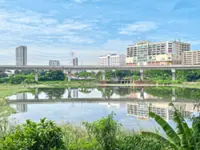
IN Selangor, one of the main problems in urban areas is flooding after a downpour.
The situation is now acute due to intensive heavy rains, primarily because of climate change.
As such, the state needs to prepare for the eventuality of frequent floods as part of its administrative duties and annual budgetary allocations.
In Selangor, most of the urban developments from the 1950s onwards were built on large plantations that were converted into housing estates, commercial and industrial zones.
Competent urban planning could have averted flooding in the new housing areas, as there was a large area to work on, unlike small pockets of land that have many constraints.
When earthworks are being done, proper foresight planning needs to be undertaken to ensure road levels are raised, housing areas are on higher ground, and the all-important retention ponds are sited at a lower level to drain off the excess water swiftly as the rain intensifies.
Since most of the downpours occur in the evening, the retention pond water can be released in the morning and emptied.
Retention ponds need to be maintained well to ensure they can hold the run-off to their maximum capacity.
Urban planners can calculate the size of the retention pond required based on the developed or built-up area comprising houses, shops, factories, buildings, roads and public areas.
Retention ponds need to be regarded as essential, as otherwise the roads, drains as well as the housing and industrial areas will be damaged, and the cost of repairing them will be much higher than the cost of allocating land for retention ponds and maintaining them.
Rainwater harvesting on a large scale can reduce flooding and the water can be used for alternative purposes by domestic and industrial users.
Developers have not included rainwater collection tanks in their housing design and the government needs to make it conditional for approving projects.
Industries can store the rainwater in underground tanks as they have larger areas.
Domestic and industrial rainwater harvesting can save costs and should be regarded as essential to reduce dependence on piped water supply, which is facing much pressure from heat waves, freak weather, drought and climate change.
With present day earth movers, a lot of levelling, filling, excavations, sloping, landscaping and designing can be done efficiently at low costs.
Houses and roads can be built on higher ground to prevent floods. Steep slopes can be made safer by reducing their incline or gradient, as maintaining and repairing steep slopes will cost the local authority much in the long run.
Main roads should not be constructed on steep elevations as they result in traffic congestion and heavier consumption of fuel for light and heavy vehicles.
Wherever possible, the gradient should be lowered, especially on busier roads, in housing and industrial areas.
Drains need to be maintained well to quicken the flow of water.
Large storm drains need to be desilted as sand and rubbish get trapped and reduce the capacity of the storm drain to clear the run-off.
Nowadays, plastics of all kinds are the main rubbish that flows into drains and rivers causing blockage, damage and pollution.
Aluminium cans, iron steel, scrap metal and others are collected and sold as it is economically worthwhile due to the higher prices.
The main problem is plastics, especially water bottles, plastics containers and bags, wires and cable coverings and a myriad other items made of plastics.
Some types of plastics are difficult and costly to process by recycling and not many firms do it. So they are thrown away as there is no value.
Malaysia is one country that does not see the immense problems plastics bring, and in an urbanised state like Selangor, the usage and wastage of plastics is enormous.
A lot of electric and electronic appliances are made of plastics that are difficult and costly to process by recyclers.
Most of these are headed to the drains to clog drains leading to flooding or to landfills that are filling up fast.
V. THOMAS
Sungai Buloh, Selangor