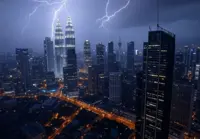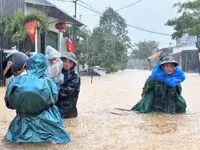
KL must transition towards nature-based urban planning as concrete expansion outpaces traditional drainage systems
Recent flash floods across the Klang Valley once again inundated highways, paralysed traffic and submerged vehicles after only a few hours of intense afternoon rain.
For many residents, the pattern has become increasingly familiar: extreme heat during the day followed by torrential rain and flash floods by evening.
These are no longer isolated weather events. They are signs of a city struggling to cope with a changing climate.
Recent remarks by Minister in the Prime Minister’s Department (Federal Territories) Hannah Yeoh reflect this reality. (StarMetro article on May 19, “KL reboots defences as rain surpasses limits”.)
Annual rainfall in Kuala Lumpur, she noted, had increasingly surpassed limits that much of the city’s flood infrastructure was designed to handle.
Recognition that the capital must become more climate-resilient − including efforts to move towards a “sponge city” approach − is a welcome shift.
But becoming a truly resilient city will require more than larger drains, underground storage systems and upgraded flood infrastructure alone.
It will require protecting and rebuilding the natural systems that absorb heat and water in the first place.
Flood mitigation in the capital is still largely approached as an engineering problem centred around drains, culverts, pumps and retention tanks.
While these remain necessary, they address only part of the issue.
A city’s ability to manage stormwater depends not only on how quickly water can be channelled away, but also on how much the urban environment can absorb in the first place.
That capacity is steadily diminishing. Across the Klang Valley, natural surfaces are vanishing beneath roads, pavements and dense development.
As green spaces fragment and mature trees are removed, urban waterways are increasingly channelised. With nowhere else to go, rainwater rushes directly into overwhelmed drainage systems, leaving the city to heat up and flood rapidly.
These problems are closely connected. Trees and green spaces are not merely aesthetic additions to urban life. They are functional infrastructure.
Urban trees cool surfaces through shade and evapotranspiration, while permeable landscapes and wetlands absorb stormwater runoff to ease pressure on drainage systems.
Removing these natural networks leaves cities hotter and more flood-prone.
To counter this, the “sponge city” concept uses integrated natural systems − such as permeable surfaces, green corridors, wetlands and tree canopies − to absorb, retain and gradually release rainwater.
Instead of treating rainwater as something to remove quickly, cities must work with water naturally.
Kuala Lumpur cannot rely solely on conventional flood mitigation while reducing landscapes that regulate water.
This requires embedding climate resilience into mainstream urban planning, rather than relying on isolated tree-planting campaigns.
Urban design standards must prioritise tree preservation alongside new planting, and mandate the use of permeable surfaces.
Green spaces should be protected not as leftover land, but as critical climate infrastructure.
Because a city that cannot absorb rain will continue to flood – no matter how many drains are built.
SHING SI YAN
Kuala Lumpur