The intricate orchid design embroidered on the shirt makes it hard to imagine that it was crafted by someone who only picked up a needle six years ago – let alone an artisan with a learning disability.
Nadzirah Halim, 36, learnt how to embroider at Bengkel Perlindungan Semangat Maju in Batu Gajah, Perak, during the Covid-19 pandemic.
“At the workshop, I learnt hand embroidery, how to make flower pots and the commercial production of chips.
“Before that, I’d never attended a special skills school for people with disabilities,” she told Bernama.
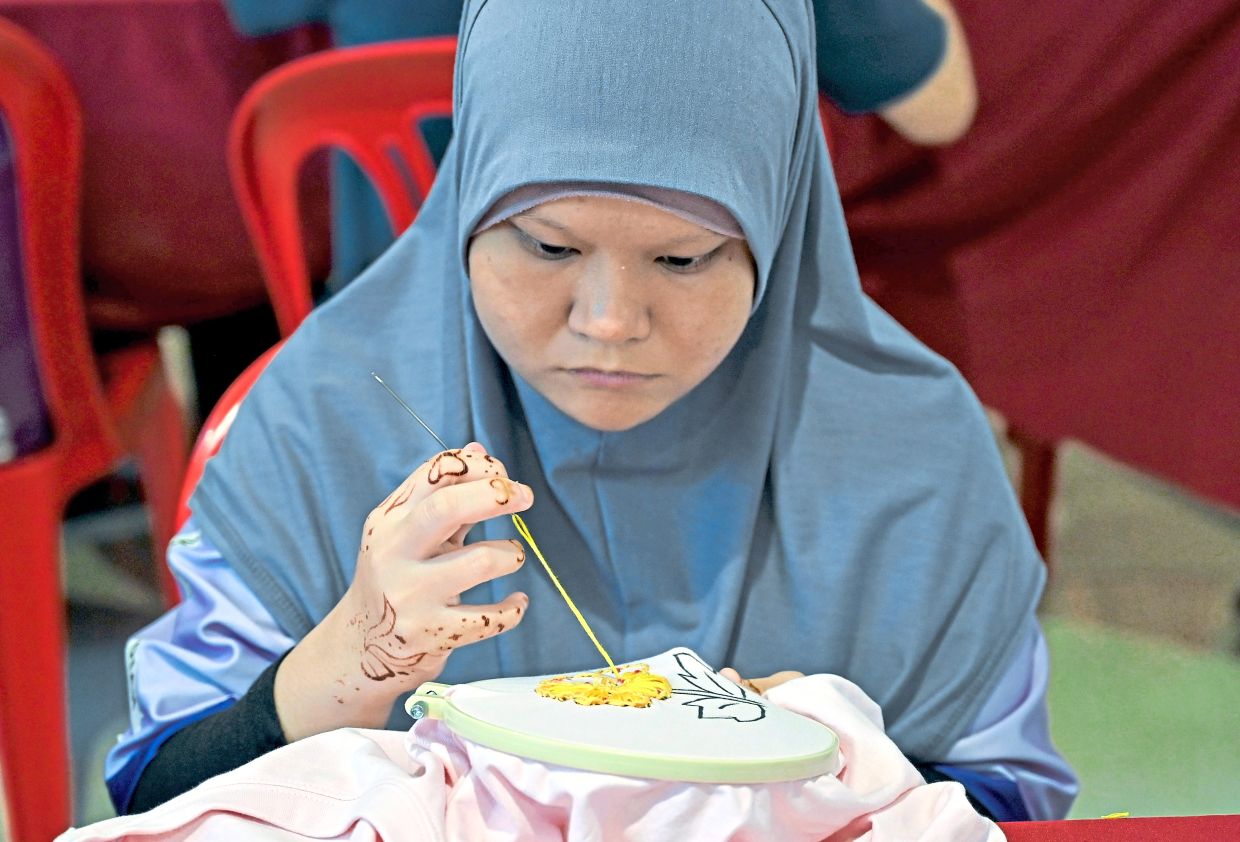
She was among 26 participants at an embroidery competition comprising trainees from five special education institutions in Perak.
Nadzirah is proud to have mastered hand embroidery and is good at stitching flowers like orchids, roses and hibiscus.
“My designs are based on customers’ requests.
“I hope I can use this skill to support myself,” she said, revealing that she can earn about RM200 per month from her creations.
She spends about three hours a day finishing orders.
The 2026 Special Needs Community Programme initiated by various organisations included a makeup event for people with Down syndrome, sales activities and singing performances.
Tan Saw Hoon, 51, mother of Loh Xin Jeanne, 19, who has Down syndrome, said her daughter has always wanted to look like a “princess”.
“But her makeup skills were quite poor so we looked for classes but they were very expensive, costing about RM300 per session.”
Then Tan found a free programme specifically for people with Down syndrome, organised by Sunway University.
She said her daughter enrolled in July and was now attending weekly classes.
Tan believes the free makeup programme helps young people with Down syndrome develop social and communication skills, as well as their ability to live independently.
Meanwhile, Sekolah Semangat Maju Batu Gajah chairman Ooi Kah Biew said the special education school planned to increase its classrooms to accommodate the growing number of students.
“We need more than RM40,000 for the extra classrooms which will help us teach more skills.
“Many of our students actually have skills, but their abilities often go unnoticed because most of them simply stay at home after returning from school.
“We do not want them to come to school just to learn basic things; we want them to acquire skills that can help them live independently,” he said.
Ooi expressed hope for corporate support through donations and orders for the students’ handiwork.