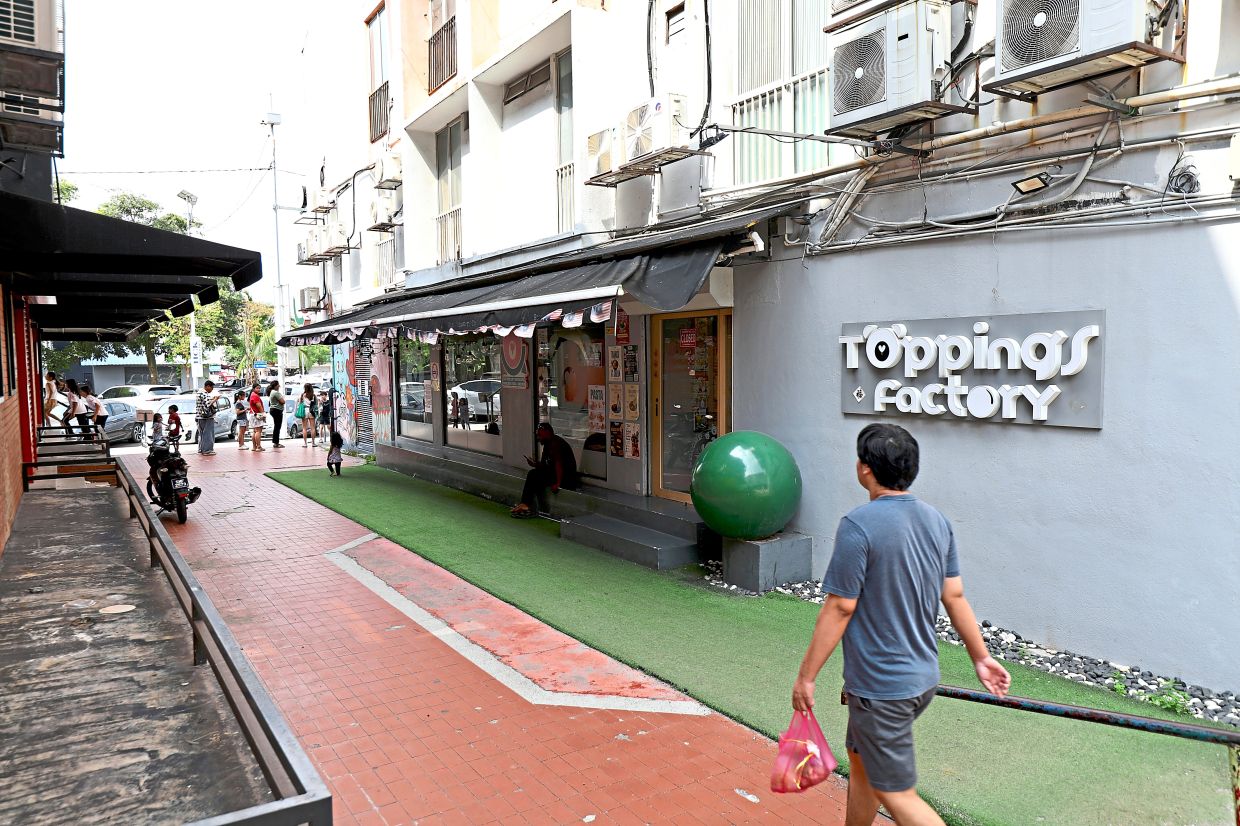
Known as a food and beverage (F&B) hotspot, the bustling SS15 commercial area functions as a vital neighbourhood hub for Subang Jaya, Selangor, yet its public spaces fail to support that role.
A placemaking study conducted by Think City for Subang Jaya City Council (MBSJ) revealed that while businesses thrive indoors, outdoor spaces function merely as transit corridors rather than places to stop, rest and connect.
In a statement to StarMetro, an MBSJ Corporate and Strategic Management Department spokesperson said despite hosting 513 shophouse units – with F&B representing over a third of licensed businesses – SS15’s public realm falls short of its potential.
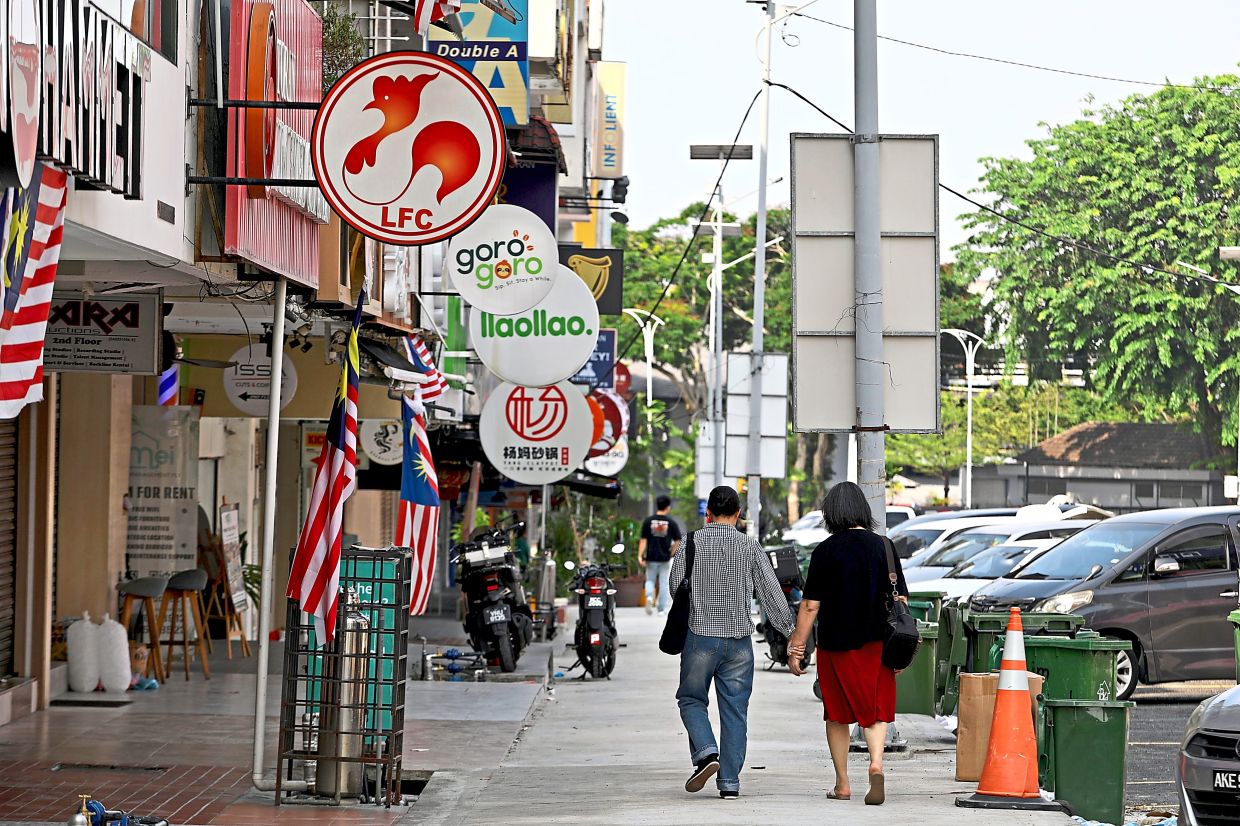
“Public life is concentrated inside commercial premises, leaving outdoor streets dominated by movement rather than social interaction,” the spokesperson added.
MBSJ engaged Think City to study user behaviour and revitalise the business district.
To determine community needs, researchers surveyed 1,577 people, conducted on-site discussions and workshops with key stakeholders, as well as analysed local traffic, land use and business trends.
While traffic congestion and limited parking dominate daily life in SS15, respondents prioritised basic safety and cleanliness.
A staggering 91.5% named traffic and parking their top daily headache, with 96% travelling by private vehicle.
Land-use analysis of the 27.5ha area illustrates the root cause: 44% of land is dedicated to transport infrastructure (including roads and 5,647 parking bays) and 44% to commercial businesses, leaving just 12% for amenities, community institutions and housing.
“Road space heavily dominates the layout, leaving minimal room for pedestrians,” noted the spokesperson, adding that shifting commuters toward public transit is essential to break car dependence.
However, when asked to rank their top priorities for the area’s rejuvenation, the spokesperson said respondents pointed to quality-of-life improvements over traffic fixes.
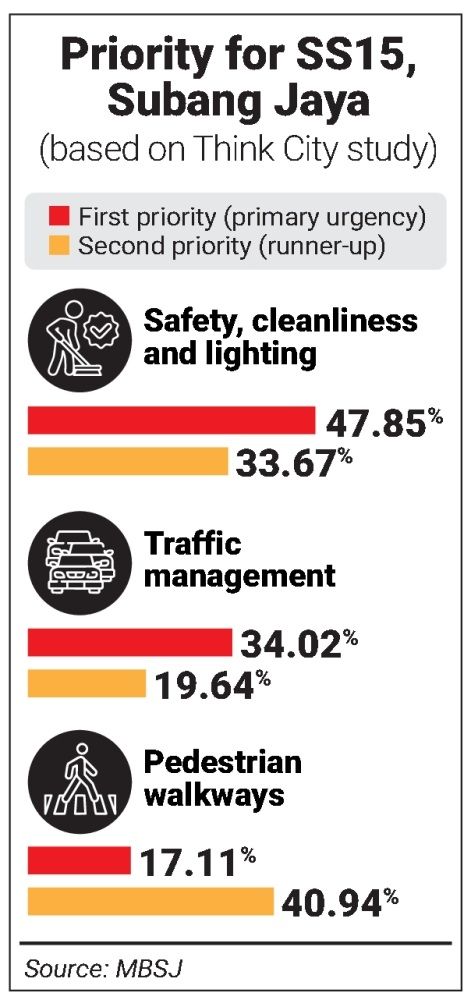
Respondents named safety, cleanliness and lighting as their top concern at 47.85%, while pedestrian crossings were the second priority at 40.94% (see graphic).
Safe streets for all
In response, MBSJ is prioritising a safer, pedestrian-friendly environment for SS15.
Key goals include upgrading walkways, creating seamless pedestrian links between business zones, public amenities and the SS15 LRT Station, as well as enhancing road facilities, signage and street lighting.
“To ensure accessibility for all – including senior citizens, persons with disabilities, wheelchair users and parents with strollers – MBSJ is incorporating Universal Design principles into public proposals,” said the spokesperson.
“Upgrades will feature flat paved paths, tactile paving and strategic pedestrian crossings.”
Additionally, MBSJ is applying Crime Prevention Through Environmental Design (CPTED) principles anchored in its Safe City Design Guidelines.
CPTED strategies focus on well-lit footpaths, upgrading back lanes to eliminate hidden corners and maintaining obstacle-free routes.
Addressing commuting struggles, the spokesperson acknowledged that double parking and gridlock are major challenges.
“Rather than simply adding or reducing parking bays, the study points toward efficient mobility management.
“MBSJ plans to analyse vehicle movements while actively encouraging transit, walking, cycling and e-scooter use.”
The SS15 LRT Station serves as a critical asset.
MBSJ plans to strengthen first- and last-mile connectivity by building safe, direct pedestrian paths into the main commercial zone, supported by wayfinding signage, dedicated e-scooter drop-offs and comfortable waiting areas.
Reclaiming spaces
Think City’s placemaking study highlighted several underused spaces – including back alleys and roadside spots – that hold high potential for reactivation.
“MBSJ envisions transforming these locations into small-scale public plazas, pocket parks,
community activity hubs or pedestrian rest areas,” said the spokesperson.
“Clean, safe back lanes will help improve foot traffic flow between different parts of SS15.”
However, MBSJ said all proposals would only be finalised after thorough technical evaluations and further engagements with property owners and residents.
To protect local traders, MBSJ plans to maintain continuous engagement, preserve local heritage and implement phased construction to minimise disruption.
“Once finalised, projects will undergo technical and financial evaluations,” added the spokesperson.
“During the construction stage, MBSJ plans to maintain access to premises, manage temporary traffic flow, work in zoned phases and notify the public well in advance.”
The project’s long-term sustainability will be managed through a new Place Management Plan, establishing shared oversight between MBSJ, local agencies and property owners to ensure regular maintenance, monitoring and quick response to community issues.
While the overall project cost remains undetermined as the SS15 Placemaking Action Plan is being finalised, MBSJ expects to have a detailed implementation framework and cost estimates from Think City by the end of this month.
“The plan will encompass both physical infrastructure and community-focused social developments,” said the spokesperson.
“Implementation will take place in phases based on council priorities and budget capacity.”
To support funding and execution, MBSJ plans to explore strategic partnerships with property developers, infrastructure providers and other local stakeholders to deliver a sustainable plan for the community.
Addressing various issues
Subang Jaya assemblyman Michelle Ng said the placemaking study by Think City aimed to rejuvenate SS15 while capitalising on the commercial area’s identity, as well as address existing issues.
“Shoplots in SS15 were originally designed with dual frontage, but the layout was altered to single frontage in the 1990s.

“The commercial hub continues to see heavy footfall by young adults, driven by Subang Jaya’s large university student population.
“So there is a natural demand for shops that cater to the Gen Z crowd and commercial lots to be converted into hostels.”
Ng said traffic congestion, lack of parking space and cleanliness issues were some of the top concerns cited by stakeholders.
“We have had three engagement sessions with stakeholders, not only business operators and residents, but also government agencies and landowners.
“These engagement sessions are important, as we need to understand how prepared each stakeholder is to change their operations, such as business owners and the waste collection provider.
“Different stakeholders have different ideas on what the solutions should be, so we want to try to find win-win options that are the most practical,” she said.
Ng said there was potential to make SS15 more walkable although there were challenges to be addressed, such as negotiating with existing F&B operators to give up some outdoor space and retrofitting existing infrastructure to ensure compliance with Universal Design principles.
“There are small arteries between shops in SS15 that can be used as walkable nodes.
“Since some restaurants are using these spaces for alfresco dining, turning them into walkways will require negotiations with the operators to give up some space,” she said.
Ng added that there was a need to assess which model (dual or single frontage) was better to revitalise the back lanes and make them walkable, given that there are problems of poor maintenance and hygiene issues in the area.
“There is also a need to improve public spaces, such as the existing SS15 market and side lanes, to create a space where people can rest, hang out and have curated events.
“Think City’s study found that most people go to SS15 to eat or visit a pharmacy, but do not linger beyond that.
“The community space function was something that the former Asia Cafe food court played years ago.”
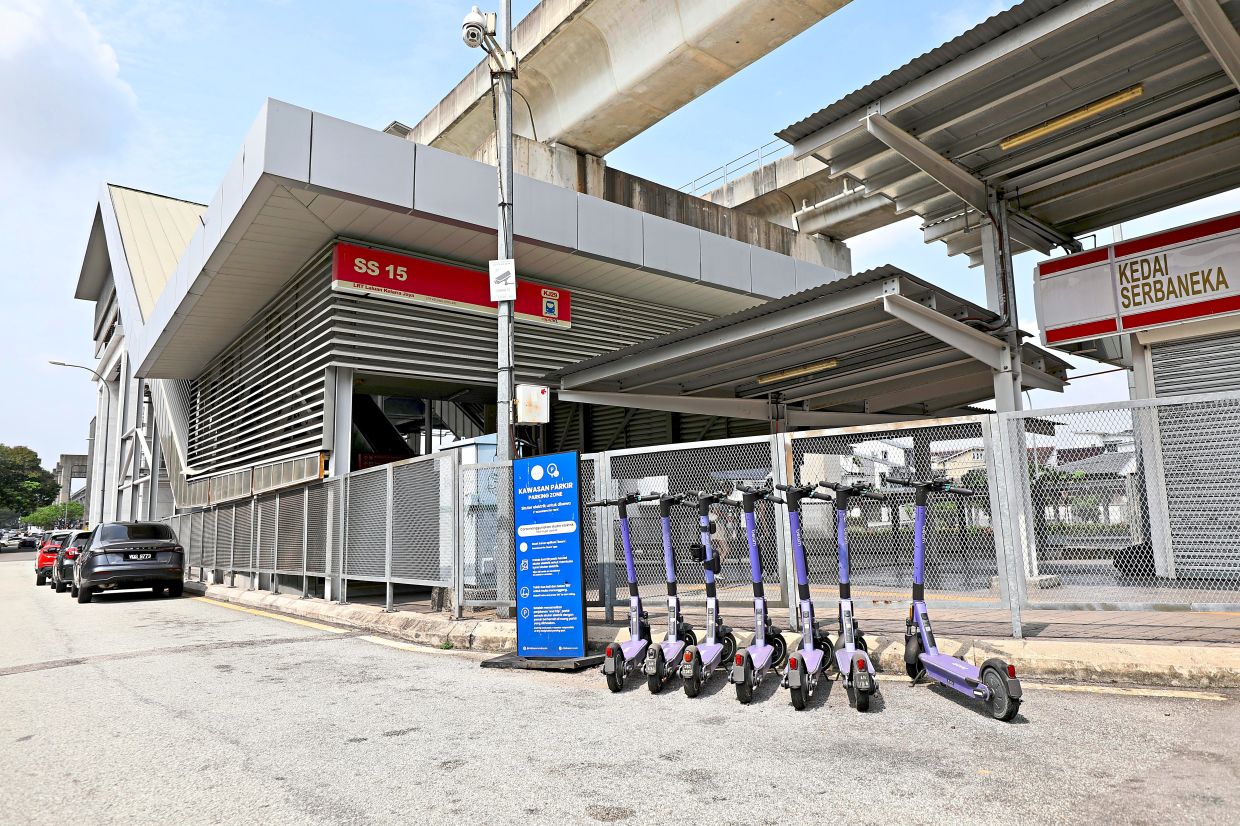
After Beam e-scooters were deployed earlier this year as part of a micromobility sandbox pilot project in SS15, Ng observed that there was an uptick in the use of personal e-scooters there due to the rental service’s limited docking stations and coverage radius.
The lawmaker added that her office and MBSJ were simultaneously working with Bike Commute Malaysia to assess the accessibility and walkability of the SS12 to SS19 neighbourhoods, to improve cycling connectivity between SS15, SS17 and SS19, as well as to improve infrastructure to encourage active mobility.
“One of the quickest options to be implemented, which could be set under MBSJ’s 2027 budget, would be to improve walkability within the SS15 commercial area by having walkways and zebra crossings linking the SS15 LRT Station and shops.
“Think City will draw up a budget based on the proposed short-, medium- and long-term goals for the placemaking project.
“We will strategise accordingly once we know the cost.
“Besides MBSJ, we will likely seek financial support from other sources such as the state government or corporate grants,” said Ng.