Placemaking is fundamentally a process rather than a predetermined physical outcome or a one-size-fits-all solution, says the Placemaking Malaysia committee.
“Placemaking centres on engaging communities to shape their inhabited spaces, ensuring interventions are rooted in local context, culture and genuine needs rather than external assumptions,” the committee said in a statement.
“Crucially, not every back lane needs to become a park, as parks are not universal solutions.”
Placemaking Malaysia is a dedicated Centre of Excellence and chapter under the Malaysian Institute of Planners (MIP).
Headquartered in Petaling Jaya at MIP’s office, it champions community-led urban design to create inclusive, safe and vibrant public spaces.
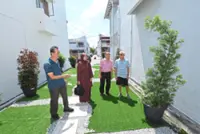
The committee said this in response to StarMetro’s cover story “From gated alleys to open community spaces” on June 8, which highlighted a pilot project to test a new placemaking effort on gated-off side lanes in SS23, Taman SEA, Petaling Jaya.
The Petaling Jaya City Council (MBPJ)-led project is being trialled on two side lanes between terrace houses that have been converted into communal spaces for community-oriented activities.
“We strongly advocate for evidence-based, community-led approaches grounded in empirical data and collective interest rather than top-down assumptions,” the committee said.
“While safety measures like gated streets may seem to address immediate concerns, physical barriers often displace issues like crime, inadequate lighting or a lack of natural surveillance without resolving root causes.
“The SS23 initiative recognises this complexity by engaging residents alongside technical agencies, addressing critical multi-stakeholder considerations such as emergency access, road gazettement and legitimate safety concerns.”
The committee added that the spaces must prioritise function over form to avoid becoming “white elephant” interventions that may fail to serve the community in the long-term.
“Even with limited financial resources, quick and cheap interventions can effectively transform a dead-end lane into a vibrant social heart, provided it is driven by flexibility and genuine user needs rather than rigid aesthetic ideals,” it said.
“Context matters deeply.
“The specific demographics and needs of SS23 should shape whether the area becomes a shared garden, play space or pedestrian thoroughfare, remaining flexible enough to evolve over time.”
The committee said authentic placemaking allowed communities to benefit meaningfully through enhanced safety via natural surveillance and active use of dead spaces, stronger social cohesion through neighbourly interaction.
It also highlighted improved physical and mental health through access to quality public spaces.
“However, these benefits are only sustainable when local communities are involved in identifying issues and co-creating solutions,” it said.
In reviewing the SS23 initiative, the committee noted positive indicators, including the thoughtful approach to testing the space before making permanent changes, engaging multiple stakeholders.
However, the committee also raised questions regarding the breadth of community engagement and the metrics used to determine the pilot’s success.
It further queried the long-term governance model and how these learnings would inform broader public space policies.
“Ultimately, we view placemaking as a long-term commitment to inclusive, community-led urban development,” said the committee.
“While supporting the SS23 initiative’s participatory approach as a valuable case study for Petaling Jaya, we caution against treating it as a rigid template to be replicated elsewhere without community engagement and context-specific adaptation.”