TRANSFORMING the banks of a monsoon drain into a community park with bicycle paths and beautifying back lanes with mural art were some suggestions highlighted at a placemaking exchange.
Another idea was turning underutilised spaces in schools into open-air halls where multi activities could take place, including providing a comfortable sidewalk for pedestrians at a congested street.
These were some of the successful initiatives highlighted by representatives from local councils who had been invited to speak at Placemaking Exchange, an event featuring speakers from Japan and Singapore.
Jointly organised by Japan Foundation Kuala Lumpur, Pollin8 and Shophouse and Co, it was moderated by Lee Jia Ping who is co-chairperson of Placemaking Malaysia and former programme director of Think City.
The day-long session took place at The Campus in Ampang, Selangor, recently.
At the talk, Seberang Perai City Council Commissioner of Building department director Zulhisyam Abdul shared how a 2.2km stretch located beside a monsoon drain in Bandar Perda is now Bougainvillea Belt.
The community park was completed in 2021 at a cost of RM913,010.
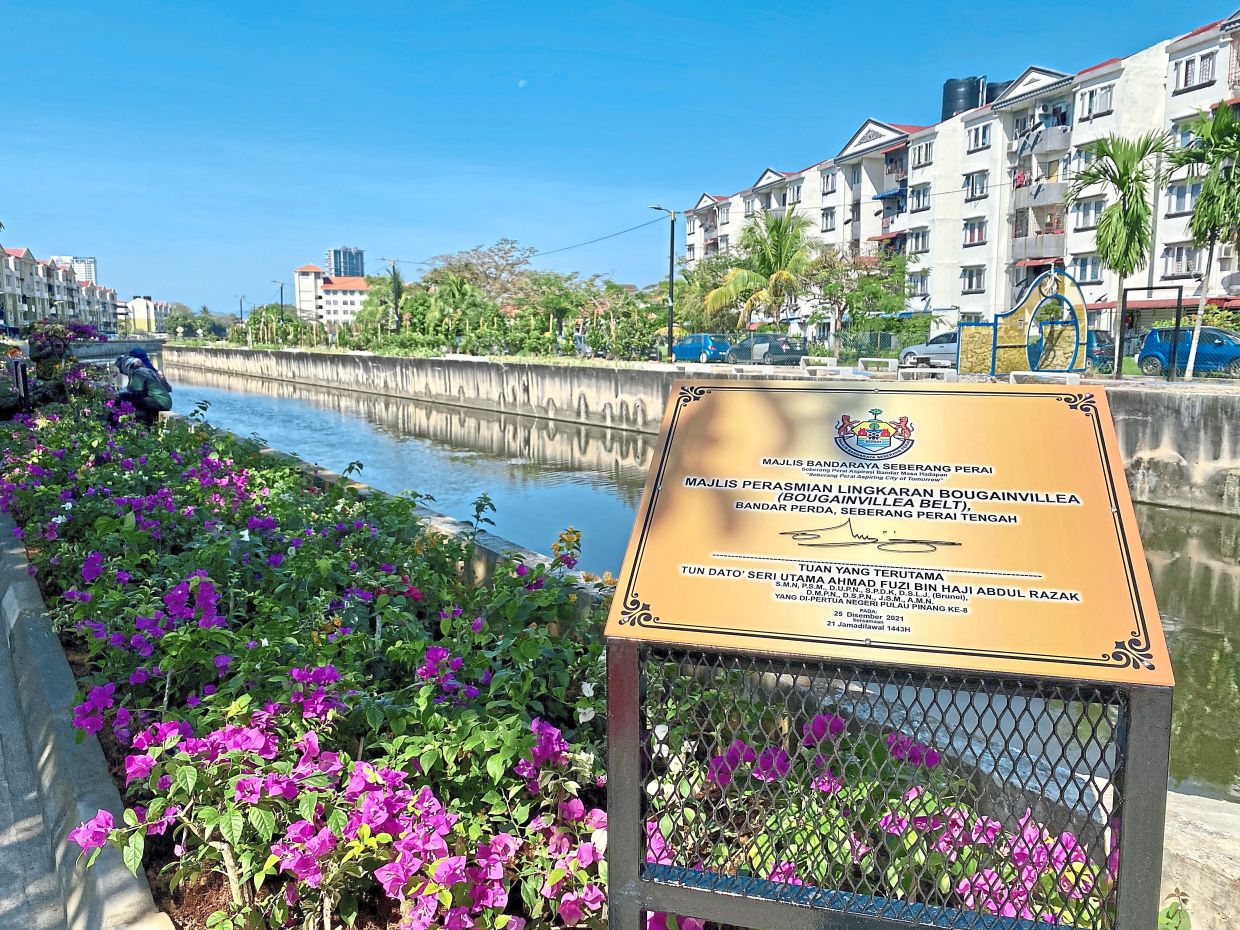
“We wanted to improve the path along the monsoon drain to create a conducive environment that could be used as a recreational space by various groups of society.
“We strongly believe that such spaces have the ability to bring people together which is a factor that is required for building strong, connected and resilient communities,” said Zulhisyam.Work began in 2019 with funding allocated by the Housing and Local Government Ministry and was completed on Dec 31, 2021.
Next was Muar Municipal Council Town Planning and Landscape Department officer Siti Rukiah Abd Shukor who spoke about how the council upgraded the back lanes of Bandar Maharani as a way to achieve optimum use for its public areas.
The project, which took place around the areas of Jalan Sisi, Lorong Sisi and Lorong Betta, was completed in 2019.
The project required repairs to the back lane facade involving 38,090.25 sq m of concrete upgrading works, covering of open drains to create pathways, street and decorative lights and mural art.
“To encourage activities that would increase local economic and social well-being in these back lanes, the council granted immediate licence approvals for double frontage operations and traditional businesses such as apam balik and cendol were provided with support and basic facility assistance.
“The spillover effect was the outdoor cafes at these back lanes became tourist draws.
“The optimising of these underutilised spaces eventually helped to generate job opportunities and increased rental rates of the buildings,” said Siti Rukiah.
Petaling Jaya City Council Development Planning Department assistant director Norhisam Hussain shared how roofs, built over open spaces at SRA Ibnu Rusyd and SMK Sultan Abu Samad, turned them into multi-function halls in 2019.
Known as the Ruang Kita @ School project, the roofs cost RM150,147.60 and RM314,982.20 respectively.
The school board had applied for a grant from MBPJ Planning Development Department education trust fund.
“The building of a roof shielded the space from the rain and hot sun. It enabled the existing open area to be better utilised where activities like assemblies, parent-teacher meetings, sports, and various school programmes could be held,” said Norhisam.
Representing Kuala Lumpur City Hall were Community Development and Urban Wellbeing Department assistant director Ahmad Faidsal Omar and Town and Country Planning officer Muhamad Sujab Abu Hassan, who shared how the council implemented a pedestrian sidewalk in the traffic congested lanes of Jalan Tuanku Abdul Rahman.
Originally a three-lane road, the transformation process which began with the closure of one lane in 2017, had faced objections from businesses who threatened to boycott the project by shuttering their shops.
One of challenges was to encourage those coming to this part of the city not to use their cars and switch to public transport as a way to alleviate traffic congestion.
This move would also lower carbon emissions and make for a more comfortable environment.
For the sake of a greener city, the road was included in its Pedestrian and Cycling Masterplan 2019-2028. It became the first placemaking attempt in the country to promote the car-free concept.
The low carbon stand saw the successful implementation of the pedestrian walk in 2022.