



GLOBAL South nations must recognise that the era of imperialism is long over and the focus should be on development and peace, says Prof Emeritus Jomo K. Sundaram.
He said there was no reason for war to serve the interests of the Global South, stressing that conflict would not enhance the region’s development or welfare.
“The Global South has no interest in war. There is no way in which war enhances the interests of the Global South.
“So, we need to recognise that the era of imperialism is long over,” he said.
The renowned economist said the Sustainable Development Agenda had been subverted for more than a decade, making it necessary for developing nations to pursue what he described as “developmental non-alignment”.
Prof Jomo said such an approach should be accompanied by a commitment to pacifism, particularly in line with principles underpinning the United Nations Sustainable Development Goals.
“The Global South has to be pacifist. And that is precisely why NAM2.0 has to be repurposed,” he said.
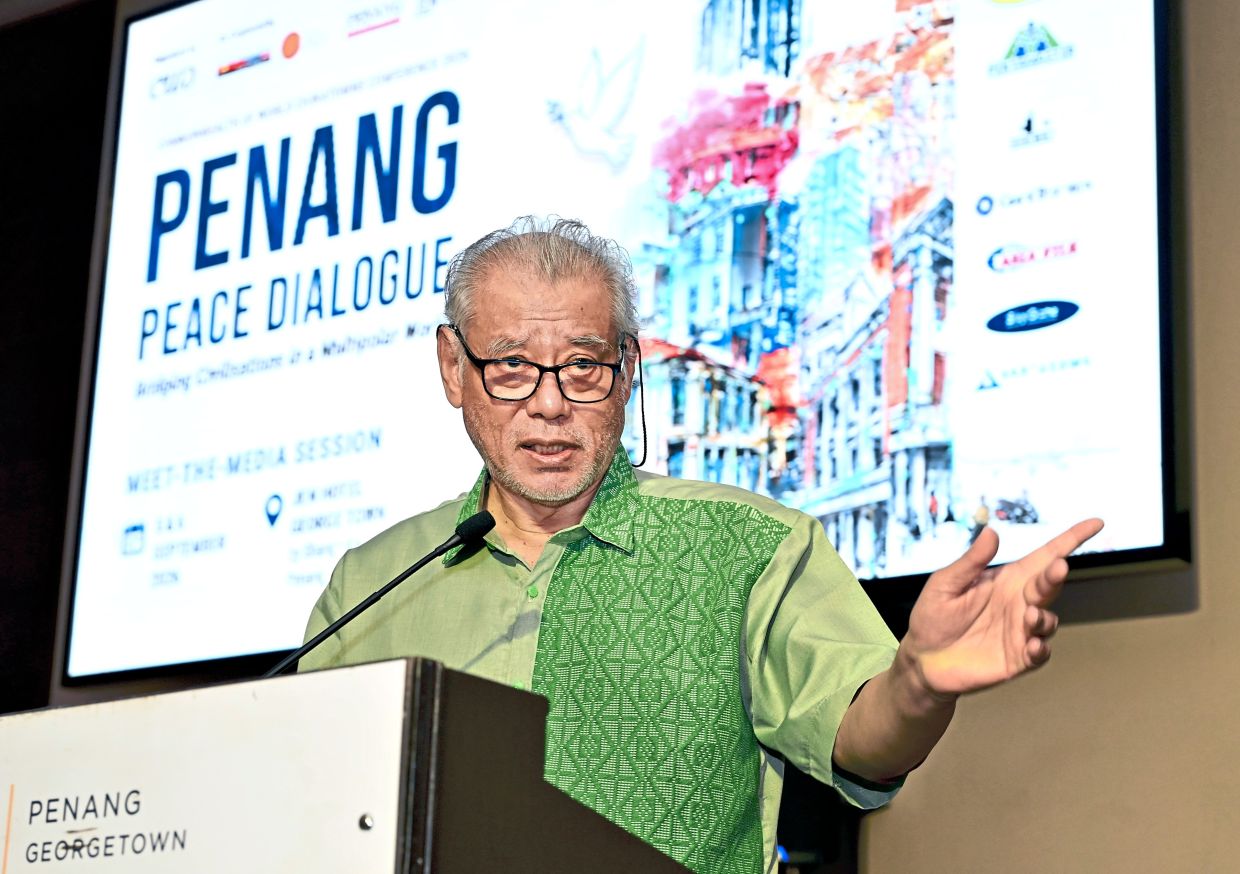
“Non-Aligned Movement (NAM) itself has to be repurposed to recognise a developmental agenda, to consistently pursue a developmental agenda as well as a pacifist agenda.”
The Global South generally refers to countries in Africa, Latin America, the Caribbean, the Middle East and much of Asia that are broadly considered developing or emerging economies.
The term is not strictly based on geography, as some countries in the Global South are located in the Northern Hemisphere.
It is commonly used to describe nations that have historically less influence in the global political and economic system compared with wealthy industrialised countries of North America, Europe and parts of East Asia.
Prof Jomo was speaking at the Penang Peace Dialogue: Bridging Civilisation in a Multipolar World held in George Town, where he delivered a lecture titled “A Renewed Non-Aligned Movement: How NAM2.0 Can Enhance World Peace and Sustainable Development?”.
Organised by Commonwealth of World Chinatowns (CWC), the inaugural dialogue was dedicated to fostering conversation, mutual understanding and cooperation.
Aside from Prof Jomo, the two-day event brought together internationally respected leaders and distinguished thinkers, including former Indonesian president Joko Widodo, Prof Kishore Mahbubani, Prof Victor Gao, Prof Jeffrey Sachs, Tan Sri Dr Mazlan Othman, Dr Wang Sheng-wei, Dr Joanna Lei, Yeoh Lam Keong and Prof Zainul Abidin Rasheed.
The dialogue aimed to provide a neutral and respectful platform where leaders, scholars, policymakers, business leaders and young people can engage in meaningful conversations.
Participants explored issues that shape their shared future including regional peace and security, sustainable development, economic transformation, science and technology, cultural diplomacy, education, and the vital role of younger generations in building a more peaceful world.
