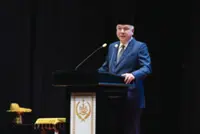
JOHOR is set to implement a strategic plan to develop and strengthen its waqf assets in phases starting next year.
State Islamic religious affairs committee chairman Mohd Fared Mohd Khaled said the Johor Islamic Religious Council (MAINJ) Waqf Development Plan had undergone several rounds of discussion, review and improvement before being presented.
“The presentation is an important step in charting a more structured, strategic, impactful and competitive direction for waqf development.
“Johor currently has 5,361 waqf land parcels covering a total area of 7,550ha statewide.
“This highlights the vast potential of these assets to be developed more strategically and comprehensively,” he said when presenting the plan in Johor Baru.
Waqf refers to property or assets permanently dedicated by an individual for religious, charitable or community purposes, with the assets managed as an endowment in accordance with Islamic principles.
Mohd Fared, who is also Semerah assemblyman, said the plan would focus on five strategic pillars to strengthen the state’s waqf ecosystem.
He said these comprised strengthening governance; developing and empowering the economy; innovation and digitalisation; human capital development and literacy; and strategic collaboration and smart networking.
“The plan aims to ensure that waqf institutions are developed as a comprehensive ecosystem, with each component complementing and supporting the others.
“This will allow various components to move in tandem and ultimately generate greater benefits for the Muslim community in Johor,” said Mohd Fared.
He said work to implement the plan would begin immediately, with the initiatives expected to translate into measures under Johor Budget 2027.
“The implementation will then be carried out in stages beginning next year,” he said.
Mohd Fared also said that the state government wanted waqf to be viewed beyond its traditional role as an asset held in trust.
Instead, he said it should become a catalyst for economic development, welfare and the overall well-being of the local Muslim community.
He said this strategic approach would enable Johor to unlock the potential of its sizeable waqf land holdings and maximise its long-term benefits.
Mohd Fared hoped the plan would create a more dynamic and sustainable waqf ecosystem capable of delivering greater benefits to the people of Johor.