

Also known as crystal dumplings, they are made with a combination of wheat starch and tapioca starch to achieve their distinctive translucent wrappers.
They are also among the more challenging dim sum to master, requiring considerable dexterity to form the characteristic pleats without breaking the delicate dough.
Faced with this challenge, I turned to my mother-in-law for guidance on the finer points of making dim sum.
While boiling water is crucial to achieving the dough’s translucency, the real skill lies in kneading it to produce a smooth, pliable texture that can be shaped without cracking.
Even after using a dough hook on an electric mixer, the dough still needs to be worked by hand to achieve the right consistency.
It should be smooth and pliable rather than sticky so that it can be rolled out and folded without tearing.
Shortening is a good choice for the dough, although cooking oil can be used as an alternative.
The dough needs to rest, covered, for at least 30 minutes before shaping. Otherwise, it may crack when you try to pleat the wrappers.
Once rested, the dough can be rolled into a sheet and cut into circles using the rim of a tumbler or a round cutter.
A more traditional method is to roll the dough into a long cylinder, divide it into individual portions and roll each piece into a thin circle.
My mother-in-law uses a pasta maker to roll the dough into a flat sheet before cutting out the wrappers with a round cutter.
The texture of the prawn filling is a matter of personal preference.
Minced prawns make the dumplings easier to fill, while dicing them into 1cm cubes gives the filling a chunkier texture.
However, larger pieces can stretch or tear the delicate wrappers if the dumplings are packed too tightly.
Pleating the wrappers is another challenge. Home cooks need not fret if they cannot achieve the neat folds seen in dim sum restaurants.
Nine pleats are a reasonable target for beginners, while experienced chefs may manage 15 or more.
Once assembled, the dumplings should be steamed over boiling water for about six minutes, depending on their size.
Avoid overcooking or using excessively high heat, as the wrappers may split.
My homemade har gow may not be as petite or polished as those served in dim sum restaurants, but they taste good.
And after all the effort that goes into making them, that is reason enough to keep practising until I get the pleats right.
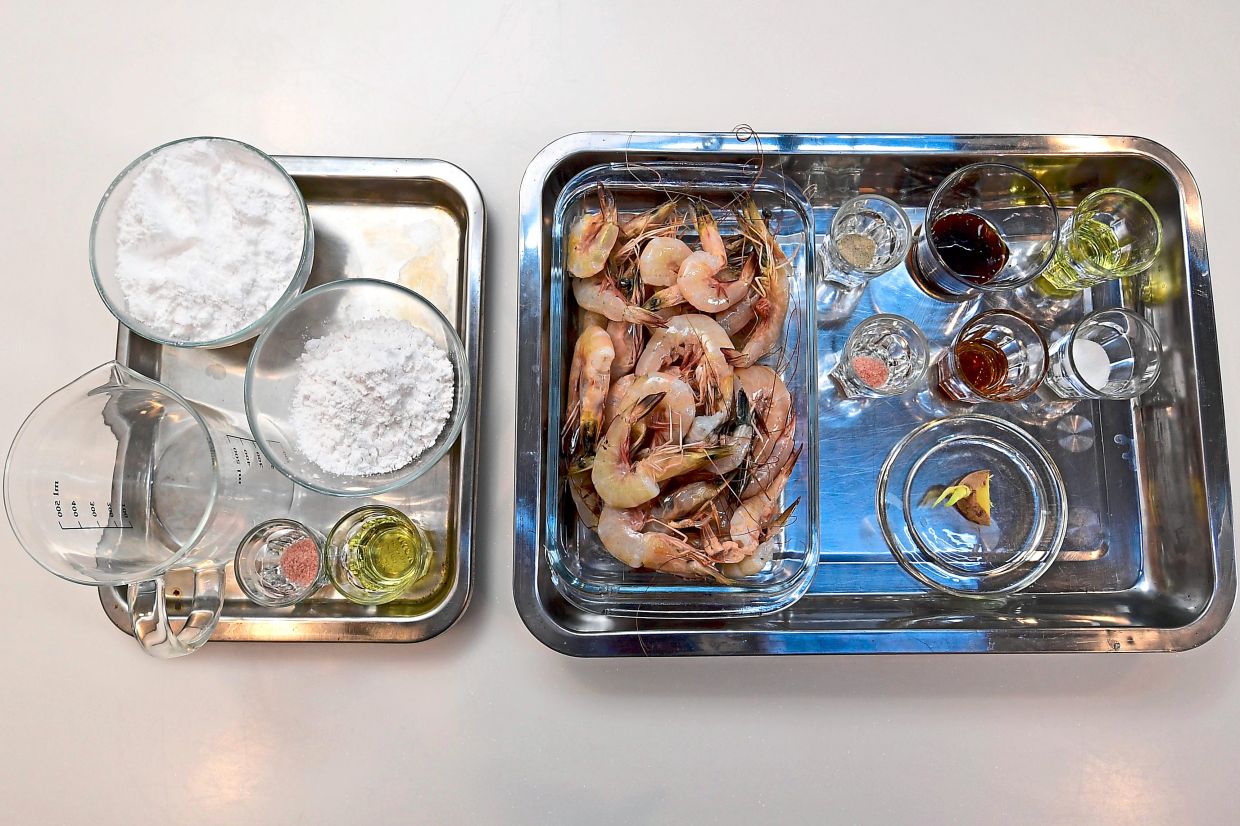
Prawn dumplings (Har gow)
Wrapper dough
120g wheat starch
60g tapioca starch
½ tsp salt
250-300ml boiling water
1 tbsp shortening or 1½ tbsp cooking oil

250g raw prawns, peeled and deveined
1 tsp oyster sauce
¼ tsp ground white pepper
1 tsp sesame oil
¼ tsp salt
1 tsp sugar
30g ginger, finely minced
Directions
Combine the prawns, oyster sauce, white pepper, sesame oil, salt, sugar and ginger.
Mix vigorously in one direction for a few minutes until the mixture becomes sticky. Cover and refrigerate while preparing the dough.
Combine the wheat starch, tapioca starch and salt in a mixing bowl.
Pour in boiling water and stir quickly until the mixture comes together. Cover and leave to rest for 15 minutes.
Add the shortening or cooking oil and knead until the dough is smooth, pliable and no longer sticky.
If necessary, continue kneading by hand to achieve the right texture. Then rest another 15 minutes.
Roll the dough into a long cylinder and divide into 18 equal portions. Roll each portion into a thin circle about 7cm in diameter.
Alternatively, roll the dough into a flat sheet and cut out circles with a 7cm round cutter.
Place a spoonful of filling in the centre of each wrapper. Fold and pleat the edges to seal the dumpling securely.
Arrange the dumplings in a steamer, leaving at least 3cm between them.
Steam over boiling water for about 6 minutes, until the prawns are cooked and the wrappers are translucent.
Serve immediately with sweet and spicy dipping sauces.