
When Nur Aliah Afiqah Ahmad Shokri discovered her 10-month-old son Khairul Ismadi had cerebral palsy and three chronic illnesses, her world shattered.
“In November last year, he was also diagnosed with hepatoblastoma,” she said.
Nur Aliah was devastated to learn that her child, who already had a disability, had developed liver cancer.
Yet in her darkest hours, respite arrived through Malaysian Children’s Hospice (MCH) Penang.
“We received support from MCH Penang when they asked about my second son and my well-being. I was so grateful to feel that I was not alone.”
She said Khairul Ismadi was under hospice care for three months before he died peacefully on Feb 1.
“Even after that, MCH Penang staff continued to help me and frequently checked on me,” she added.
MCH Penang has provided palliative care to 25 children since its establishment last year, with 17 currently under active care.
Its president, Dr Teoh Yen Lin said the children were referred to them by the paediatric departments of Hospital Pulau Pinang and Hospital Seberang Jaya.
“In October 2025, we took in our first home-care patient, Aidil from Penaga, who had a brain tumour,” she said during the hospice’s opening ceremony.
Dr Teoh said the journey towards establishing the service began on June 18, 2018, when a group of paediatricians trained by Health Ministry in paediatric palliative care joined Malaysian Association of Paediatric Palliative Care (MAPPAC).
MCH was subsequently established as a service centre under MAPPAC to provide multidisciplinary care and support to children with life-limiting or life-threatening illnesses.
“This vital service is delivered through MCH. Our specialised doctors and nurses provide expert clinical assessments and medical management, while a dedicated network of volunteers helps secure the long-term funding needed to sustain our home-care programme,” said Dr Teoh.
MAPPAC president Dr Lee Chee Chan said the association aimed to provide seamless and continuous care for children with life-limiting conditions, as they transitioned from hospital to home.
MCH currently has branches in Kuala Lumpur, Klang, Sibu and Kota Kinabalu, with Penang being its fifth branch.
Dr Lee said data on the clinical spectrum of children receiving palliative care in Malaysian hospitals showed that 37.1% had congenital malformations, deformations and chromosomal abnormalities, while 24.1% had nervous system diseases.
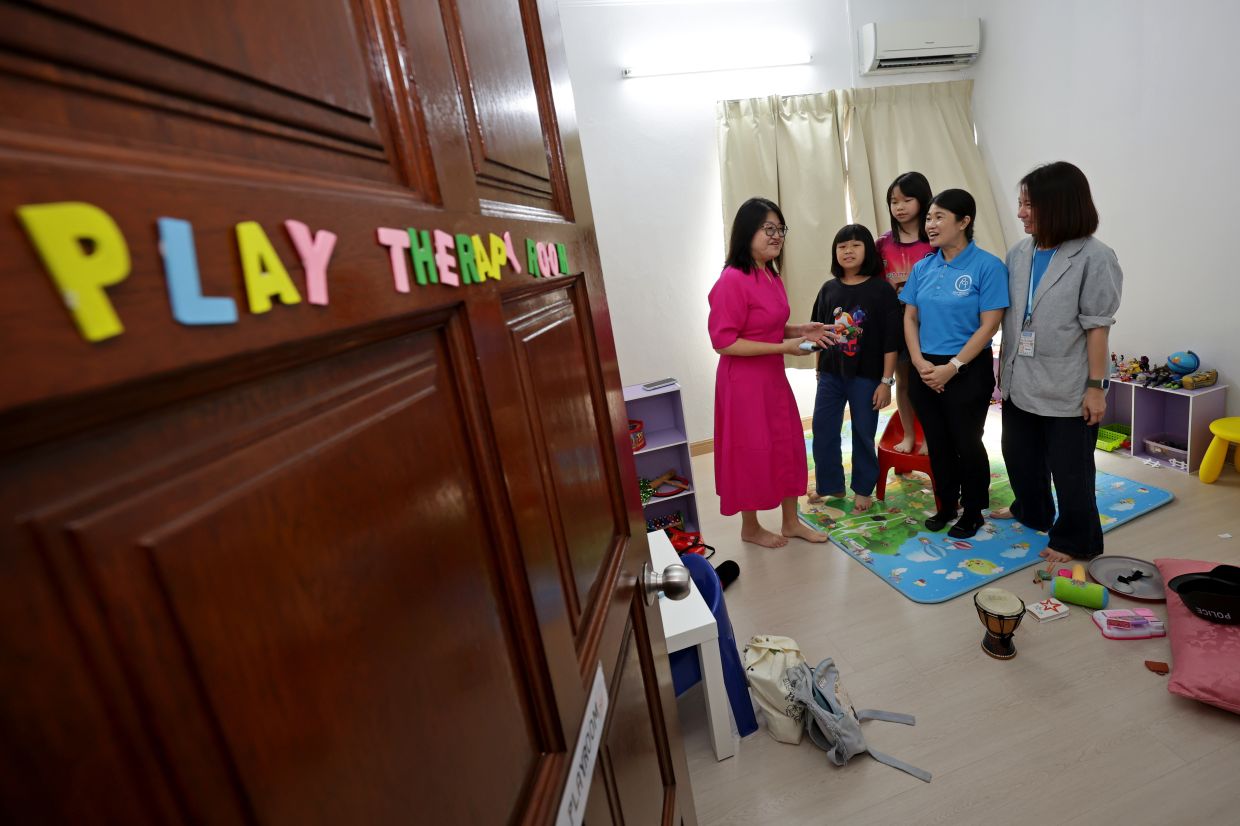
“Only 19% of cases relate to neoplasms or cancer, unlike in adult palliative care where most patients have cancer,” he said.
Penang social development, welfare and non-Islamic religious affairs committee chairman Lim Siew Khim highlighted that behind every seriously ill child was a family, particularly parents and caregivers, who often shouldered tremendous emotional, physical and financial burden.
“Supporting the child therefore also means supporting the parents, siblings and caregivers.
“Sometimes what a family needs is not just medical care, but someone to listen, offer practical assistance, financial support, time to rest and a community that understands,” she said.
Also present were the hospice’s person-in-charge Datuk Dr Hussain Imam Muhammad Ismail, Friends of Childhood Cancer Northern adviser Dr Tan Eng Guan and Penang Hospital director Dr Goh Hin Kwang.
MCH Penang is located at No.6, Tingkat Batu Uban 3, Gelugor.
For more information, call the hospice at 04-668 9944 or 018-245 5988. It operates from 9am to 6pm on weekdays.