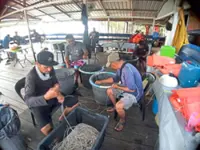
LIFE for coastal fishermen in Gelang Patah, Johor, is becoming more challenging.
Fisherman Faidarus Ab Rahim said apart from the changing weather patterns and unpredictable atmospheric conditions, the Middle East conflict had profound impact on their livelihoods.
“Reduction in the monthly fuel quota this year is giving us a big headache,” he said at the Kampung Pendas Laut Fishermen Jetty in Gelang Patah.
Effective April 1, the government reduced the monthly subsidised RON95 fuel quota under the Budi95 Scheme from 300 litres to 200 litres.
Fuel remains subsidised at RM1.99 per litre up to the 200-litre limit, after which, consumers must pay unsubsidised market rate.
“Most of us use up to 20 litres of fuel going out to the sea daily, and now we have to limit our trips,” Faidarus said, adding that this meant a reduced income.

Another fisherman, Basirun Salikun, said coastal fishermen faced escalating hardships daily due to a combination of environmental and industrial pressures.
“The Middle East conflict also caused prices of two-stroke engine oil, or boat lubricants to go up.”
Basirun said the four-litre specialised oil for outboard marine engines was previously sold at RM20 but jumped to RM60 in February, and now at RM95.
He added that it was also becoming more difficult to get the product due to a shortage.
“Massive coastal projects have severely disrupted local marine ecosystems. The destruction of mangroves and seagrass beds has drastically reduced the fish and prawn populations,” said Basirun.
He said the situation had pushed fishermen further out into deeper waters, closer towards the international maritime boundary.
“We depend on the sea for our livelihood, regardless of changing weather patterns, problems such as regional pollution incidents and land reclamation,” said Basirun.

Proprietor of a fishing equipment business Chua Boon Guan said the distributors of fishing nets increased their wholesale prices in early March.
“The 91.44m fishing net now costs RM47, compared with about RM37 before.”
Chua said local fishermen preferred the more expensive Thai fishing nets because of their quality and durability over China-made fishing nets.