
THE global semiconductor industry is entering a new era defined by resilience rather than efficiency.
As the global technology sector enters an aggressive AI supercycle driving exponential demand for purpose-built chips, Penang stands uniquely positioned with a sophisticated industrial ecosystem and ready infrastructure to sustain this relentless computing revolution.
For decades, multinational corporations built supply chains around the idea of global optimisation, locating manufacturing where costs were the lowest and logistics most efficient.
Today, that calculus has changed. Geopolitical tensions, export controls, critical mineral dependencies and supply chain disruptions have prompted firms to rethink where to invest and manufacture.
With high-level diplomacy taking place around the world, directly or indirectly affecting global economies, rigid semiconductor export controls and critical mineral chokepoints remain firmly intact.
This vulnerability underscores a pressing need for diversification.
Across the global semiconductor industry, many companies are accelerating “Plus One” strategies, seeking locations that offer political stability, strong infrastructure, skilled talent and long-term certainty.
The AI supercycle is also accelerating demand for increasingly sophisticated chips.
Those requirements increasingly point towards Penang – the northern Malaysian state long celebrated as the “Silicon Valley of the East”.
It has spent over five decades building one of Asia’s most successful electrical and electronics (E&E) manufacturing ecosystems and today accounts for a significant portion of Malaysia’s exports in this sector.
But the state’s ambitions extend beyond preserving its position within the global semiconductor value chain. It is currently undertaking major infrastructure projects to expand its capabilities and meet the surge in demand.
Key to that is the 2,300-acre Silicon Island off the southern coast of Penang Island.
This mega development represents a master-planned evolution from traditional backend assembly into integrated circuit (IC) design, semiconductor capital equipment, automated test equipment, advanced packaging and high-value wafer fabrication.
It positions the state to become a critical global node in the next generation of semiconductor manufacturing.
While Penang originally established its reputation through semiconductor assembly and testing operations, the future lies further up the value chain.
AI, high-performance computing, electric vehicles and next-generation communications technologies are driving unprecedented demand for advanced chips.
Silicon Island was designed specifically to support this transition. Rather than a mere expansion of industrial land, it is in fact a strategic evolution of Penang’s economic model.
The Bayan Lepas advantage
Silicon Island is not an isolated venture. Its location directly leverages its proximity to the Bayan Lepas Free Industrial Zone (FIZ) – one of the world’s most established E&E manufacturing clusters.
Since the 1970s, it has been the beating heart of Penang’s industrial economy, attracting some of the world’s largest technology companies such as Intel, AMD, Bosch, Infineon, Broadcom, Renesas, HP, Dell, Plexus and Motorola Solutions, along with an extensive support network.
However, with demand for industrial space growing through the decades, available land within the zone has become increasingly scarce.
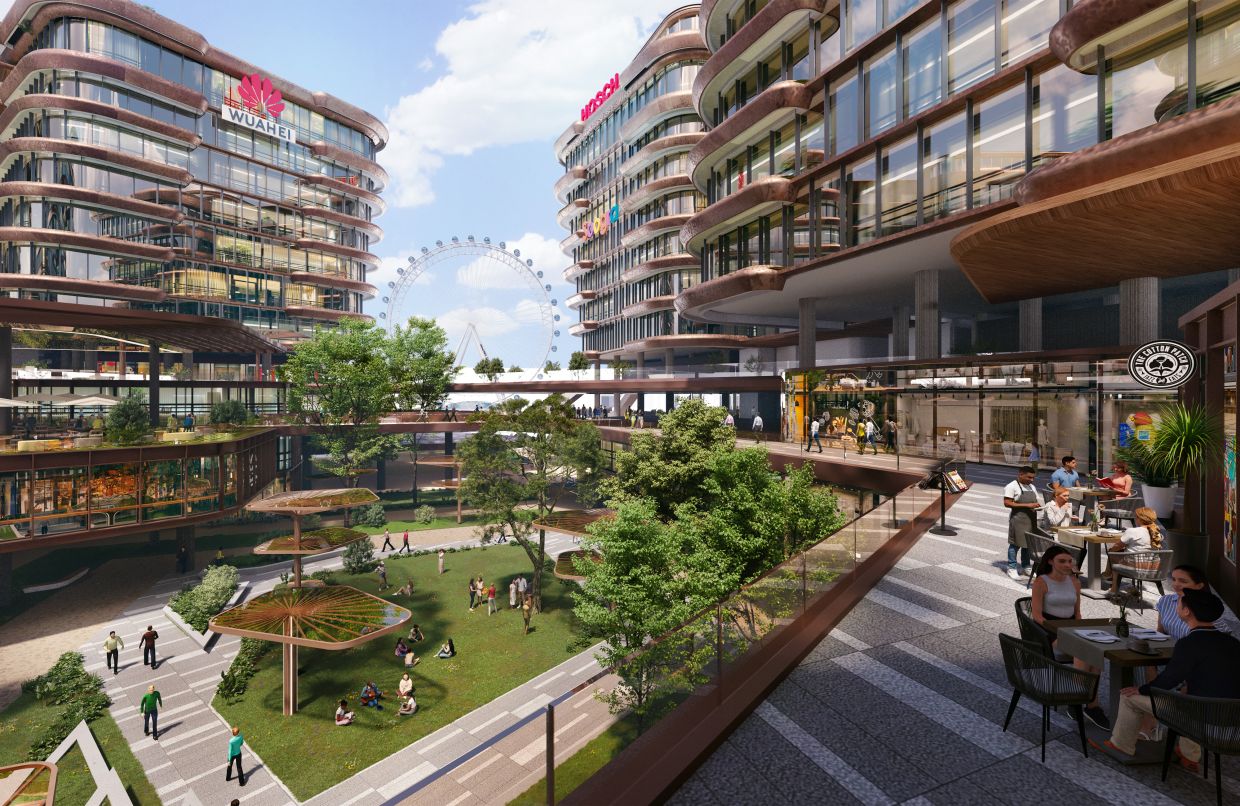
Silicon Island provides the room needed for future expansion while maintaining immediate connectivity with the existing ecosystem. For foreign direct investors, this geographic proximity offers a powerful advantage.
Instead of building operations in isolation, new entrants gain access to a mature ecosystem comprising over 4,300 technology-related companies, established logistics networks, specialised suppliers and a highly experienced workforce.
The result is a plug-and-play environment that drastically reduces costs, shortens development timelines and accelerates time-to-market for incoming tech giants.
Architecting an elite talent ecosystem
As global demand for AI-capable chips skyrockets, the engineering talent gap widens. Industry captains and insiders often point to talent shortages as one of the biggest challenges to future semiconductor growth.
With Silicon Island expected to create approximately 220,000 direct, indirect and induced job opportunities and also fulfil the national mandate of producing 60,000 highly-skilled engineers by 2030, Penang has aggressively invested in building a sustainable talent pipeline.
Initiatives such as the Penang Silicon Design @5km+ will help cultivate a dynamic IC design ecosystem and strengthen its capabilities in high-value activities.
Central to this is the Penang Chip Design Academy @PSDC, which provides targeted upskilling and reskilling opportunities for engineers seeking to stay relevant in this rapidly-evolving sector.
There is also the Penang Skills Development Centre’s (PSDC) Attraction, AI for Manufacturing Programme (AIMP), which seeks to attract and retain highly skilled talent while strengthening connections between industry, academia and aspiring professionals.
Simultaneously, the Penang Future Foundation continues to nurture the next generation of STEM talent through scholarships and educational opportunities, affording local students pathways into the state’s technological transformation.
Together, these initiatives ensure that incoming multinational corporations not only have access to a robust ecosystem, but also a world-class pool of talent to power operations.
State-building and empowerment
Large-scale developments often raise concerns about the impact on surrounding communities. But far from displacing local heritage, Silicon Island seeks to set a global gold standard for community inclusion through its Social Impact Management Plan (SIMP).
The development includes initiatives that ensure economic growth benefits local stakeholders rather than leaving them behind.
Under one programme, local fishermen are provided with advanced, higher-capacity vessels and engines equipped with modern navigation technologies, enabling them to improve operational efficiency and increase potential yields.
Furthermore, through strategic educational pipelines, the children of these traditional communities are also empowered with the resources to become tomorrow’s automation engineers and tech innovators.
Such commitment to inclusive development reflects a broader vision for Penang’s future – where economic competitiveness and social progress advance together.
Driving sustainability
With environmental, social and governance (ESG) considerations increasingly influencing global investment decisions, companies today need to ensure operations meet stringent sustainability standards.
As a result, industrial developments can no longer focus solely on economic outcomes. They must also address environmental stewardship, community wellbeing and long-term resilience through its infrastructure and policies.
What sets Silicon Island apart from other manufacturing and industrial hubs is its provision of green technology infrastructure and emphasis on sustainable operations. This has resulted in Silicon Island being accredited with a 5-Diamond Low Carbon City accreditation.
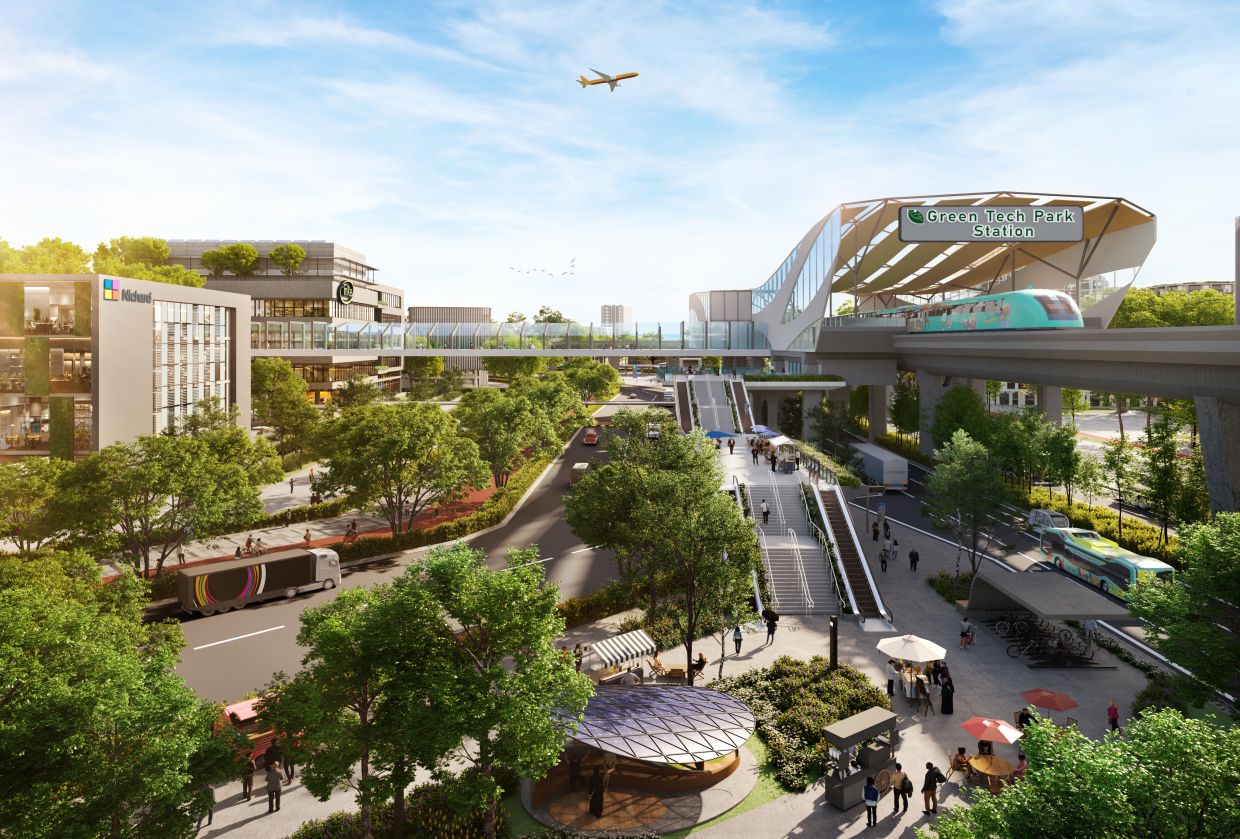
A prime example will be the Green Tech Park (GTP), targeted to commence operations as early as 2028, which was designed to host lower-carbon manufacturing.
Phase 1 of GTP will be supplied with 100% renewable energy and incorporates dual sewerage treatment plants. This provides future tenants with infrastructure that supports their decarbonisation strategies and broader sustainability objectives.
With some 400 acres of land reclaimed thus far, the development continues to move forward.
The Silicon Island Experience Centre is scheduled to open in the fourth quarter of 2026, offering investors, stakeholders and the public a glimpse into the project’s longterm vision.
After half a century building the foundations of a world-class semiconductor ecosystem, Silicon Island will anchor the next chapter in Penang’s manufacturing evolution.
As global supply chains continue to evolve, regions capable of combining stability, talent, sustainability and industrial excellence will emerge as preferred destinations for investment.
This makes Silicon Island more than just a land reclamation project. It is a blueprint for how a mature industrial economy can reinvent itself for decades ahead and ensure that prosperity is shared across communities, industries and generations.
For more information, visit www.siliconisland.com.my.