
AT KAMPUNG Parit Tiram Jetty in Johor, Sungai Muar looks like just another river.
Not many realise the wealth of gastronomic treasures hidden in its depths.
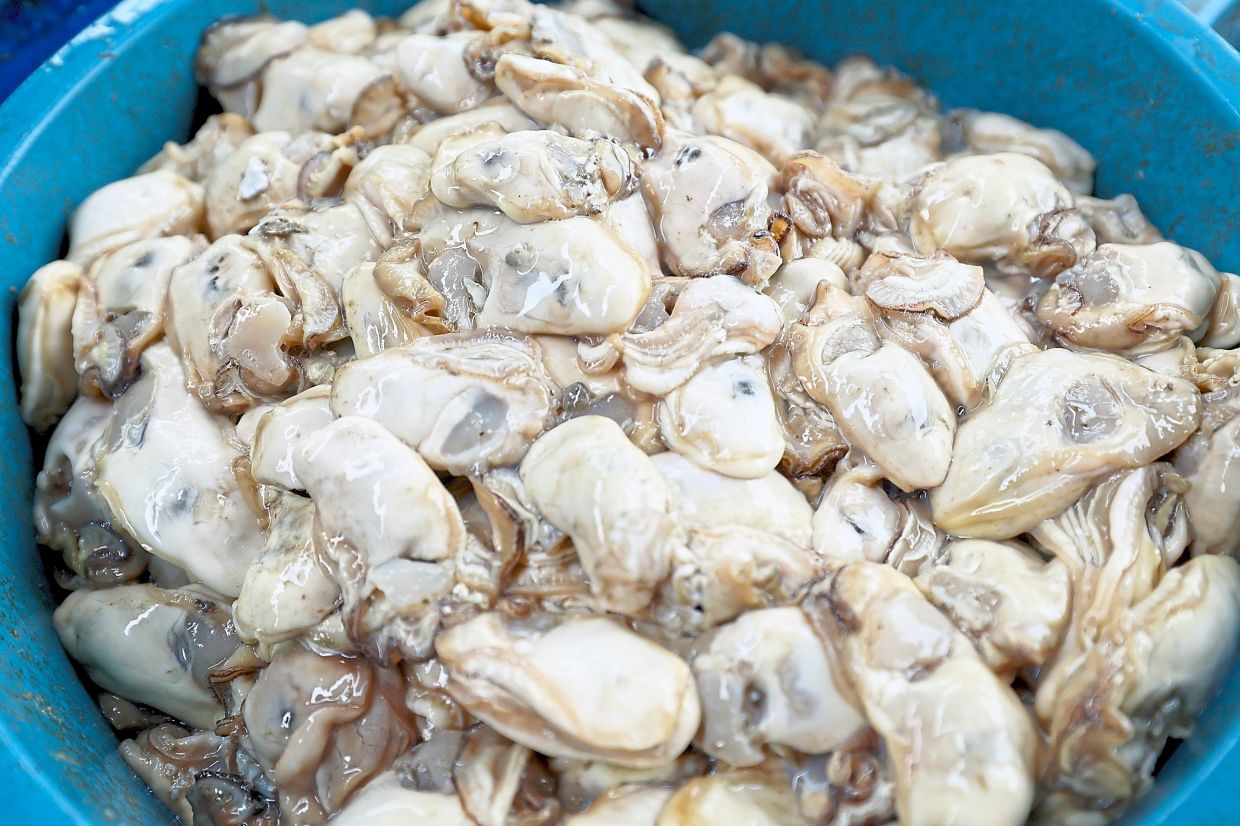
At the bottom of the riverbed, white oysters − Crassostrea (Magallana) saidii − can be found in abundance.
The white oyster has been identified as a new species and named after local resident Md Saidi Mohamed who first brought them to the attention of researchers.
Kampung Parit Tiram village chief Mohammad Daniel Azahari, who is fondly known as Tok Daniel, said the oysters here were in a class of its own.
“Muar oysters are among the best in the world, and this white oyster is unique.
“Many times, other people have tried to seed them elsewhere but it did not work. They must grow and live here naturally.
“Before I became the village head, I did not like oysters.
“But when I tried these, I found them delicious.
“There was no aftertaste like other oysters,” he told Bernama at the village in Muar, Johor.
Mohammad Daniel said white oysters in this river were unique because of the natural ecosystem.
However, all the oyster seeds that were taken out of their original habitat failed to survive, he said.
“It is because of the water quality here, when the tide is in, saltwater comes in.
“When the tide is out, freshwater pushes them out. So the oysters here are in two waters.”
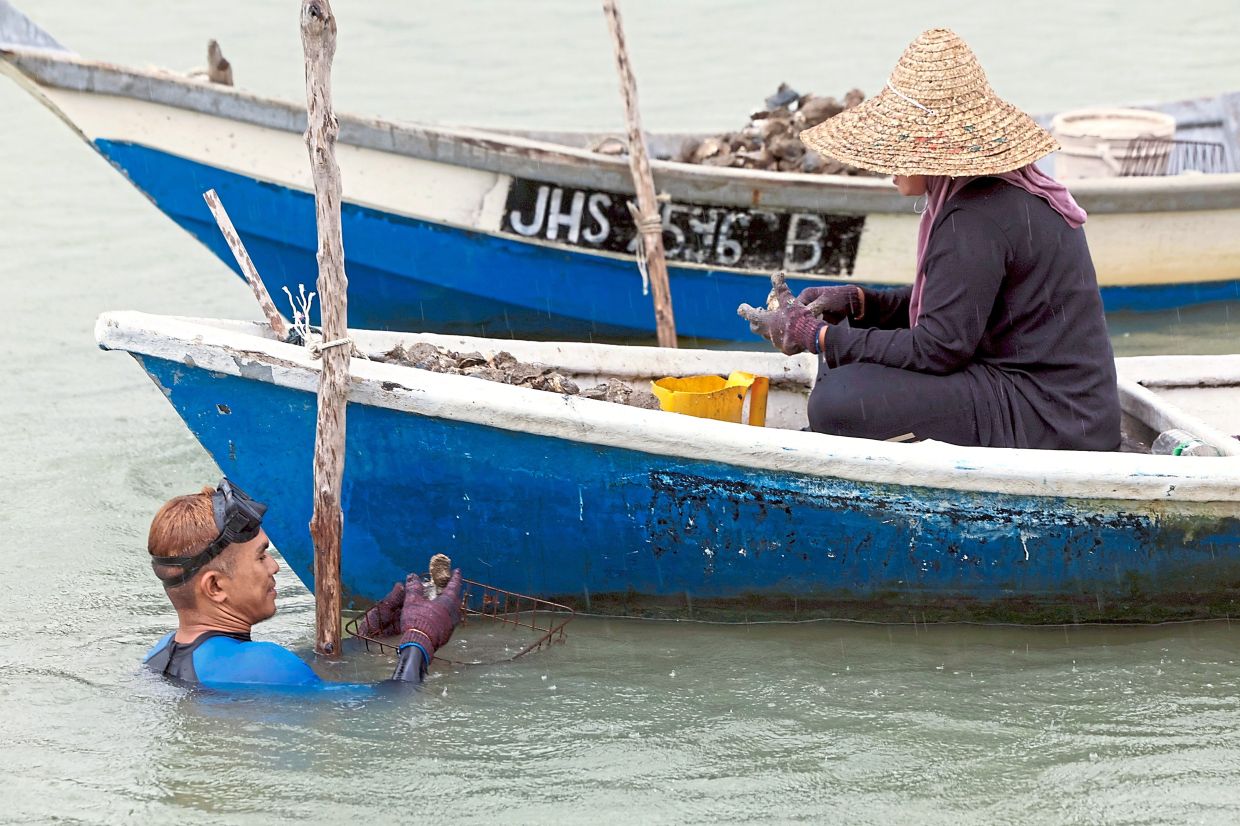
Mohammad Daniel said the harvesting process was done manually, with fishermen diving to the bottom of the estuary without any breathing apparatus or oxygen tanks.
The geographical conditions of Sungai Muar act as a complex flavour map for the molluscs.
Oysters that breed in different shoals have their own unique flavours.
Among them are Ngah Leman shoal, Ngah Talib shoal and Panjang shoal, each of which has a different oyster profile in terms of size and texture.
The structure of the silt deposits, the speed of the current and the salinity of the water in each area ultimately influence the flavour, making the tracking down of white oysters here seem like a flavour-hunting activity.
In the middle of the river estuary on a rainy day, veteran oyster diver Zaimi Mohd Noh was spotted.
Although he started diving for oysters at 13, the retired military man admitted that hunting for them in the darkness of the riverbed was not for the faint-hearted.
“This work is dangerous. A prayer is always on the lips,” said the father of five.
Divers place a long mangrove wooden pole into the riverbed next to the boat to guide them in the dive to the bottom.
Zaimi said it was difficult to attract new divers from the younger generation due to safety factors and the physical risks involved.
“We cannot force it. They must do it out of interest.”
He is worried about the long-term future of the trade because of the lack of young blood keen to take over.