For Muhammad Syaputra Yusof, the path to music began not with lessons, but with the late Tan Sri P. Ramlee’s films, which inspired a passion for the violin.
It was the film Anakku Sazali that proved to be a turning point for the 13-year-old as he was captivated by its emotional storytelling and musical elements.
The expressive use of the violin in the movie left a lasting impression on the young boy, better known as Adik Putra.
Determined to learn how to play the string instrument, he asked his father Yusof Harun for a violin, marking the start of his musical journey.
Growing up, Adik Putra was exposed to music through his father’s performance as musician and comedian in Omar Hashim’s Penang boria and ghazal parti troupe.
“Although I was too young at the time to join in, I continued practising the violin over the years to be really good at it,” said the Form One student.
Adik Putra has also begun playing the guitar and piano as he aspires to be a versatile performer like the late P. Ramlee.
He described his father as his earliest teacher, and one of the most important influences in his musical journey.
Since his father’s death early this year, Adik Putra has been under Omar’s wings and has been performing alongside his troupe.
Omar (widely known as Omara) and Adik Putra were among performers highlighted at the “Penang Musicians Exhibition: A Musical Journey from Legacy to the Next Generation” festival at Robina Eco Park in Teluk Air Tawar, North Seberang Perai in Penang.
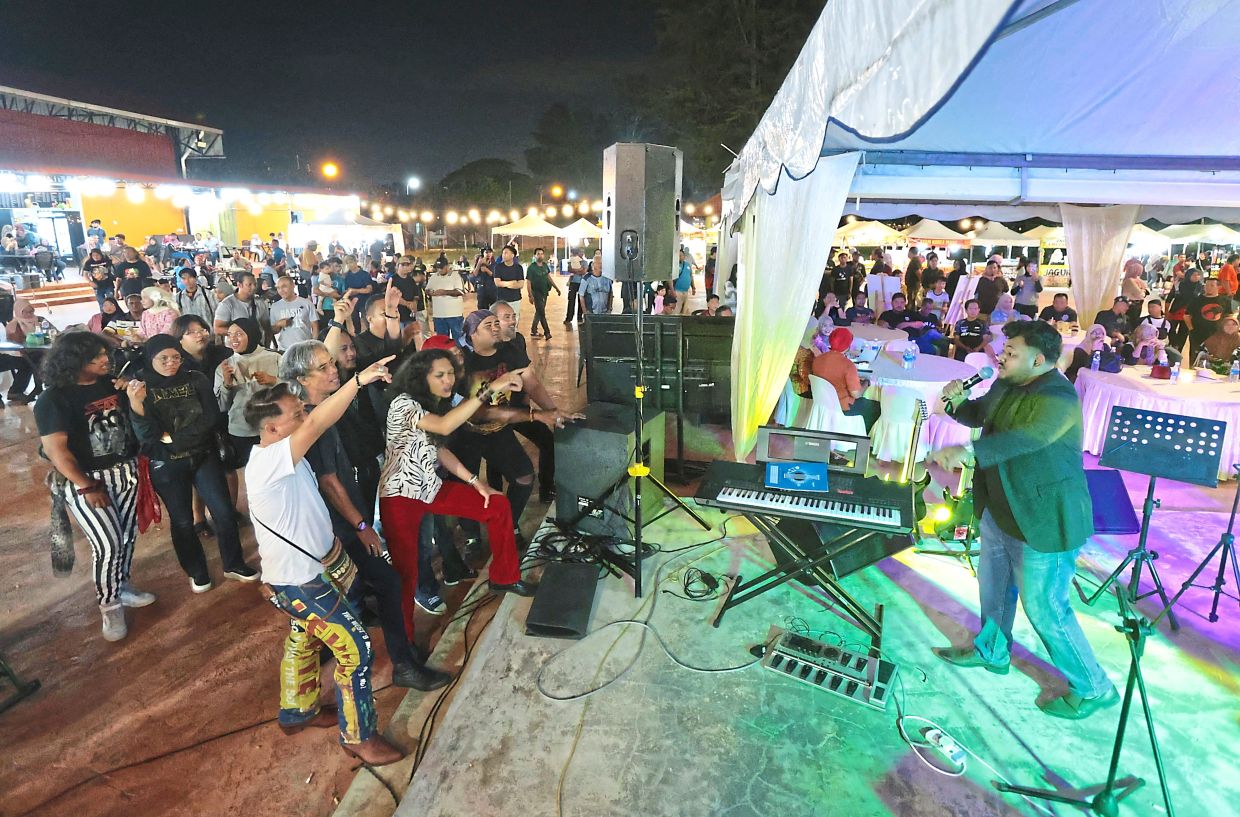
The festival, featuring a nostalgic journey through the decades, showcased traditional genres of boria and ghazal parti – popular in the 1950s before moving through pop and contemporary rock music eras.
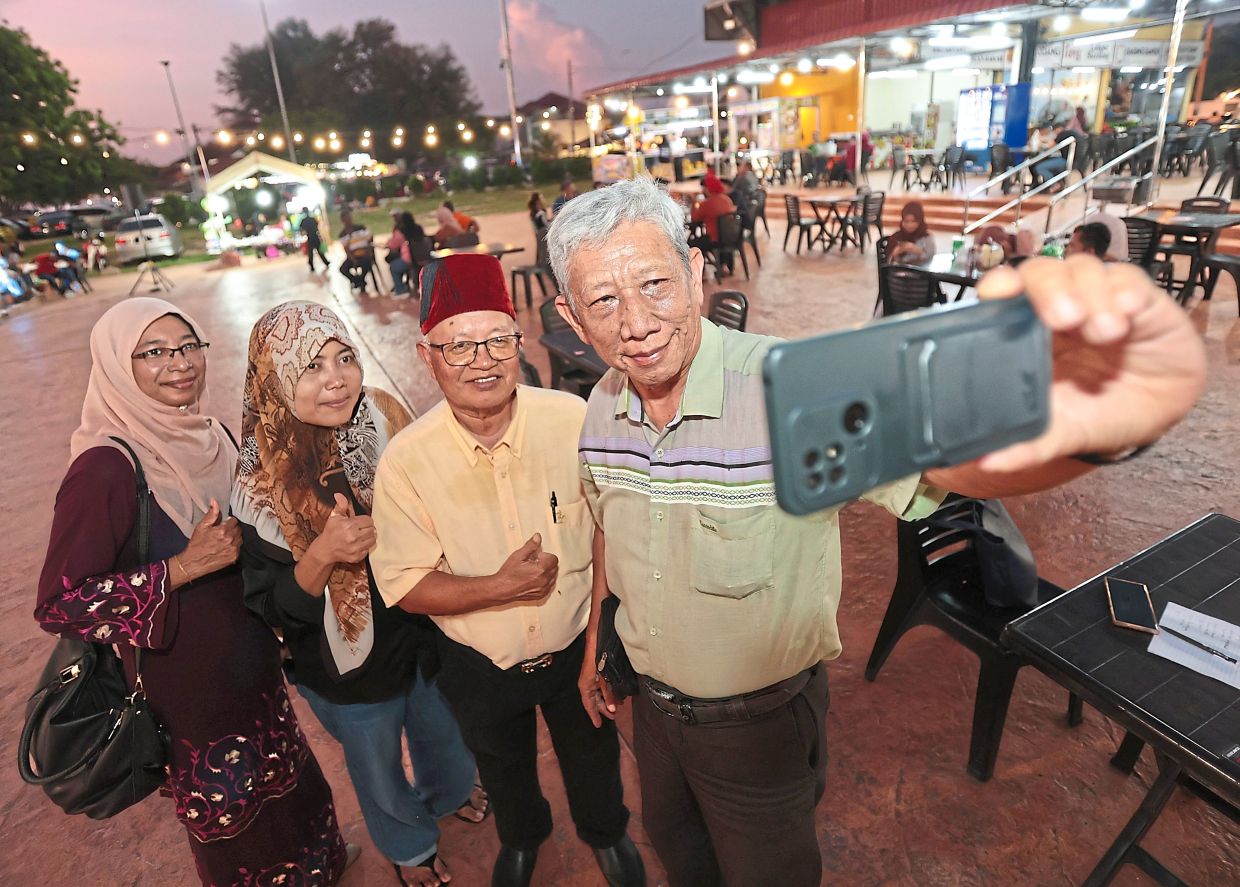
The event drew a predominantly Malay audience with the rich musical heritage of the community taking centre stage.
Musicians like the late P. Ramlee, Tan Sri Ahmad Nawab and Datuk M. Daud Kilau were celebrated as the crowd enjoyed familiar classic tunes while the youth were introduced to cultural art forms which defined the region’s musical identity.
Voices of heritage
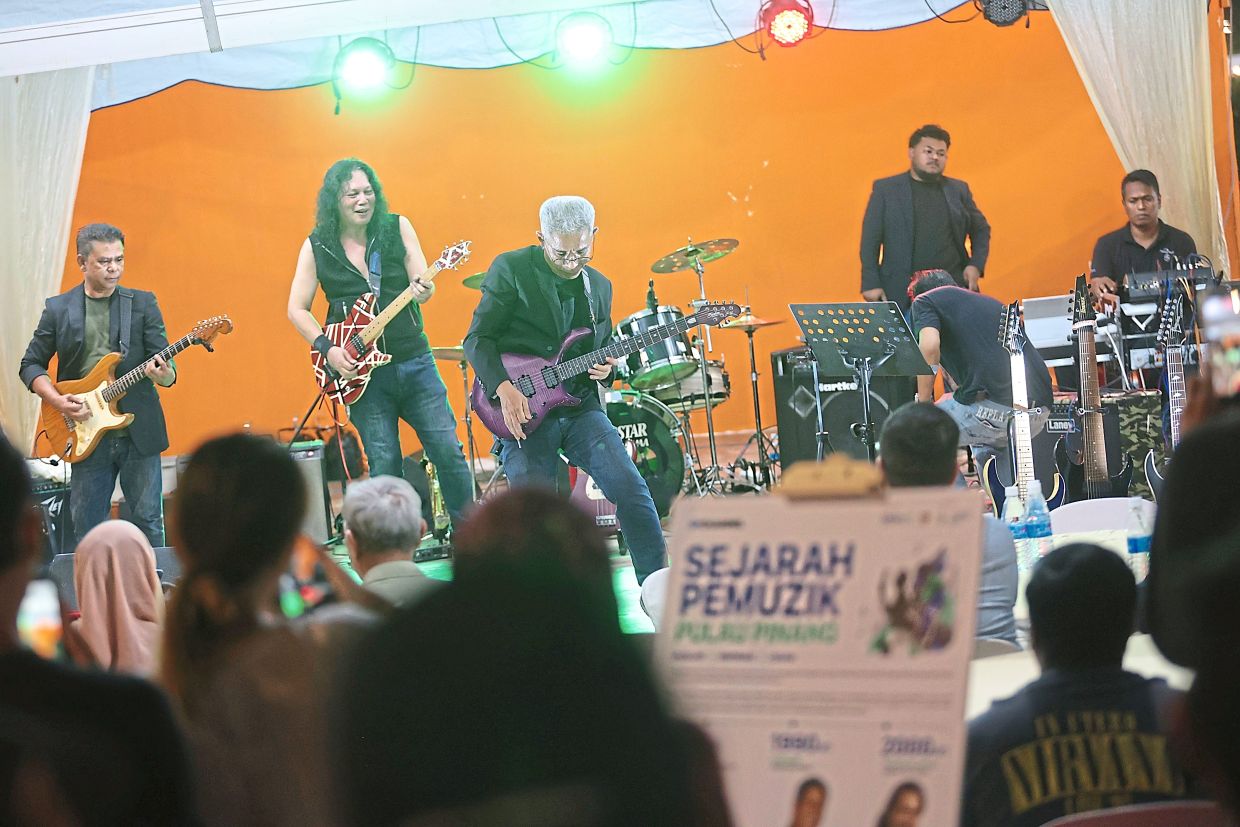
The festival featured programmes such as outdoor music classes, storytelling and documentary screenings on Penang musicians, boria and ghazal parti talks by Omar, violin performance by Adik Putra and live band performances.
Omar, the state’s most recognisable boria practitioner, was born in Bukit Mertajam.
A highly decorated figure in Malaysian culture and arts, Omar holds the prestigious Tokoh Warisan Kebangsaan Orang Hidup (Living National Heritage) title.
He grew up immersed in performance arts and is best known for his work in preserving and promoting boria.
Boria and ghazal parti are traditional Malay theatrical performance art synonymous with Penang.
Omar’s troupe Kumpulan Boria Omara, founded in 2008, did many boria programmes for radio, television and local events.
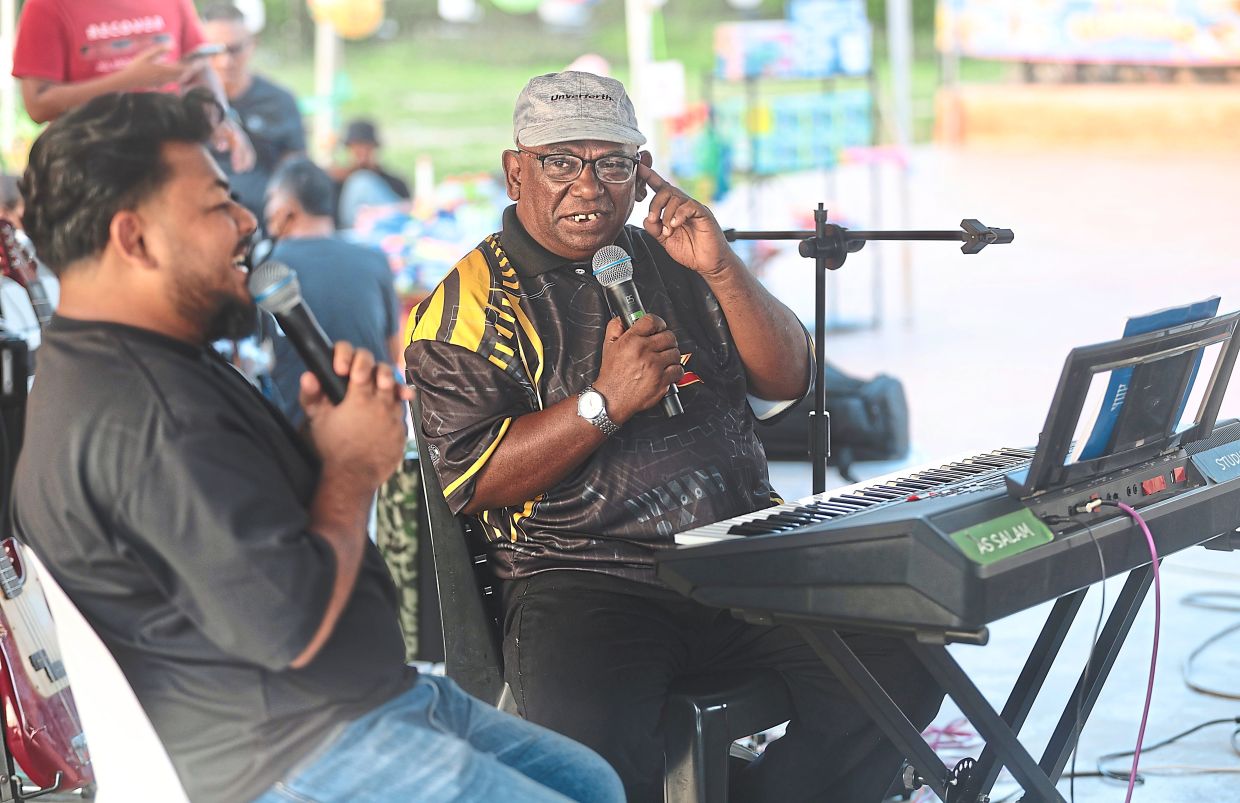
He is also a lyricist, scriptwriter, poet and cultural activist.
Omar said he was involved in other Malay cultural traditions such as ghazal parti – documenting and sharing its history and evolution.
Having mastered both the asli (original) and modern styles of boria, he shared how the structure of today’s boria has evolved from its ancient origins.
“Boria does not serve a religious ritual function anymore.
“Today, it has evolved into a highly entertaining show,” he said.
During his talk, Omar spoke about the role of the tukang karang (lead singer) and kelasi (sailors), who serve as chorus singers and dancers.
“Twirling a baton to lead his troupe, the tukang karang sings boria verses while the kelasi echoes in unison,” he said.
Omar added that the 1970s saw the introduction of RTM Boria, which influenced the contemporary style of boria with its flashy costumes and electronic rhythms.
Schools often perform this style of modern boria, he said.
“Today, boria is making a comeback as there is renewed interest,” said Omar.
“Many are curious to rediscover and reclaim the festive spirit of boria asli.
“I hope that one day boria will be recognised worldwide as a truly unique cultural heritage of Penang and Malaysia.”
Ghazal parti, he said, is a traditional Malay musical performance that blends singing, instrumental music, dance and comedy into a lively show.
“Ghazal parti is more than just entertainment,” he said.
“It plays a vital role in conveying educational, moral and social messages to the community.”
Mohamad Din Haniffa, better known as Mat Din, a veteran Malaysian musician and composer with over three decades of experience in the local music industry, also shared his experience with the crowd.
A highly skilled traditional Malay percussionist, Mat Din is renowned for his deep knowledge of the traditional Malay drum or gendang.
He spoke on various formats of composing and arranging music.
Over the years, Mat Din has assisted local schools and government departments in producing their own songs.
He has also composed and arranged music for numerous prominent Malaysian singers and groups.
In recognition of his contribution to traditional and local music, he was named Tokoh Seni Budaya (Cultural Arts Figure) by the Penang Malay Association.
Meanwhile, guitarist Alwan Hasanurdin thrilled the crowd when he performed the late Tan Sri P. Ramlee’s Jeritan Batinku.
Next came musician and independent singer Syafiq Ismail who awed the audience with his rendition of Seniman Menangis by singer Datuk Jamal Abdillah.
There were also musical demonstrations and performances by the Fix Akustik band.
Culture builds communities
The festival, held for the first time, was organised by Think City in collaboration with production house SPChannel.
It was launched by Tasek Gelugor Technical and Vocational Education and Training (TVET) coordinator Muhammad Yusof Abdul Ghani.
Think City senior manager Kishore Ramdas said the festival was part of the Levelling Up Seberang Perai (LUSP) programme.
LUSP is a long-term urban regeneration effort aimed at making Seberang Perai more liveable, sustainable and inclusive.
The event, Kishore said, was jointly funded by the Finance Ministry, state government and Seberang Perai City Council (MBSP).
“We brought the music festival as a celebration of Penang’s musical heritage.
“This is a community-driven effort to enhance liveability across the mainland by strengthening community identity and social cohesion in Seberang Perai through cultural engagement, heritage conservation, grassroots participation and economic empowerment,” he said.
Through grants and grassroots partnerships, the LUSP initiative was aimed at strengthening small towns and neighbourhoods while fostering more inclusive and resilient communities, he added.
SPChannel owner Jaafar Morad said the company was working with Think City under the LUSP framework to create narrative documentaries on Seberang Perai’s structural evolution.
“This project is focused on enhancing the socio-economic strength of the Seberang Perai people by leveraging on culture, heritage and nature,” he said.
Spotted enjoying the event and the cool evening breeze were former police officer Muzmi Mustafa, 67, and his wife Siti Nur Ismail, 51, from Bukit Mertajam.
“We found out about the event and felt it was a good opportunity to enjoy some old traditional music by the beach.
“Such events are a good chance for the public to appreciate our rich cultural heritage.
“Cultural traditions such as boria and ghazal form part of our identity and should not be allowed to fade away,” said Muzmi.
He added that programmes like the Penang Musicians Exhibition should be held regularly to keep local art forms alive.
“Many young people are familiar with modern music genres, so there is a need to introduce traditional music to them.
“Schools and universities also can play a vital role by exposing students to boria, ghazal and other traditional performing arts so they can better understand and appreciate our musical roots.
“We enjoy listening to traditional music, especially ghazal and boria performances.
“My wife and I also visit veteran artistes to support them, particularly those facing financial difficulties or health challenges, because they have contributed so much to preserve our cultural heritage,” said Muzmi.
A group of friends – Wan Nadhirah Wan Azizan, 24, Muhamad Khairuddin Darwazi, 26, and Ashroff Abd Wahab, 31 – said they attended the event out of curiosity.
“We have never been to such an event but when we heard there was a musical exhibition, we decided to check it out.
“Interestingly, there is so much history behind heritage music like boria and ghazal parti,” said Wan Nadhirah.
Muhamad Khairuddin said his grandparents’ used to listen to such music but he had not taken the trouble to find out more.
“I am aware of boria, especially the modern version but when I came here, I found out about the asli version,” he said.
He said it would be good for schools to start looking into introducing traditional music so that the younger generation could appreciate and safeguard these historical art forms.
Ashroff also echoed his friend’s sentiments, adding that although he did not know much about boria, listening to Omar’s talk made him realise the art form’s rich heritage.
“These traditional art forms are more than just entertainment.
“They showcase our history, identity and values, making them an important part of Malaysia’s cultural landscape,” he said.
Ashroff added that traditional arts could be developed in many ways through education, tourism, digital platforms and cultural exchanges.
“With the right support, they have the potential to reach wider audiences and elevate Malaysia’s profile on the international stage,” he said.
“There is growing interest worldwide in authentic cultural experiences and heritage music.
“We should take advantage of that demand by promoting our traditional art forms more actively and ensuring they remain relevant for future generations,” he added.