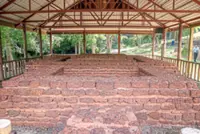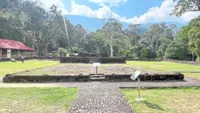
DESPITE its immense historical value, the Bujang Valley in Kedah faces major preservation hurdles, from encroaching development to public misunderstandings over conservation.
Bujang Valley Archaeological Museum senior museum assistant Mohd Faudzi Sulaiman points to shifting landscape dynamics as a core threat, with development and land-use changes effectively overwriting the function of some former historical discovery sites.
He said certain areas previously identified as historical sites were now being used as padi fields and plantations, while others are located on private land, making it difficult to expand excavation efforts.
“For example, in areas like Sungai Mas, when we want to widen our excavation, some parts have already been encroached upon by residential land.
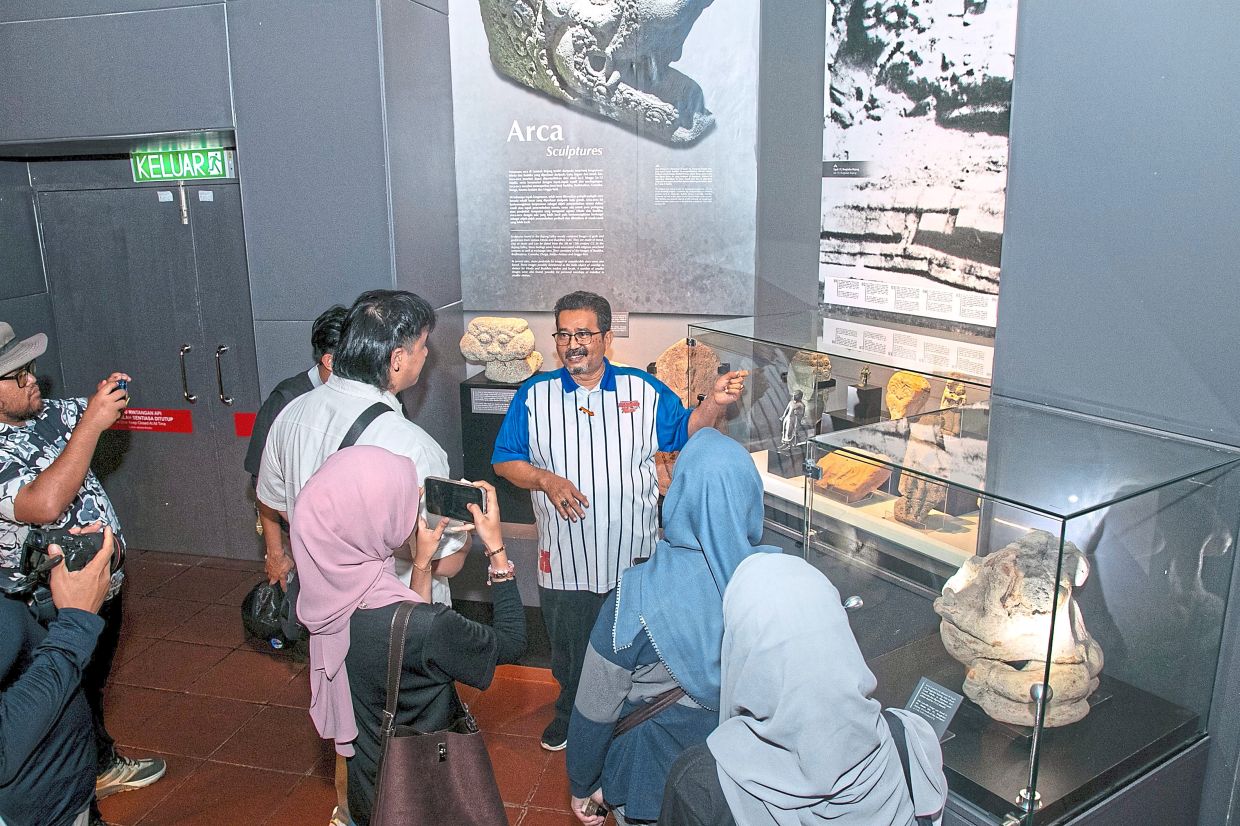
“This makes it challenging to carry out more comprehensive exploration,” he told Bernama during the Surreal Experience In The North Kedah & Perlis programme organised by the Northern Region Tourism Malaysia.
Mohd Faudzi said research related to Bujang Valley was actively ongoing, including at Bukit Choras in Yan, Kedah, which has once again become a focus for researchers following the discovery of a new site near a previously explored area.
He highlighted that Bukit Choras stands as one of the most significant archaeological sites within the Bujang Valley, consistently drawing researchers’ attention due to the discovery of structures and artefacts tied to Kedah Tua’s ancient history.
Bukit Choras Site 1 first captured the spotlight after Colonel Sir James Low discovered it in 1845, he said.
Since then, a wave of studies have followed.
“Excavations at the site’s previously explored section have since revealed another temple structure and a large Buddha statue. Research there continues, phase by phase, to this day,” he said.
Beyond Bukit Choras, Mohd Faudzi added that new discoveries had also emerged from Kota Kuala Muda, where Assoc Prof Zuliskandar Ramli from the Institute of the Malay World and Civilisation at Universiti Kebangsaan Malaysia uncovered another site now named Candi Kampung Baru.
“Studies there are still very much active, only deepening the potential for future discoveries linked to Kedah Tua’s ancient history,” he said.
Mohd Faudzi added that the museum also faced pushback from a small segment of the public, who mistakenly saw temple conservation efforts as an attempt to rebuild old structures.
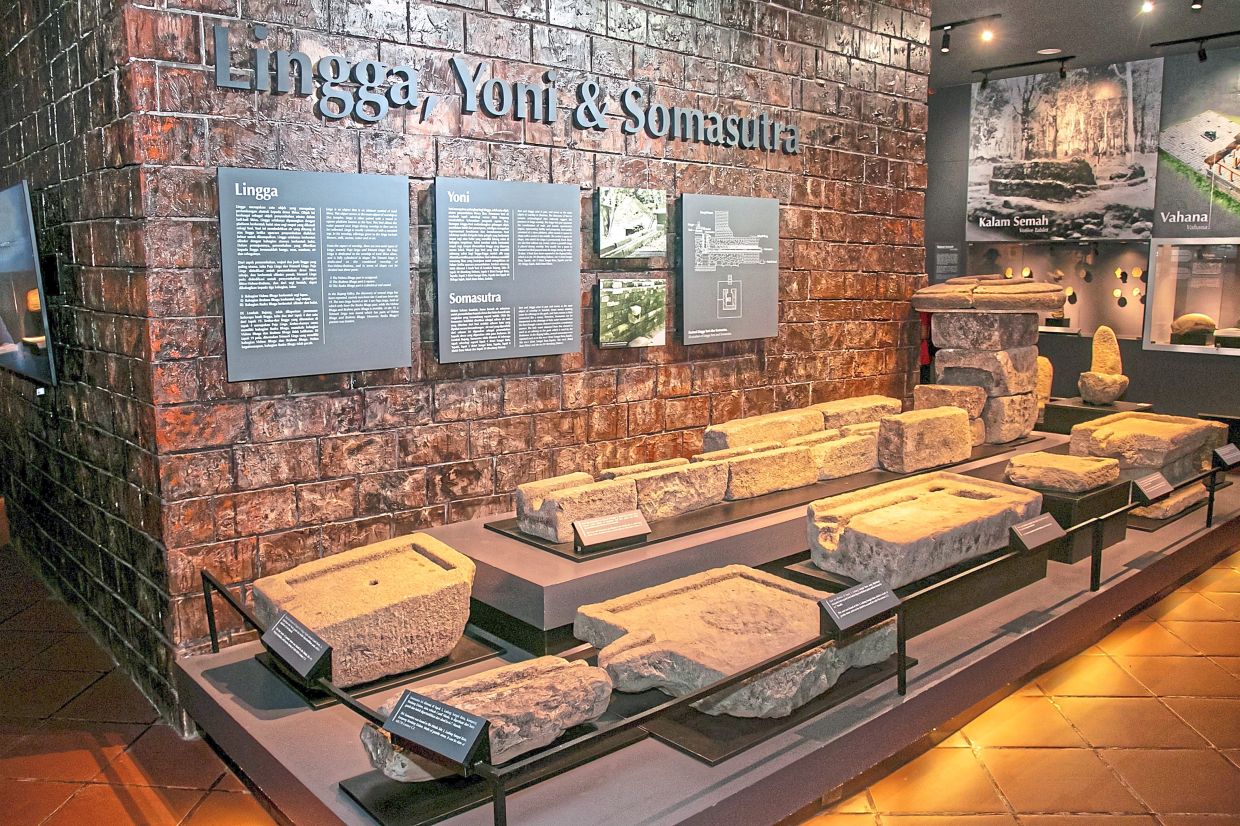
“There’s been some confusion. We’re not rebuilding on a whim; every step we take is in the service of historical research and understanding the Kedah Tua civilisation.”
Officially opened on Jan 23, 1980, the Bujang Valley Archaeological Museum in Merbok, Kedah is Malaysia’s first archaeological museum, built specifically to house artefacts from the valley and the ancient Kedah Tua civilisation.
Mohd Faudzi said the museum’s origins traced back to artefact discoveries across Bujang Valley, a sprawling area of roughly 1,000 sq km, stretching from Cherok To’ Kun in Bukit Mertajam, Penang, all the way to Bukit Choras in Yan, Kedah.
The museum features two main galleries, one focusing on archaeological finds and the other on the region’s trading history, together painting a vivid picture of life and development in Kedah Tua at its peak.
To draw the public, especially younger crowds, the museum also runs a steady lineup of activities, including talk sessions, workshops and hands-on exploration programmes tied to history and archaeology.
“Last year, we welcomed around 130,000 visitors and numbers keep climbing every year,” said Mohd Faudzi, who hoped the people would walk away appreciating and preserving Kedah Tua’s heritage, so that the historical remains could survive for generations to come.