
These delicate Chinese biscuits are prized for their incredibly crumbly texture, nutty aroma and restrained sweetness.
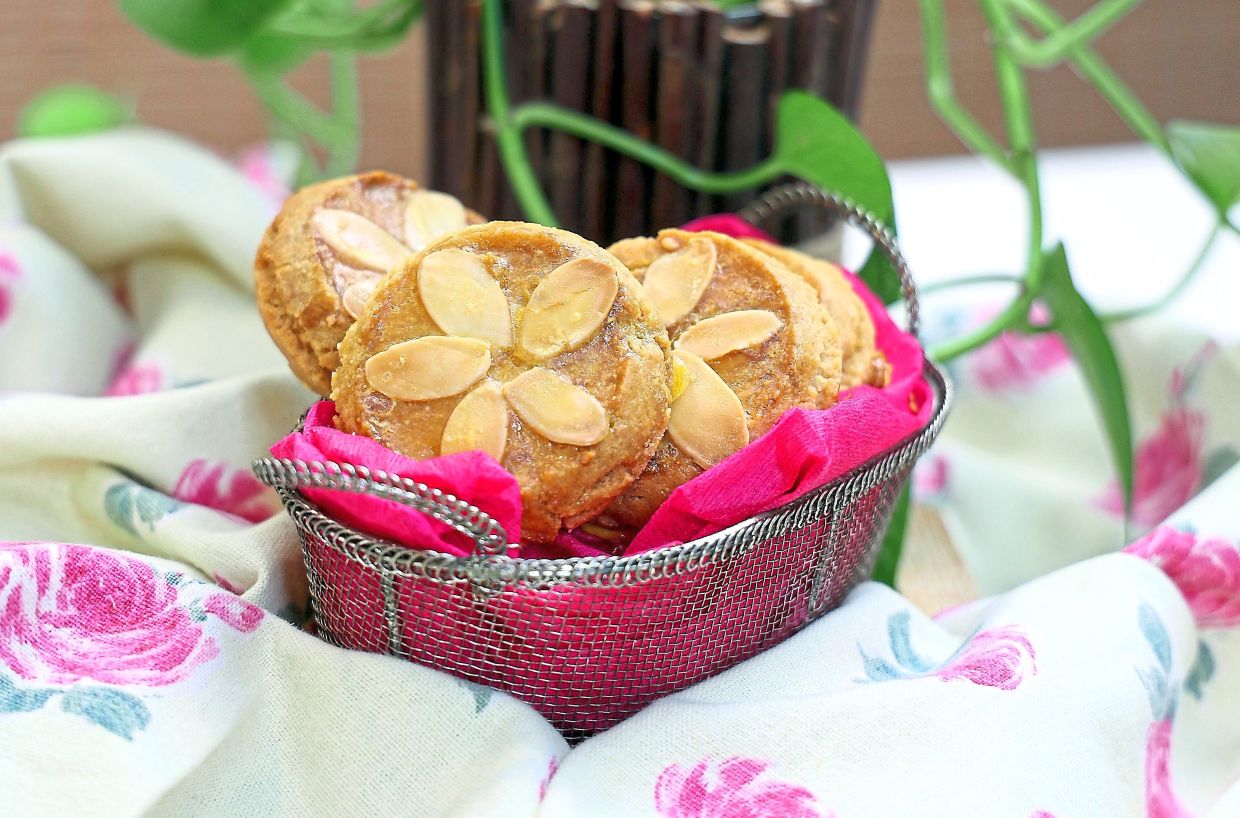
Traditionally made with butter, they may also be prepared with peanut oil or another neutral-tasting oil.
The word “sou” or “soh” is often translated as a crispy or flaky pastry.
It is commonly associated with salted egg or century egg pastries, but also describes a family of delicate nut-based biscuits made with walnuts, almonds or peanuts.
This style of Cantonese biscuit is known as sou beng and the preparation shares traits with the shortbread method.
Fat is incorporated into dry ingredients until the mixture resembles crumbs, before being compressed into shape and baked. The result is a biscuit that is rich yet airy, tender yet crisp.
For this version, I used almonds simply because they were readily available in my kitchen, though walnuts remain the more traditional ingredient.
Peanuts, cashews or other nuts can also be the substitutes, each lending its own character to the biscuit.
The addition of both baking powder and baking soda creates a lighter, more fragile texture that crumbles easily upon biting.
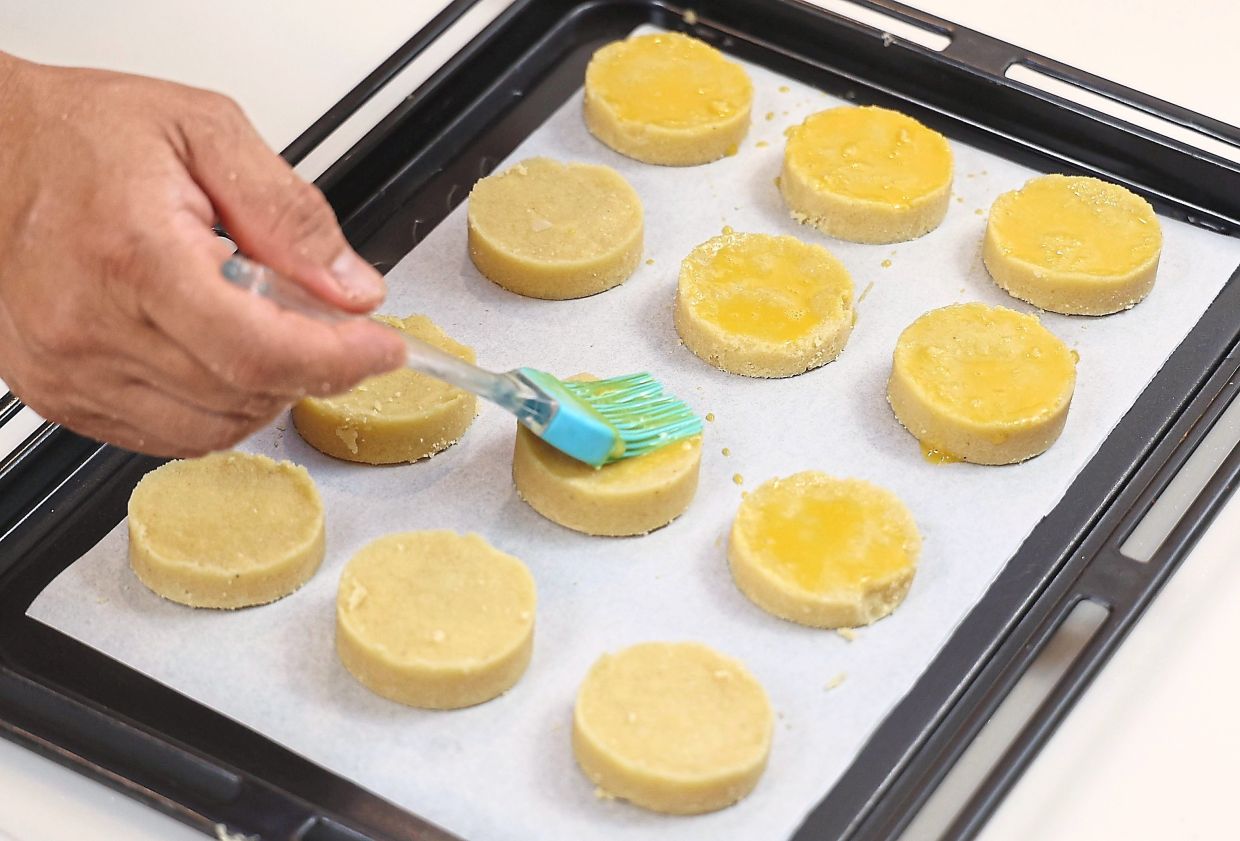
A double application of egg wash gives the biscuits their characteristic glossy finish while helping to hold the almond flakes in place and preventing the surface from becoming too fragile.
Once completely cooled, the biscuits develop a delicate snap while still retaining that melt-in-the-mouth sensation that makes them so addictive.
Served with hot tea or coffee, they become the sort of simple indulgence that quietly disappears from the biscuit tin faster than expected.
Chinese almond shortbread
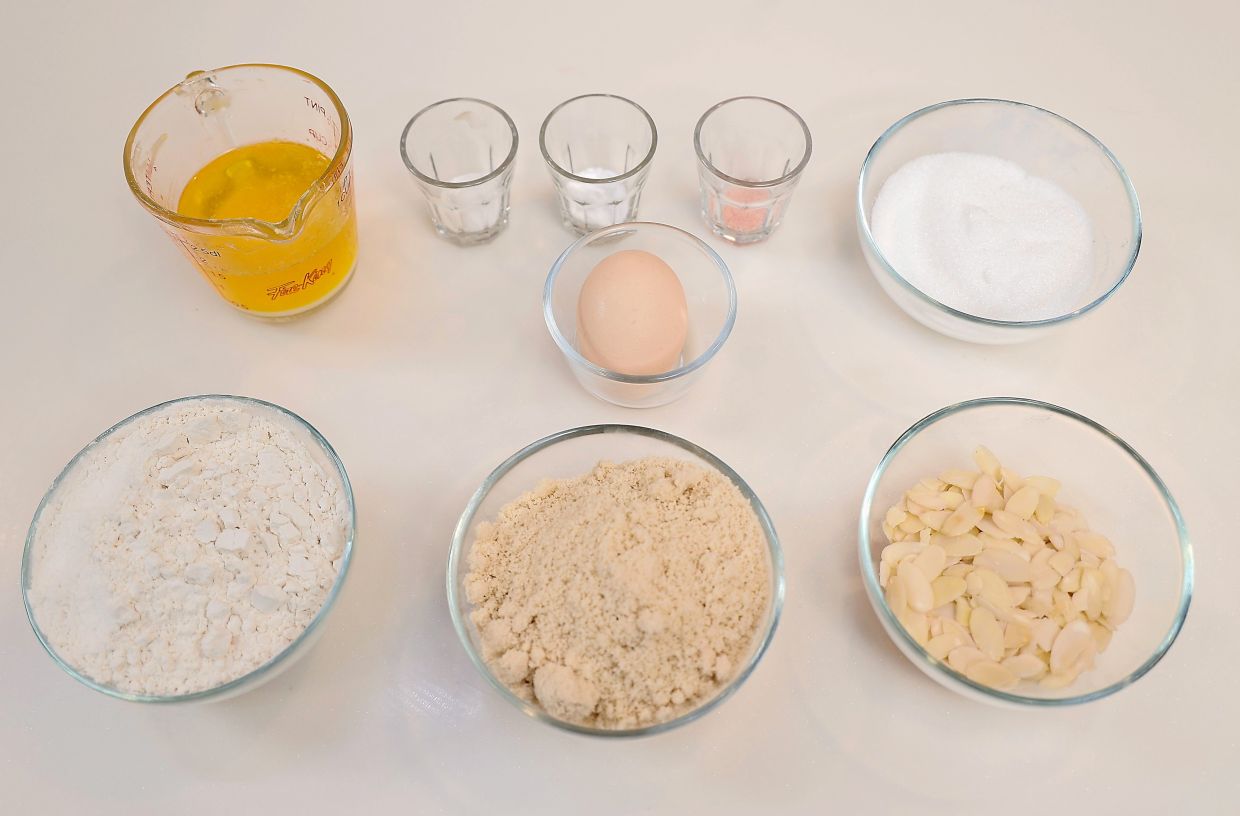
Ingredients
180g all-purpose flour
1 tsp baking powder
1 tsp baking soda
120g castor sugar
120g ground almonds
¼ tsp salt
120g melted butter
Topping
1 egg, beaten
¼ cup almond flakes
Directions
Preheat the oven to 180°C and line a baking tray with baking parchment.
Sift together the flour, baking powder, baking soda, sugar, ground almonds and salt into the bowl of an electric mixer. Mix briefly at low speed.
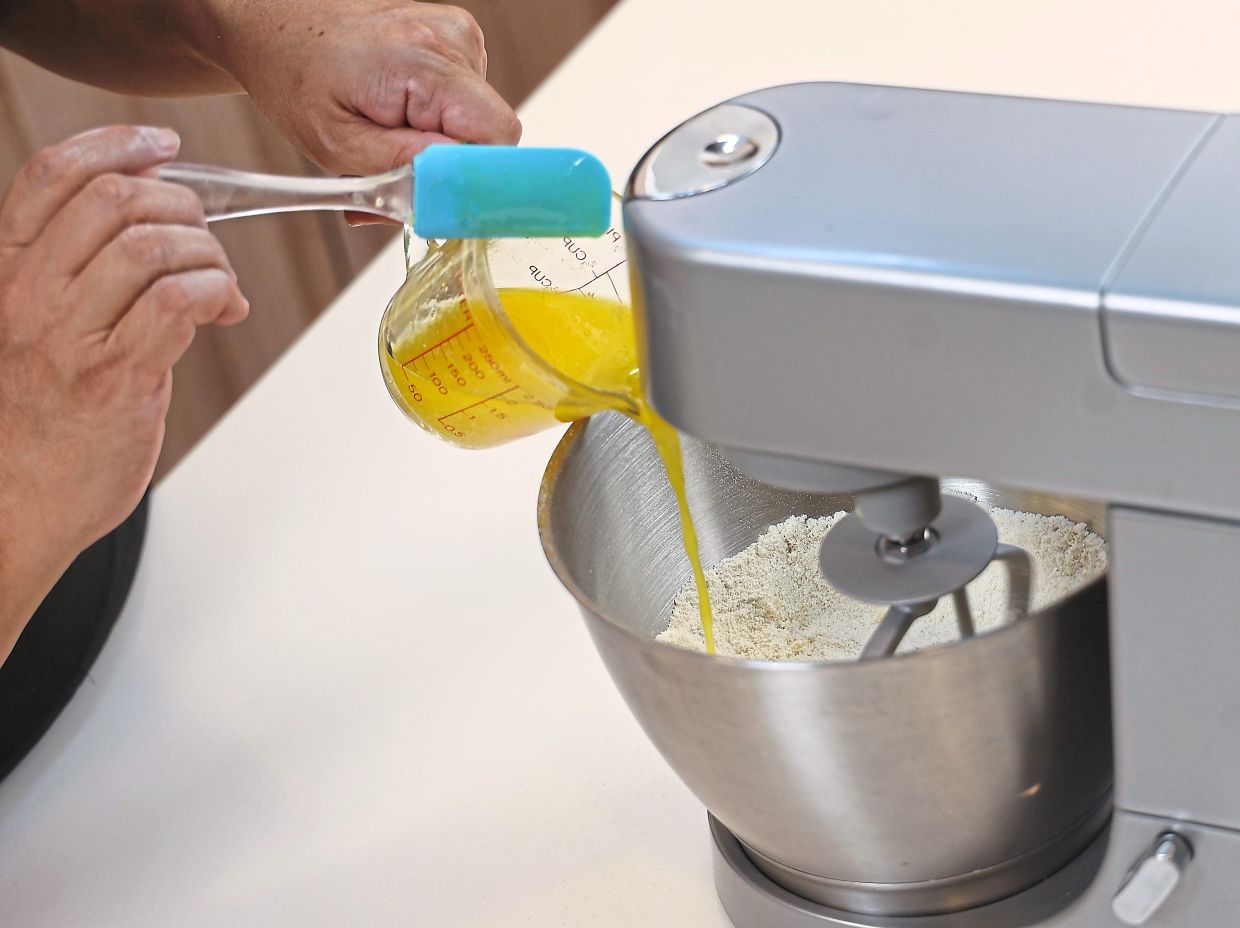
With the mixer running, slowly drizzle in the melted butter so the fat is evenly absorbed into the dry ingredients. The mixture should resemble damp crumbs.
Turn the mixture out onto a work surface and knead lightly until it just comes together.
Avoid overworking the dough, or the biscuits may become dense.
Using a 6cm round cutter as a mould, loosely fill it with the mixture to about 1cm thick. Compress firmly using your fingers or the base of a glass tumbler until the biscuit holds together.
Carefully remove the mould.
Arrange the biscuits on the prepared tray and brush lightly with beaten egg.
Decorate the tops with almond flakes in a floral pattern if desired.
Bake for 15 minutes. The biscuits will puff slightly and develop natural cracks on the surface.
Remove from the oven and glaze once more with the remaining egg wash to seal the cracks and create a glossy finish.
Return to the oven and bake for another five minutes until golden.
Allow the biscuits to cool completely before serving. Their texture becomes crisper as they cool while still retaining a delicate melt-in-the-mouth crumb.