It was stated by Selangor government recently that there was an uptick in recycling.
However, the situation on the ground does not reflect this and Selangor has a long way to go to ensure maximum recycling.
Since the price of plastic resins used in the manufacture of plastic products has increased tremendously due to the war in the Middle East, the demand for recycled plastic should be high.
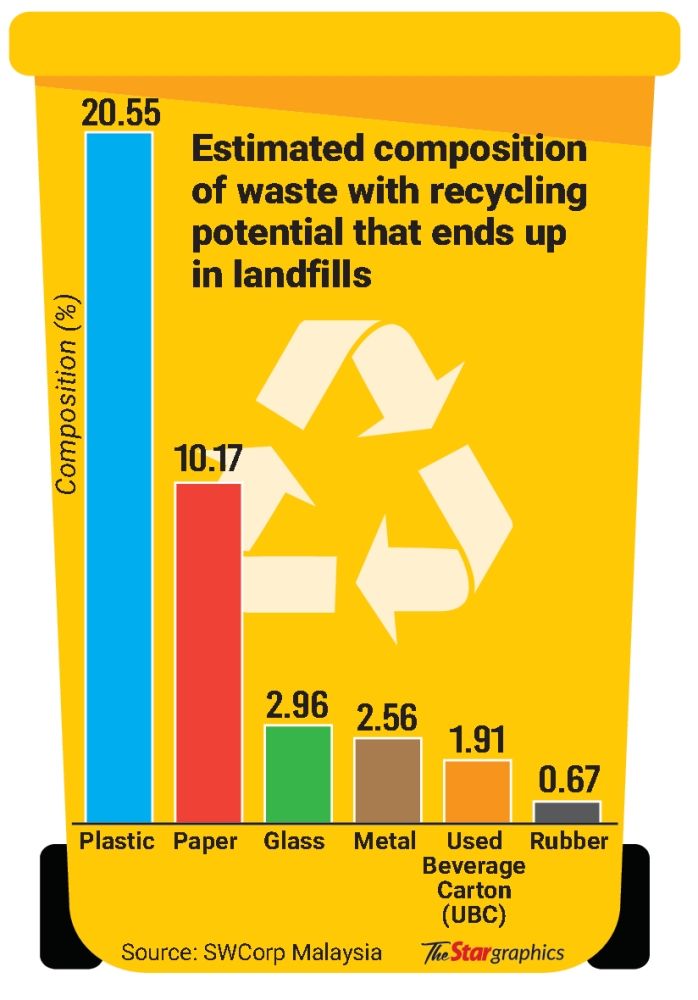
However, this is not the case as locally, recyclers are rejecting plastics from collectors and this has led to an all-round rejection of all recyclable plastics.
This is a contradiction to the present situation, considering the shortages and increased prices of the resins, which are manufactured by the petrochemical industries.
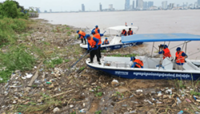
Nowadays, a lot of discarded plastic items become public litter and clog drains.
The same applies to PVC products such as plastic pipes used for cable casings.
Large quantities of plastics that could have been recycled now head to landfills as those who collect recyclables no longer pick up plastics.
Plastic waste is the main problem in urbanised states like Selangor and authorities need to investigate the poor support mechanism for plastic recycling.
Assistance to the recycling firms could be allocated in the state government’s annual budget to help the recyclers opt for better recycling technology.
Some plastics, especially the harder varieties, can only be recycled by specialist firms with the appropriate machinery and technology.
There’s no point talking about circular and green economy when there is no budgetary assistance or incentives given to these recyclers.
Plastic recycling is very essential for our well-being as plastics are hazardous, polluting and cause a wide range of hygienic and municipal problems.
The prevalence of dengue in Selangor can be traced to stagnant water in plastic containers facilitating the proliferation of the Aedes mosquitoes.
Burning plastics can be carcinogenic and hazardous to the environment.
More research needs to be done to maximise the use of recycled plastics.
Malaysian manufacturers should be asked to prioritise recycled plastics as part of their socio-economic contribution.
In public spaces, used water bottles are a nuisance as they end up as litter and become an eyesore.
The state government could subsidise the recycling of plastic water bottles.
Firms that manufacture water bottles as well as those bottling water should be directed to pay a levy on the bottles.
The money could be used to pay plastic waste collectors and recyclers a higher rate.
During the 1960s and until the 1980s, one could see vendors collecting glass bottles and 5 to 10sen was paid for each bottle.
But now, there are very few glass recovery or recycling facilities.
Why can’t we have a system to rid the environment of plastic bottles?
Left uncollected, these bottles end up in drains and rivers – a lot of money has to be spent later clearing and cleaning the waterways.
Would it not be better to recover the plastic bottles before they clog up drains and rivers and contribute to flooding?
Malaysian Institute of Road Safety Research (Miros) had stated that it was exploring ways to make bitumen from recycled plastics.
It also said that it had difficulty sourcing for a single type of plastic in huge quantities.
Every year Malaysians, foreign workers and tourists discard tens of millions of water bottles.
Miros should look into the possibility of using drinking water bottles for roads.
These bottles are made of high-quality plastic and if they can be used to make bitumen to pave the roads, it will be an achievement as many roads are in a deplorable condition.
V. Thomas
Sungai Buloh, Selangor