
THE tranquil morning air at Ipoh’s DR Seenivasagam Recreational Park is typically filled with the sounds of rhythmic tai chi or the clatter of skateboards.
Recently, however, a quieter ritual has taken root near the skating arena.
A diverse group has settled on the grass, absorbed in physical books rather than smartphones, marking the arrival of Ipoh Reads – a community-driven movement proving that the printed page still holds a unique power to connect.
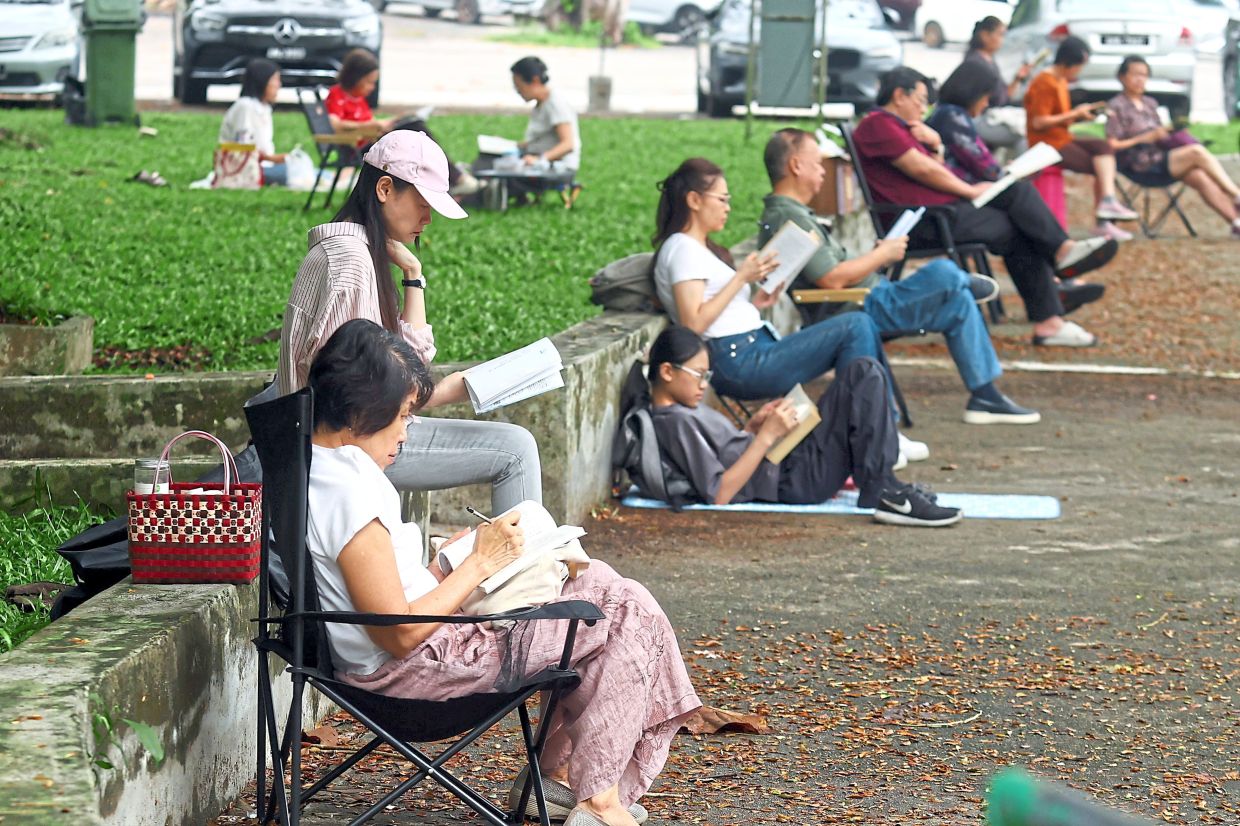
Launched in November last year and modelled after the successful Kuala Lumpur Reads initiative, the movement aims to reclaim public spaces for intellectual growth.
It operates on the philosophy that reading is not merely a solitary act, but a shared cultural experience capable of bridging gaps across generations, races and religions.
The movement shares a similar philosophy with the Kuala Lumpur Reads initiative, focusing on community-driven efforts to make reading a visible and social activity.

“We want to inspire more people to read a book and to depend less on smartphones.
“We certainly wish to see more readers from all races come together,” Dr Wong said during a recent session at the park.
The choice of an outdoor, public environment is a deliberate strategy to pique the interest of passers-by.
Dr Wong said curious onlookers often approached the group to ask why they have chosen a park for an activity traditionally associated with indoor silence.
“Well, we want to make what we are doing visible, and hopefully promote our movement,” he explained.
He remains hopeful that this visibility will lead to the creation of more reading movements or similar groups across the city.
The concept for Ipoh Reads remains intentionally simple: participants are invited to come to DR Park (as it is commonly known) with a book or newspaper and engage in quiet reading.
The setting plays a significant role in the experience, as Dr Wong believes that the park provides a relaxed and healthy atmosphere that contrasts sharply with the frantic pace of modern life.
“We hope people, especially young parents, can bring their children along and join us, and make it a family outing,” he added.
To keep the initiative accessible, the sessions are held three times a month: on the first and third Saturdays and the last Sunday of every month.
The timing is designed to accommodate different schedules, with sessions running from 8am to 10am.
“The group is flexible, allowing people to come and go as they please,” Dr Wong stressed.
Even the unpredictable Malaysian weather is factored into their plans.
If rain prevents them from gathering at the park, the group shifts to the heritage-rich environment of Old Town.
“There are some cafes in Old Town that we can go to if it rains,” Dr Wong said, ensuring the habit of reading remains a constant regardless of the conditions.
Fruitful exchange
The origins of Ipoh Reads are rooted in a personal family experience.
Co-founder Tan Hooi Leng, 63, recalled how the idea was sparked after her daughter took her to a reading session organised by KL Reads at the Perdana Botanical Garden in Kuala Lumpur.
The experience of reading in a natural setting resonated with her, and she felt the concept could work well in her home city.
“I thought having a picnic in Ipoh to enjoy the outdoors while reading books was a good idea,” said Hooi Leng, who is married to Dr Wong.
However, launching a new community movement was not without its challenges.
“It was not easy to start the ball rolling, but we were happy that about 60 people attended our inaugural activity at the recreational park in November last year,” Hooi Leng added.
Following that initial success, the group established a presence on social media to maintain momentum and attract new participants.
The movement has also benefitted from the support of Liow Yeong Lih, a bookseller based in Rawang.
Liow travels to Ipoh regularly to assist with the sessions, bringing his own stock of books to be exchanged or given away to participants.
Hooi Leng believes this is a vital part of the movement’s mission.
“Sharing the books among family and friends is better than keeping them on shelves,” she said.
For her, the appeal of a physical book lies in its depth and the unique connection it creates between the author and the reader.
She finds that while many literary works are now adapted into films, these versions often lack the emotional resonance found in the written word.
“Even if some books have been turned into films, they just don’t convey the same feelings that were written by the authors. It is through reading that I can sometimes feel the warmth,” she said.
This sentiment is shared by other participants, including 63-year-old former teacher Chong Poh Keng.
For Chong, reading outdoors provides a mental clarity that is often missing at home.
“If I read at home, I can doze off, but here I can read for an hour-and-a-half,” she said.
The sensory experience of the park, with its cool morning breeze and the sound of birds, serves as a backdrop that enhances her concentration rather than distracting from it.
Dr Wong is now looking to expand the reach of Ipoh Reads by encouraging other organisations to take up the mantle.
He has reached out to various non-governmental organisations (NGOs) and associations in Ipoh, suggesting that they hold their own reading activities through their youth wings.
He believes that since these movements require very little financial investment, they are accessible to almost any group.
“Schools and kindergartens should also consider doing this to encourage children to read,” he said.
He is also exploring potential collaborations with public libraries to conduct joint activities.
Despite a slight dip in participant numbers during recent sessions, Dr Wong remains committed to the schedule.
He understands that modern life is busy and that families often have competing commitments, such as extracurricular classes for children.
“Our days are fixed, so people can join in any time,” he said.
Books over gadgets
The role of parents in fostering this culture was highlighted by former school principal Tan Hooi Kuan, 65.
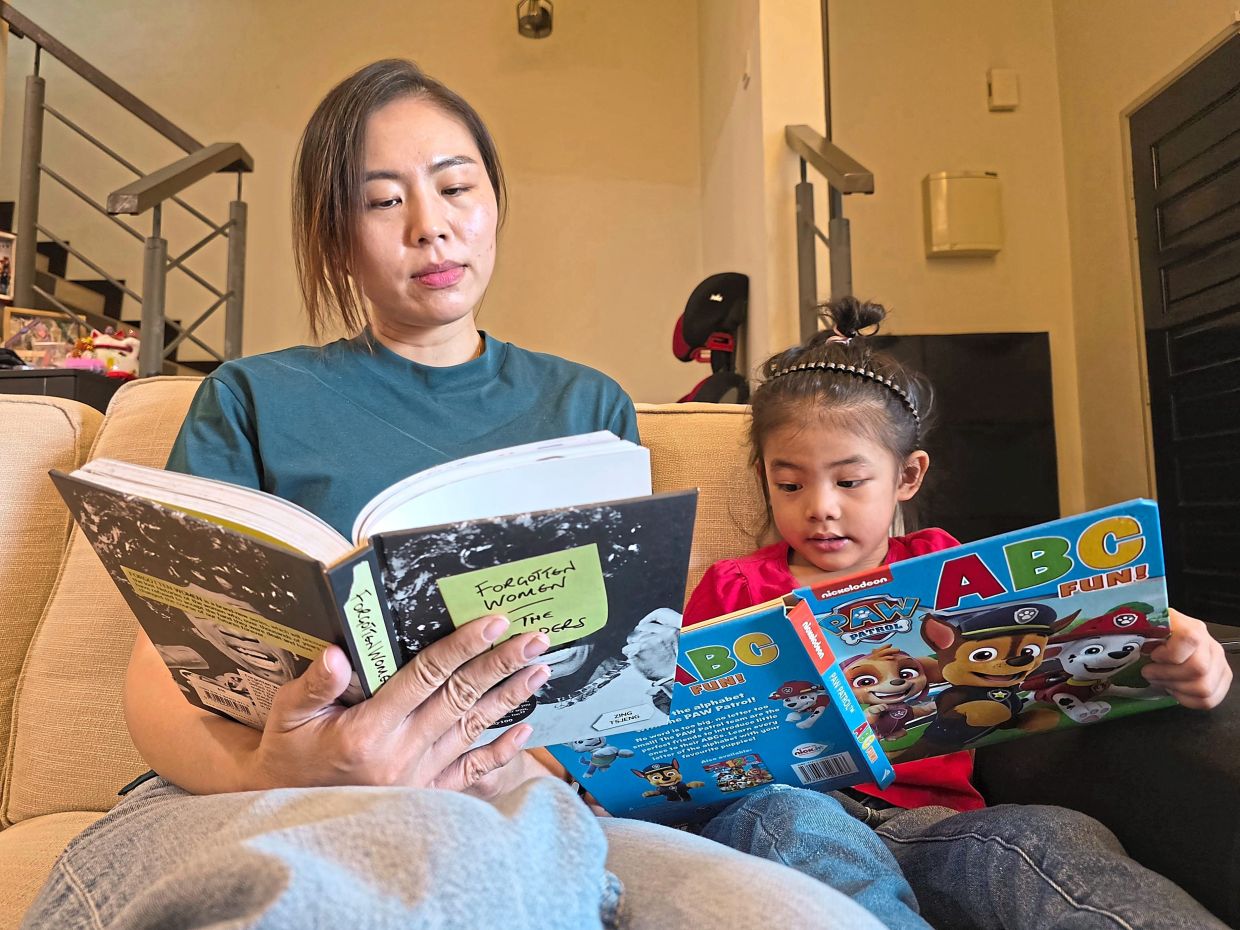
Drawing on her professional background, Hooi Kuan argued that the first step in encouraging children to read must occur within the home.
“It starts at home. Parents should put down their mobile phones and instil the habit of reading,” she said.
She warned that prolonged gadget use can negatively impact a child’s ability to focus in a traditional classroom setting.
“Instead of giving them gadgets, give them a book to read or even to colour,” Hooi Kuan suggested.
While she admits that it is difficult to compete with digital entertainment, she believes that a gradual shift is possible through shared activities.
“When parents start picking up books to read, it will also get the children, who will emulate their parents, to do the same.
“I have seen some parents let their children colour in books at eateries instead of holding a cellphone, so it is doable,” she said.
Silent reading
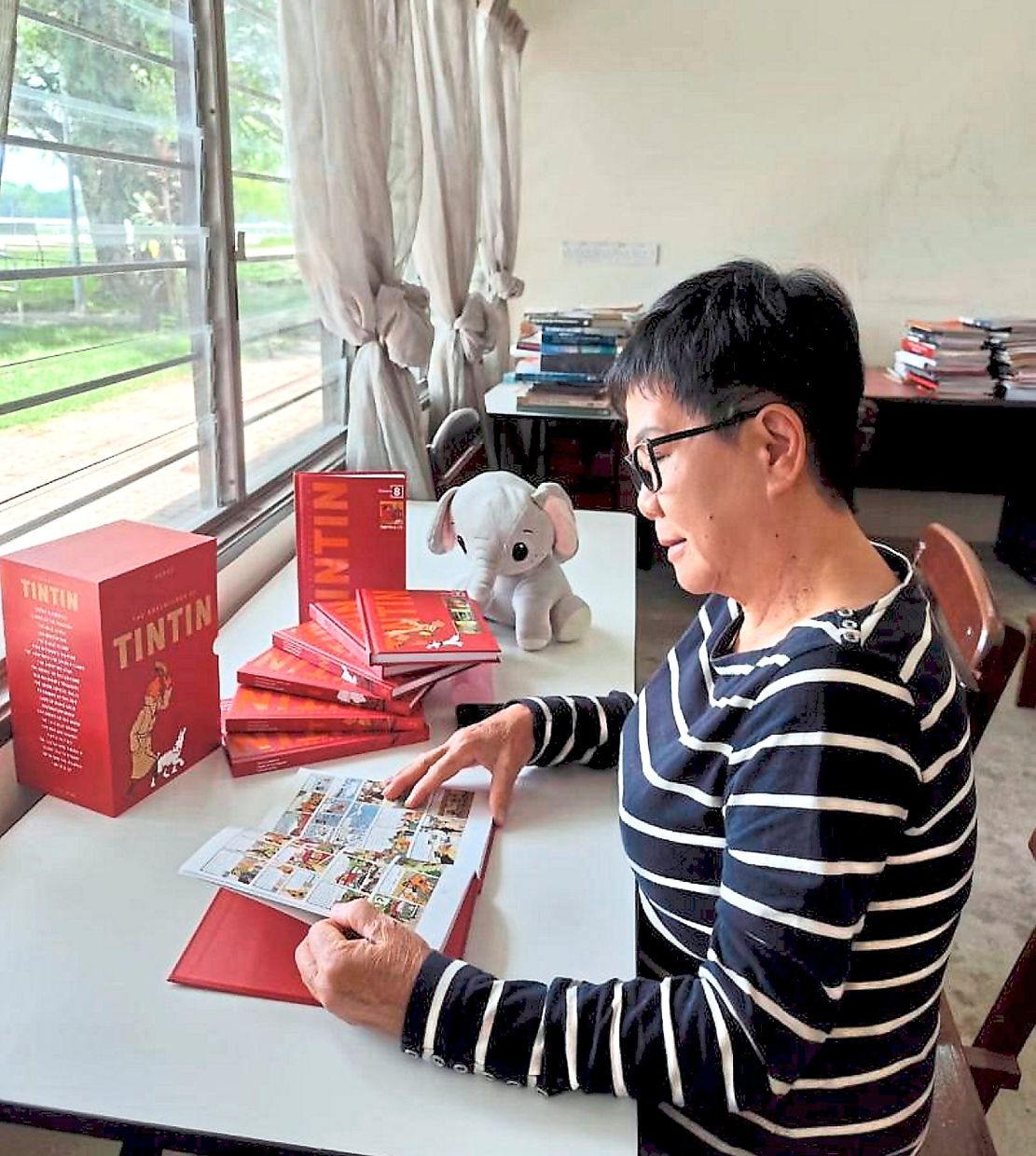
An equestrian centre may seem an unlikely setting for a literary revival, but for the Perak Women for Women Society (PWW), the quiet presence of horses provides the perfect backdrop for their latest community initiative.
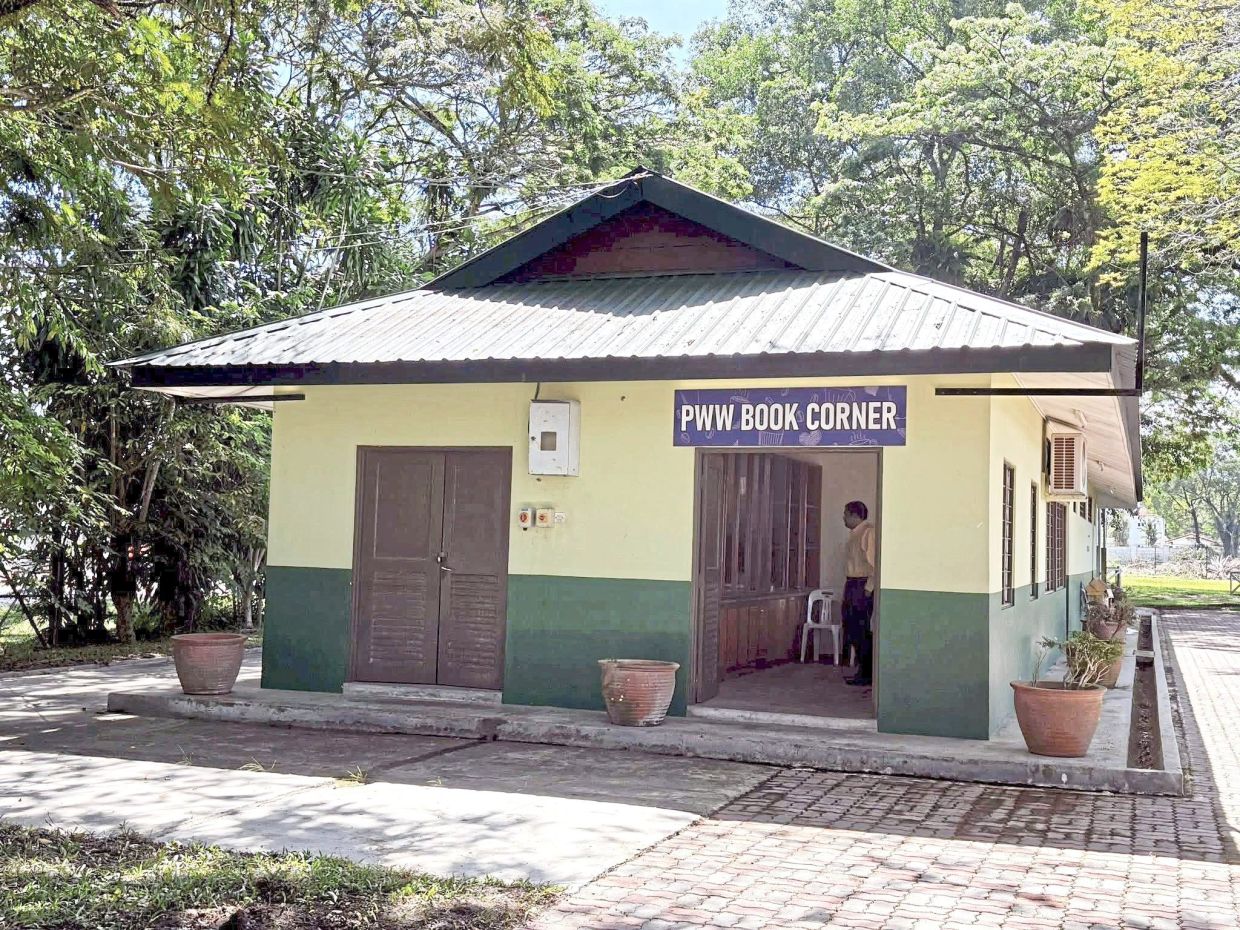
Since its launch in May 2025, the organisation’s Book and Cafe Corner at the Perak Turf Club has become a unique fixture in Ipoh’s efforts to promote literacy and social empowerment.
The initiative serves a dual purpose: providing a platform for women entrepreneurs from lower-income backgrounds to sell home-cooked meals, while offering a dedicated “Book Corner” where patrons can borrow, exchange or donate books.
“Most of the time people will just come take a book and read it in the Book Corner while having a cup of coffee,” said PWW secretary and co-founder Yip Siew Keen.
The premises opens on weekends from 9am to noon, except on racing days, with some patrons opting to read at the pavilion just outside the cafe.
The primary aim of the project is to inculcate a reading habit, which Yip believes is currently lacking, particularly among younger people.
To address this, PWW hosts various activities including silent reading sessions, book reviews and exchange programmes to expose youths to literature.
The Equestrian Centre offers a unique atmosphere for such
pursuits.
“The location is suitable for reading as it has a tranquil environment,” Yip noted.
“Because there are horses nearby, we cannot be too loud, so as not to spook the animals.”
PWW frequently invites other book clubs and NGOs to use the space, moving larger gatherings to the pavilion to accommodate the crowd.
The society is seeking volunteers to manage the Book Corner and facilitate activities. Interested parties can call Fiona via WhatsApp on 012-521 2480.
Whether through quiet mornings at the turf club or community gatherings in the park with Ipoh Reads, the effort to return to the printed page is gaining steady ground across the city.