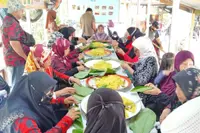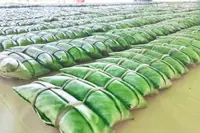
For many families in Sabah, the Hari Raya Aidilfitri celebration would be incomplete without kelupis, a glutinous rice delicacy wrapped in nyirik leaves.
It has long been a staple on the morning of Raya and is a symbolic tradition among the state’s diverse communities.
In Sabah, kelupis is often regarded as the equivalent of the peninsula’s ketupat or lemang. During the festive celebration, almost every household serves the dish to visitors, usually accompanied by peanut sauce, rendang or other traditional dishes.
For kelupis entrepreneur Hamidah Ontong, 39, the traditional dish is more than just festive food – it represents a family tradition passed down the generations.
“Every Raya, there must be kelupis. Without kelupis, it feels like something is missing from the Raya spread. Just like if there were no ketupat or lemang during Raya in the peninsula.
Hamidah told Bernama that she began learning to prepare kelupis at the age of 17 while helping her mother make the dish for family celebrations.
According to her, preparing kelupis required patience and precision, beginning with preparing the wrapper, using nyirik leaves, and cooking glutinous rice mixed with coconut milk.
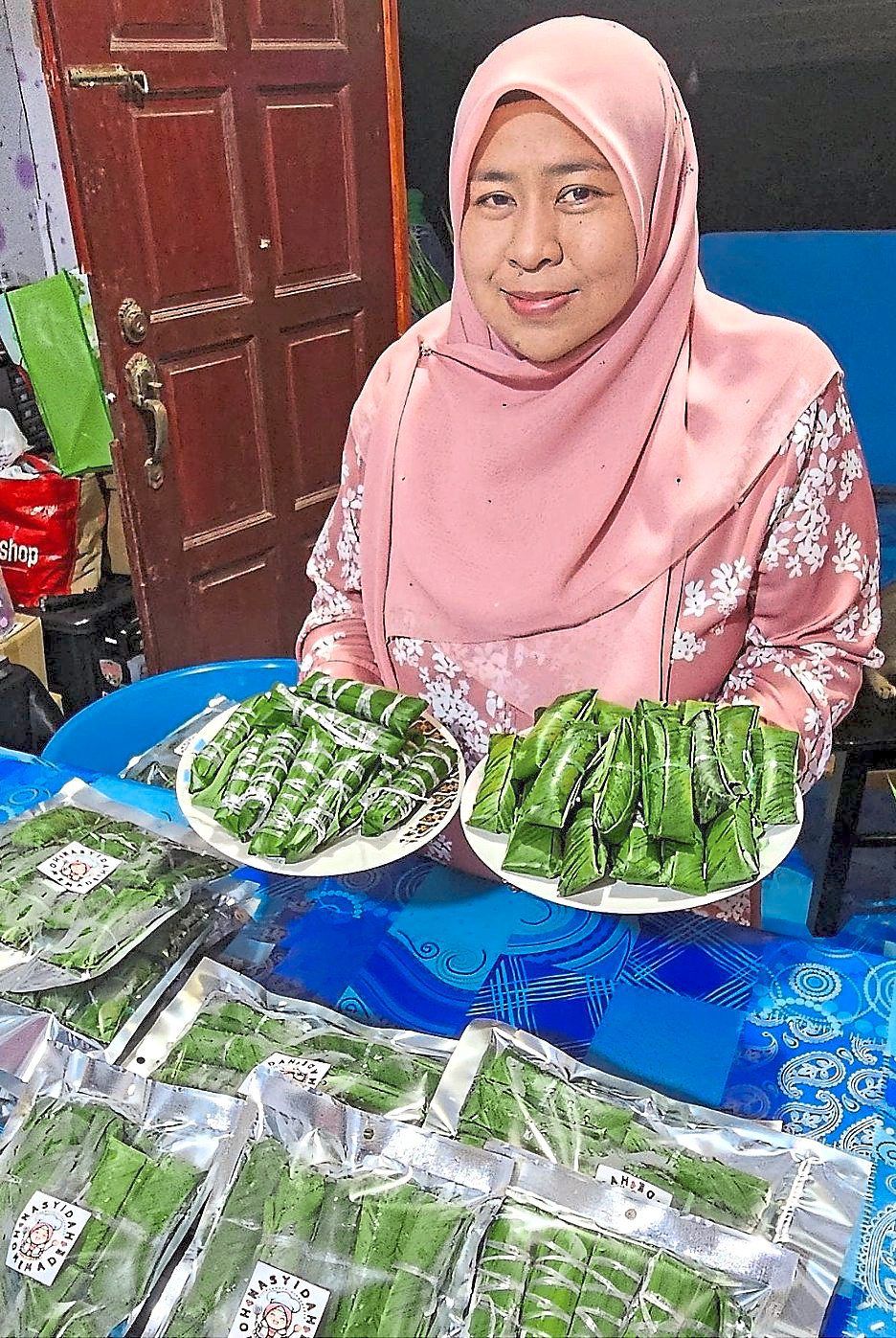
She said the most time-consuming part of the process was wrapping the kelupis, as each piece must be carefully wrapped and tied individually.
On average, it takes about six to seven hours to prepare around 100 pieces of kelupis, starting from preparing the glutinous rice, coconut milk and leaves before wrapping and boiling them until the contents are fully cooked.
“After that, we freeze them so they last longer.”
Hamidah said although kelupis was often associated with the Brunei community in Sabah, the dish was also a traditional food among the Bisaya, Kedayan and Dusun communities, with slight differences in preparation and wrapping techniques.
She said kelupis prepared by the Brunei community was usually denser and richer in coconut milk flavour, while versions from other communities may vary slightly in texture, size, and the type of leaves used for wrapping.
However, she said the communities all used the basic ingredients of glutinous rice and coconut milk.
Apart from being a signature dish during Hari Raya, kelupis is also commonly served at various community events such as feasts, weddings, doa selamat gatherings and other social functions.
Hamidah, who sells kelupis at RM1 per piece, said she would continue using her family’s traditional recipe, including using coconut milk and freshly grated coconut to ensure the dish retained its rich flavour and soft, perfectly textured glutinous rice.